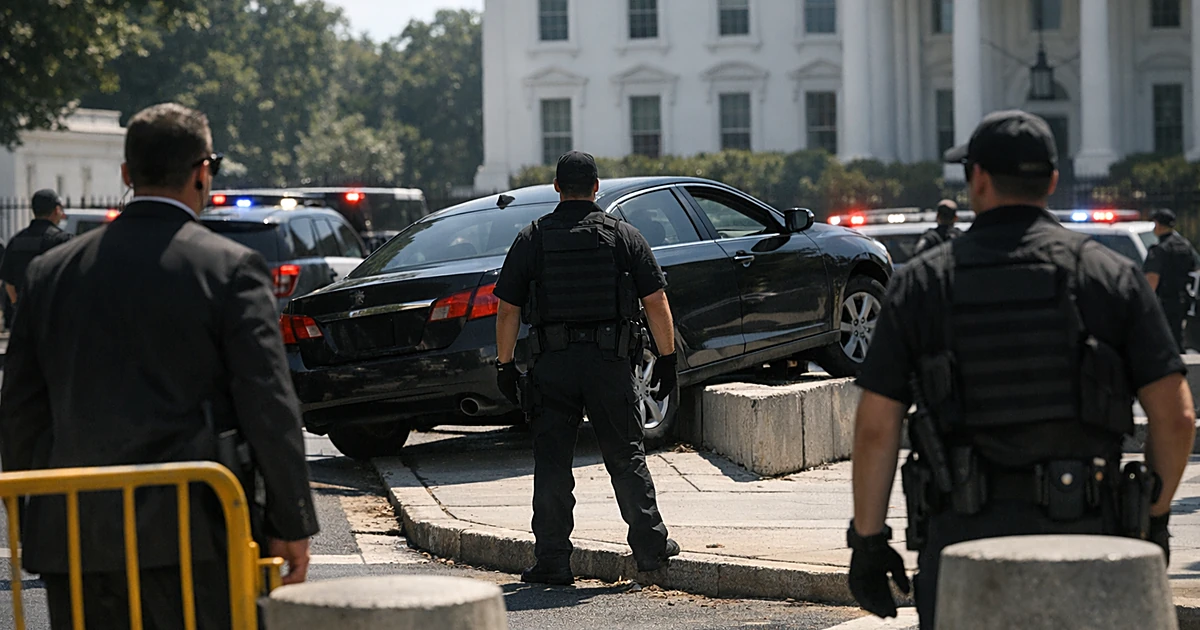
President Trump is publicly pressing his own appointed U.S. Attorney for Washington, D.C., Jeanine Pirro, to reverse course and refile criminal charges against an alleged vandal at the Lincoln Memorial Reflecting Pool, a demand that puts a longtime ally in an uncomfortable spotlight.
Trump posted on Truth Social on Friday, sharing images from freelance photographer Andrew Leyden that he said show deliberate cuts in the pool's expansion joints. The photos surfaced after the National Park Service removed fencing that had blocked public access to the area since June, Newsmax reported. Trump seized on the images as proof that the damage was no accident.
Pirro's office had moved on July 31 to dismiss felony charges against former U.S. Olympic canoeist David Hearn and misdemeanor charges against three other defendants, Justin Carreno, Cameron Thiers, and Sophie Dennison-Gibby, who had pleaded not guilty to destruction of property valued at less than $1,000. Pirro said the damage was the "result of flawed installation by the contractor" rather than vandalism.
Trump called that conclusion a "hastily made decision" and urged Pirro to revisit it. The case was dismissed without prejudice, meaning prosecutors can refile if they choose.
Trump's post included Leyden's photographs and his own description of what he said they revealed. He wrote on Truth Social:
"Now that people are able to see it up close, they are reporting pure VANDALISM at The Reflecting Pool. The material was cut right where the video tape showed, for 300 feet or more. People were on their knees with their hands in the water at the exact location of the 'slashes.' Additionally, there were witnesses to the VANDALISM, and the flexible areas of the material were cut with a knife."
The gray foam expansion joints along the pool's edge are at the center of the dispute. Pirro's office blamed the damage on Atlantic Industrial Coatings, a Virginia-based contractor that received a $14.7 million no-bid contract for the Reflecting Pool renovation project Trump had ordered. Problems with the pool emerged shortly after the refurbishment was completed.
Fox News reported that DOJ prosecutors said the Department of the Interior had failed to initially disclose records showing the pool's coating had extensive installation problems. Prosecutors wrote that had the Interior Department "been forthcoming with the information clearly in its possession, the government would not have sought a grand jury indictment."
Trump, however, contradicted that framing. He distanced himself from the contractor, telling reporters he "didn't know the contractor", a claim that sat uneasily beside the fact that Atlantic Industrial Coatings received the no-bid deal under his administration, as the Associated Press reported.
Hearn had faced a felony charge carrying up to ten years in prison before Pirro's office dropped the case. The original arrests drew national attention when Park Police took multiple suspects into custody at one of the most recognizable monuments in the country.
Friday's post was not the first time Trump publicly challenged his own appointee on this case. Earlier in the week, he told reporters he was "disappointed" in Pirro and accused her of buckling under pressure from the presiding judge.
"Frankly, I think she choked because the judge was really vicious. Instead of going after the people that did it, the judge went after her and went after her department, and I guess she choked."
He went further, saying Pirro "folded like an umbrella." The language marked a rare and sustained public rebuke of a Trump appointee, especially one who is also a former Fox News host and a longtime personal ally. On Truth Social, Trump also posted that he disagreed "100%" with Pirro's decision, the New York Post reported.
Pirro has not publicly responded to Trump's latest call to reopen the case. Whether she will comply, resist, or resign remains an open question, one with implications for how much independence any Trump-appointed U.S. Attorney can exercise when the president disagrees with a prosecutorial judgment.
Beyond the physical evidence, Trump used Friday's post to highlight what he described as Hearn's political ties. He called Hearn "a big player in ActBlue," the Democratic fundraising platform, and took aim at Hearn's attorney, Norm Eisen, and the organization CREW.
Trump's post did not hold back about Eisen. He called Eisen a "Political Hack Lawyer" and claimed he had been "beating Eisen...in Court for 10 years, or more." He also accused CREW of using "charity" for political purposes, calling the practice, "to the best of my knowledge, ILLEGAL."
Eisen fired back. In a statement reported by the New York Post, the attorney said Trump and Interior Secretary Doug Burgum were "attacking Pirro because she admitted what we established in our legal filings all along: Trump's botched renovation was responsible for the damage, not Davey Hearn."
That counterargument frames the dispute as one about accountability for a failed government contract, not sabotage. But Trump's argument runs the other direction: that the contractor's problems do not explain the specific cuts Leyden's photographs appear to show, and that Pirro's office moved too quickly to accept the contractor-fault explanation without examining the physical evidence closely enough.
The administration has shown a willingness to use the Justice Department aggressively on multiple fronts. Trump's DOJ has taken cases all the way to the Supreme Court and has pursued enforcement actions that prior administrations left dormant.
The Reflecting Pool renovation was supposed to be a signature restoration project. Trump ordered the refurbishment, and Atlantic Industrial Coatings won the $14.7 million no-bid contract to do the work. When damage appeared shortly after the project was finished, authorities moved quickly. Hearn was indicted on a felony charge. Three others faced misdemeanor counts.
But the case unraveled when records emerged showing the contractor's sealant installation was defective. Pirro's office said the Interior Department had not been forthcoming with those records before the grand jury indictment. That failure of disclosure gave prosecutors grounds to drop the case, and gave Hearn's defense team ammunition to argue the charges should never have been filed.
The tension between the administration's desire for accountability and its own role in selecting the contractor creates an awkward dynamic. Trump wants the vandalism prosecuted. His own government hired the contractor whose work Pirro cited as the real cause of the damage. And the Interior Department's failure to share key records with prosecutors is what forced the dismissal in the first place. The pattern of executive agencies withholding information from their own prosecutors echoes broader accountability gaps that Congress has confronted in other high-profile cases.
Whether the newly surfaced photographs change the evidentiary picture enough to justify refiling charges remains unclear. The dismissal without prejudice leaves the legal door open. But Pirro would need more than presidential pressure to rebuild a case that her own office said was undermined by flawed government disclosures.
Trump has not hesitated to publicly direct legal actions he believes his appointees should pursue, a posture that has drawn criticism from some legal observers but that his supporters view as a president holding his own team accountable. The administration's willingness to activate aggressive enforcement tools across the Justice Department suggests this fight is far from over.
The Reflecting Pool case sits at the intersection of government contracting failures, prosecutorial independence, and a president who refuses to let go of what he sees as clear-cut vandalism. If the new photographs show what Trump says they show, Pirro has a decision to make, and the whole country will be watching whether she follows the evidence or follows orders.
When a president's own renovation goes sideways and his own appointee says the charges don't hold up, the easiest thing in Washington is to move on. The hardest thing, and the right thing, is to make sure somebody actually looks at the evidence before the file gets closed for good.