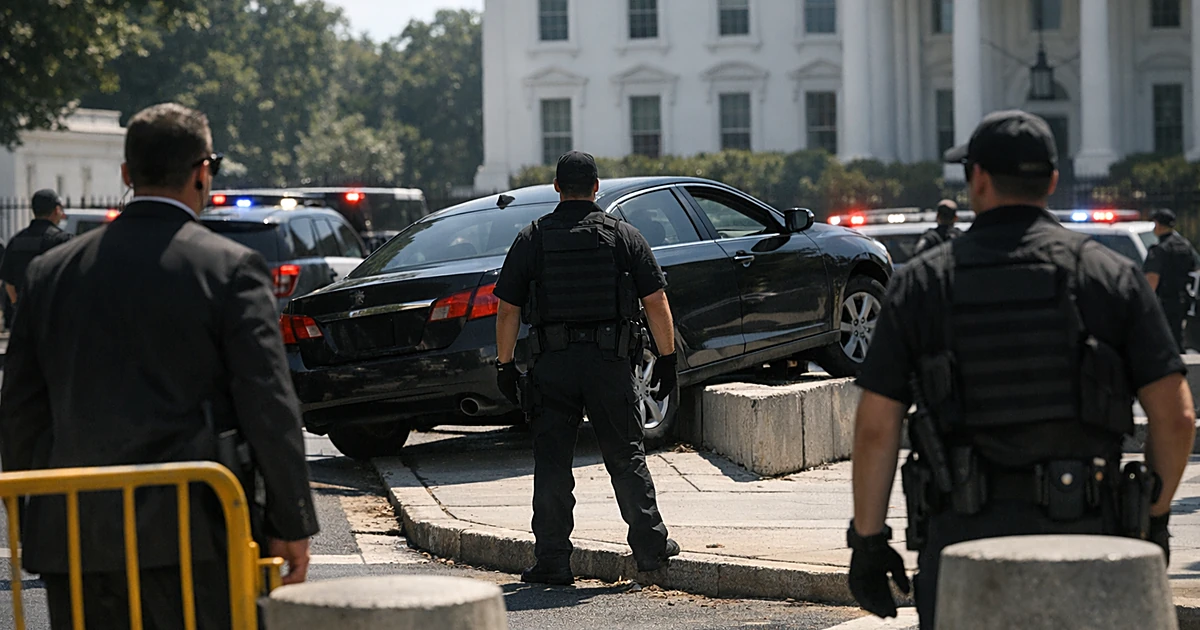
An unnamed man allegedly drove his car onto the sidewalk near the White House security barrier on Saturday and demanded to speak to President Trump, the latest in a growing string of security incidents around the executive mansion.
The incident unfolded around noon at the corner of 16th Street and H Street at Lafayette Square in Washington, D.C., drawing a massive response from Metropolitan Police, Secret Service officers, and members of the military. The man was arrested at the scene and transported to a nearby hospital for a mental health evaluation, the New York Post reported.
President Trump was not at the White House at the time. He was vacationing at Camp David.
A Secret Service spokesperson told the Post that officers swept the man's car and found nothing. Surrounding roads were shut down "out of an abundance of caution," the spokesperson said.
"We appreciate the swift actions of our Secret Service Police Officers and are grateful for the Metropolitan Police Department for their prompt response."
That was the full statement the Secret Service spokesperson provided. No details about the man's identity, specific charges, or how long the road closures lasted have been released.
Saturday's incident adds to a pattern that should alarm anyone paying attention to the security of the nation's most important address. The Post catalogued multiple prior breaches in recent memory, each one a reminder that the perimeter around the White House remains a target.
In October 2025, a driver in a grey Acura was arrested after allegedly trying to smash through the security gate outside the White House while President Trump was inside. Months later, in March, another driver was detained after allegedly plowing through a temporary security barricade at Madison Place and H Street Northwest near Lafayette Park.
The Secret Service has faced its own internal turbulence in recent months, raising questions about whether the agency is stretched thin at a moment when threats to the president keep mounting.
And the threats have not been limited to vehicles. On April 25, 2026, a 31-year-old California schoolteacher named Cole Allen allegedly opened fire one floor above the grand ballroom at the Washington Hilton during the White House Correspondents' Dinner. Allen allegedly struck a Secret Service agent's bulletproof vest. The agent returned fire but missed. Allen is now in federal custody awaiting trial.
The stretch of pavement around Lafayette Square has been a recurring flashpoint. In May 2023, a 19-year-old named Sai Varshith Kandula flew into Washington on a one-way ticket, rented a U-Haul truck, and drove it directly into the security barriers at Lafayette Square. The Washington Examiner identified Kandula as a resident of Chesterfield, Missouri, citing the United States Park Police.
Kandula's stated intentions were far more explicit than anything attributed to Saturday's driver. Secret Service charging documents laid out his goals in stark terms.
"Kandula stated his goal was to get to the White House, seize power and be put in charge of the nation. When agents asked how Kandula would seize power, he stated he would Kill the President if that's what I have to do and would hurt anyone that would stand in my way."
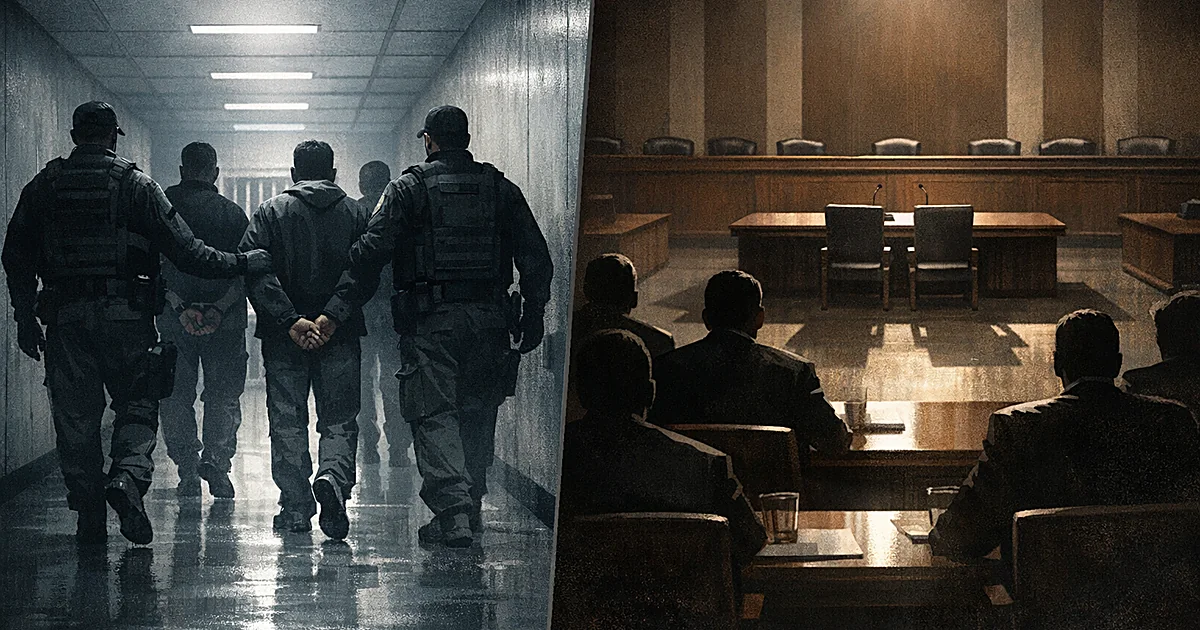
A Secret Service agent wrote in those same documents that "Kandula's acts were calculated to influence or affect the conduct of government by intimidation or coercion, or to retaliate against government conduct." Kandula was charged with depredation of government property and ordered held in detention after a federal court appearance.
Saturday's suspect, by contrast, has not been named. No charges have been publicly announced. His demand, to speak to the president, may sound less threatening than Kandula's explicit statements about seizing power. But a car driven onto a sidewalk beside the White House security barrier is not a polite request for a meeting.
The security incidents near the White House sit alongside direct threats to Trump himself. In July 2024, Thomas Matthew Crooks nearly shot the president in the head during a campaign rally in Butler, Pennsylvania. That assassination attempt, the Correspondents' Dinner shooting, and the vehicle breaches form a pattern that no serious person can dismiss as coincidence or bad luck.
The question hanging over all of it is whether the federal government's security apparatus, from the Secret Service to local law enforcement coordination in the capital, is keeping pace with the threat environment. The agency has drawn scrutiny from multiple directions in recent months, and each new incident near the White House compounds the pressure.
Saturday's driver was stopped, arrested, and removed without anyone getting hurt. The car sweep came back clean. Those are the facts that went right.
But the list of unanswered questions is long. Who is this man? What charges will he face? How did he get a vehicle onto the sidewalk beside a security barrier in the first place? And why does the perimeter around the White House keep failing to deter people from trying?
Amid ongoing controversies involving the White House on multiple fronts, the physical security of the building and its occupants ought to be the one thing everyone in Washington agrees matters.
When the same few blocks keep attracting people who want to breach, ram, or shoot their way closer to the president, the right response is not another statement thanking officers for their "swift actions." It is a hard look at why those officers keep having to act swiftly in the first place.