A federal appeals court ruled Saturday that construction on President Trump's $400 million White House ballroom project can proceed until at least April 17, giving the administration a short but significant reprieve in a legal fight over presidential authority, congressional approval, and the security of the Executive Mansion itself.
The U.S. Court of Appeals for the District of Columbia Circuit voted 2-1 to extend the deadline, temporarily pausing a lower-court injunction that had ordered all work halted. The three-day extension may sound minor. But the reasoning behind it, and the questions the court posed, suggest the judges are taking the administration's national security argument seriously.
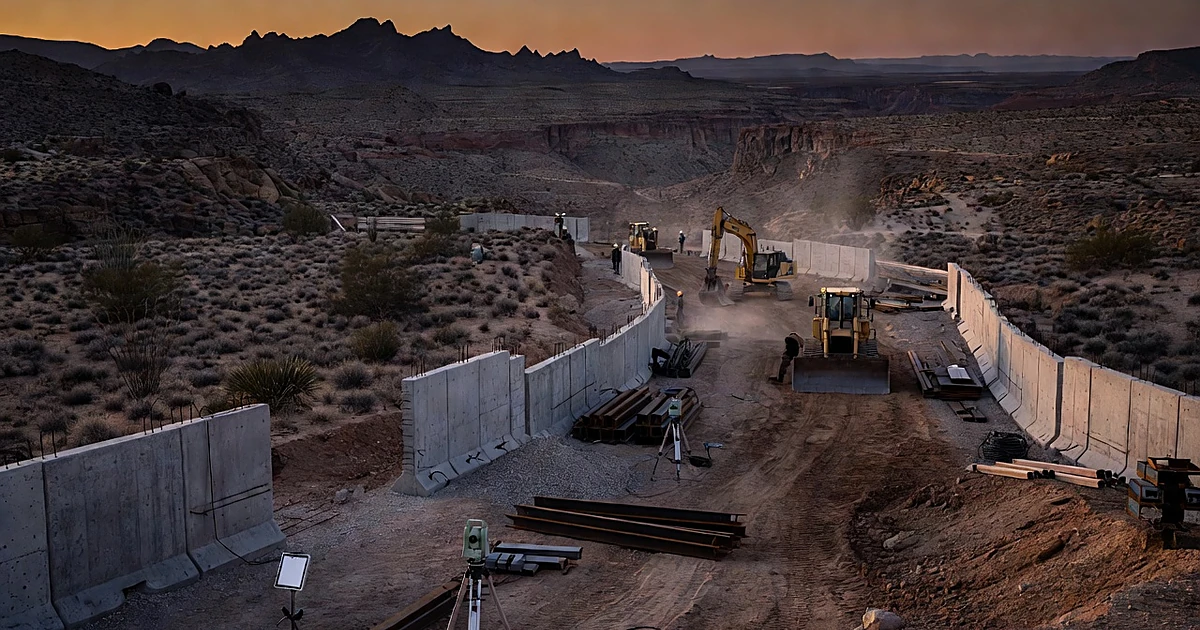
That argument is straightforward: the East Wing has already been demolished. A massive excavation sits adjacent to the Executive Mansion. Stopping work now, Trump's lawyers contend, would leave the president, his family, and staff exposed.
In court filings submitted last week, Trump's legal team laid out the stakes in blunt terms. They argued that a district judge had "ordered the President to halt ongoing reconstruction... leaving a massive excavation and structurally completed site adjacent to the now open and exposed Executive Mansion and threatening grave national-security harms."
The Washington Examiner reported that Trump's lawyers described the ballroom as "a vital project for the safety and security of the White House and the President, his family, and his staff." The project, they said, includes a rebuilt Presidential Emergency Operations Center, the nuclear bunker originally built in the 1940s, along with bulletproof and drone-proof protections.
Trump himself has described the scope of the work. Speaking to reporters aboard Air Force One last month, he said the military is building a large complex beneath the ballroom.
"It's bulletproof, and it's ballistic-proof. It's very thick. It's going 45 feet high, and every window is covered, every door is covered, the roof is drone-proof. We have secure air handling systems. You know, bad things happen in the air."
The administration has also said the project includes bomb shelters, a hospital and medical area, and other top-secret military installations, as Breitbart reported. Trump's team warned that stopping construction "would imperil the President and national security, and indefinitely leave a large hole beside the executive residence."
The legal battle traces back to last year, when the National Trust for Historic Preservation, a nonprofit chartered by Congress to help preserve historic buildings, sued Trump over plans for a 90,000-square-foot White House ballroom. The group's core complaint: Congress was never involved in the decision-making process.
Late last month, Judge Richard Leon, a George W. Bush appointee, sided with the National Trust and imposed a preliminary injunction. His language left no room for ambiguity.
"Unless and until Congress blesses this project through statutory authorization, construction has to stop!"
Leon's stop order was set to take effect April 14. The administration immediately appealed, and the DOJ's swift appeal set the stage for Saturday's ruling.
The appeals court did not fully resolve the dispute. Instead, the panel acknowledged it could not "fairly determine, on this hurried record" whether the injunction should stand. It extended the deadline three days and sent the case back to Judge Leon's court for more information about the national security risks the administration says would result from pausing construction.
The appeals court majority framed the open question carefully. The Washington Times reported the court wrote that "it remains unclear whether and to what extent the development of certain aspects of the proposed ballroom is necessary to ensure the safety and security of those below-ground national security upgrades, or otherwise to ensure the safety of the White House and its occupants while the appeal proceeds."
That language matters. The court did not dismiss the security argument. It asked for more evidence, a signal that the administration's case has enough weight to warrant a closer look before any construction halt takes effect.
The 2-1 split on the panel also signals this is not a settled question among the judges. One member of the three-judge panel dissented, though the specifics of that dissent were not detailed in available reporting.
The pattern of courts engaging seriously with the administration's emergency arguments has become familiar. Trump's legal team has repeatedly found success on emergency appeals, even when lower courts initially ruled against the administration.
The ballroom case sits at the intersection of several questions that have defined Trump's second term. How far does presidential authority extend over White House renovations? Does Congress need to approve construction projects on the grounds of the Executive Mansion? And when the administration claims national security is at stake, how much deference do the courts owe?
The National Trust for Historic Preservation has taken an aggressive posture. Beyond the ballroom lawsuit, the group is also suing the president's team over renovations to the Trump-Kennedy Center. Their argument, that Trump cannot proceed without statutory authorization from Congress, frames the president as overstepping his authority.
But the administration's response reframes the entire debate. This is not about a party venue, they argue. It is about hardening the most important residence in the country against modern threats, drones, chemical attacks, ballistic weapons. The Presidential Emergency Operations Center, a relic of the 1940s, sits below where the East Wing once stood. Rebuilding it is not a luxury. It is, the administration contends, a necessity.
The broader political environment around challenges to Trump's executive power has been contentious. Congressional Democrats have repeatedly sought to constrain the president's authority through legislative maneuvers, while the courts have become the primary arena for these disputes.
Trump has a personal history with this project that predates his presidency. He offered to pay for a White House ballroom during the Obama administration and was turned down. Now, in his second term, he has courted private donors and contributed his own money to make it happen, only to face a lawsuit from a congressionally chartered nonprofit arguing he needs Congress's permission.
The April 17 deadline gives both sides only a few days. Judge Leon's court must now address the appeals panel's questions about how the injunction accounts for White House safety and security concerns. Just The News reported that the earlier halt came from Leon's finding that the administration lacked congressional authorization, meaning the fundamental legal question remains unresolved.
Newsmax noted the ruling was limited and procedural, sending the case back for clarification rather than fully resolving the project's legality. The appeals court wants to know more before it decides whether to let the injunction stand or keep it paused while the full appeal plays out.
Several questions remain unanswered. What specific statutory authorization does Judge Leon believe is required? How will the district court weigh classified national security information against the National Trust's preservation concerns? And if construction is ultimately halted, who bears the cost, and the security risk, of leaving a massive excavation site next to the president's home?
The administration's legal exposure across multiple fronts during Trump's second term has drawn intense scrutiny. Courts, Congress, and advocacy groups have all pressed various legal challenges against the president's agenda, making each procedural win a building block for the larger fights ahead.
For now, the jackhammers keep running. The concrete keeps pouring. And the administration has until Thursday to make its case that protecting the president of the United States should not require an act of Congress.
When a nonprofit's lawsuit could leave a gaping hole next to the leader of the free world's bedroom, the phrase "national security" stops being a legal argument and starts being common sense.