President Trump dismissed NATO as "useless" and told the alliance to "stay away" from the Strait of Hormuz after Iran declared the critical waterway open to commercial shipping, a move that sent crude prices tumbling 10 percent within minutes. The rebuke, delivered on Truth Social, came after NATO reportedly called the White House to offer assistance following a nearly month-long shutdown of the strait that had rattled global energy markets.
The sequence of events moved fast. Iran's foreign minister, Seyed Abbas Araghchi, announced Friday morning on social media that all commercial vessels could now pass through the strait. Crude oil fell more than 10 percent to $82 a barrel. And Trump, rather than welcoming allied support, used the moment to settle a score with an alliance that had refused to back his naval blockade of the waterway.
Trump wrote on Truth Social:
"Now that the Hormuz Strait situation is over, I received a call from NATO asking if we would need some help."
He said he told them to "stay away", accusing NATO members of wanting only to "load up their ships with oil." The message was clear: America handled the crisis alone, and NATO's late interest was unwelcome.
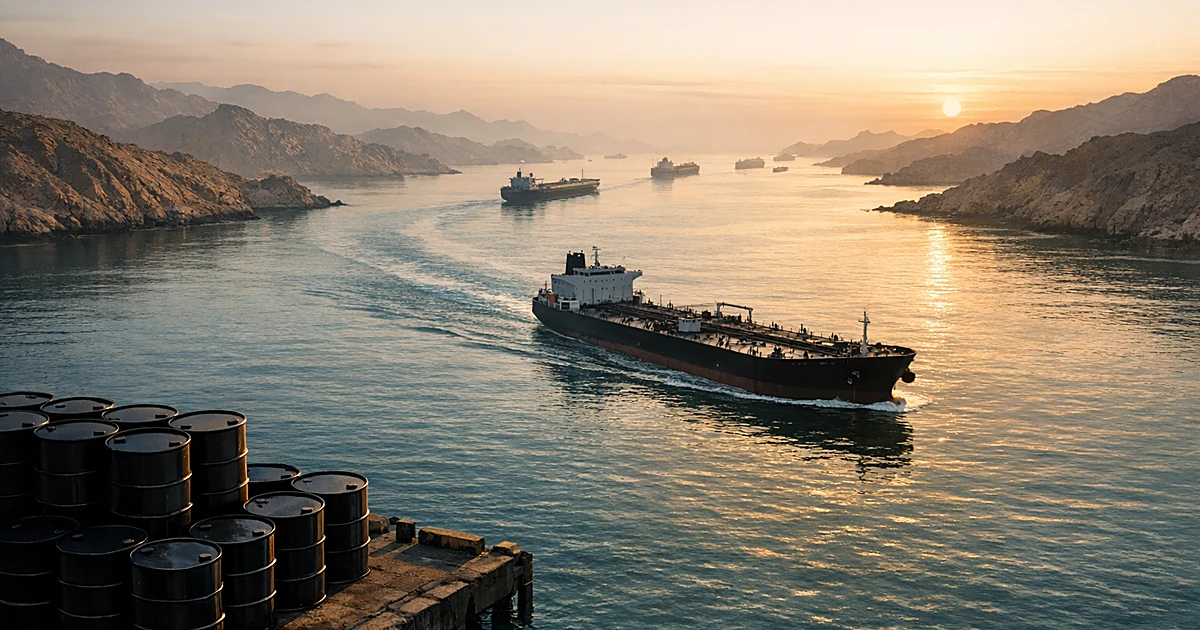
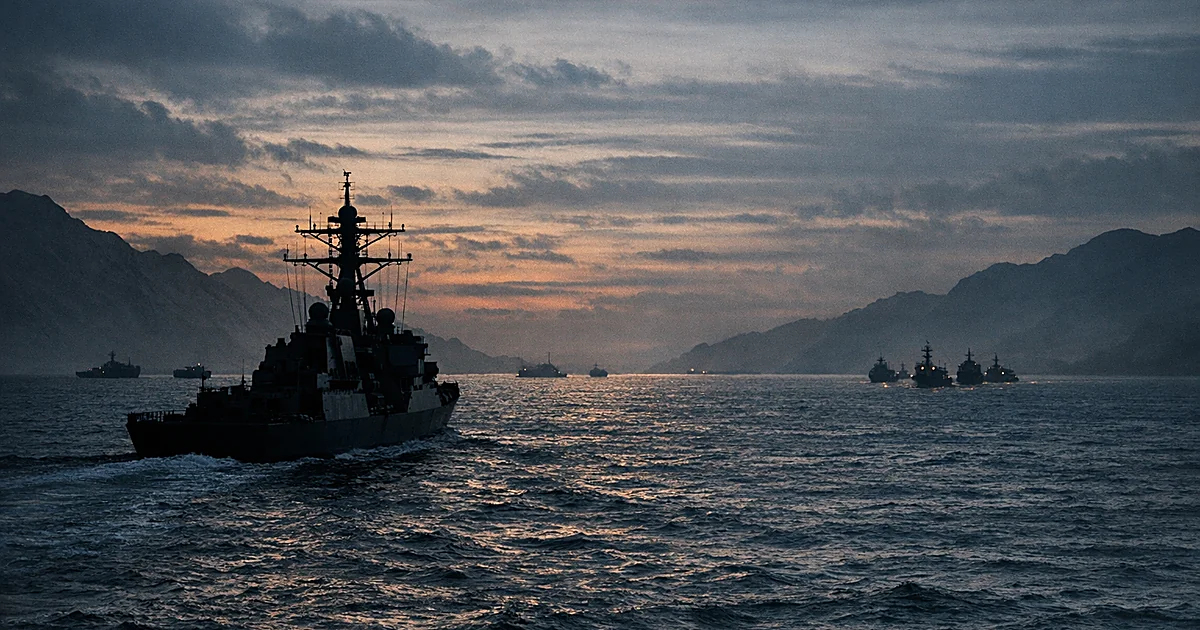
The Strait of Hormuz carries roughly one-fifth of the world's oil supply. When Iran halted nearly all commercial transport through the passageway, a response to U.S. and Israeli strikes on Iranian nuclear facilities, the disruption sent shockwaves through global energy markets. Trump responded by launching a naval blockade after peace talks with Iran collapsed last weekend in Pakistan.
Araghchi's announcement tied the reopening directly to a ceasefire between Israel and Lebanon that Trump had brokered the day before, following a phone call with Israeli Prime Minister Benjamin Netanyahu.
The Iranian foreign minister wrote:
"In line with the ceasefire in Lebanon, the passage for all commercial vessels through Strait of Hormuz is declared completely open for the remaining period of ceasefire, on the coordinated route as already announced by Ports and Maritime Organization of the Islamic Rep. of Iran."
But Trump made clear the opening was not unconditional. He stated that while the strait was "completely open and ready for business and full passage," the U.S. naval blockade would "remain in full force and effect as it pertains to Iran, only, until such time as our transaction with Iran is 100 percent complete." In other words: everyone else sails free, but Tehran stays boxed in.
That distinction matters. The Washington Times reported that the U.S. blockade on Iranian port traffic would remain until a final peace agreement is completed. Trump had earlier warned that gas prices could rise further during the standoff, a prediction that he made publicly when the blockade was first imposed.
The celebration over the reopening was short-lived. Fox News reported that Iran reimposed restrictions on the strait just hours later, after Trump's declaration that the blockade would stay in place. Iran's joint military command said the restrictions would continue "as long as the U.S. continues to block Iranian ports."
Iran's joint military command stated that "control of the Strait of Hormuz has returned to its previous state... under strict management and control of the armed forces." The reversal underscored how fragile the reopening was, and how directly it depended on the leverage Trump's naval presence provided.
The episode illustrated a pattern: Iran moved only when pressure was applied, and retreated the moment it realized the pressure would not be lifted in exchange for a partial concession. That is not the behavior of a regime negotiating in good faith. It is the behavior of a regime testing limits.
Behind the strait drama sits a larger negotiation with enormous stakes. Trump told reporters Thursday that Iran had agreed to hand over its highly enriched uranium, 450 kilograms of 60 percent enriched material that the administration considers a primary objective. Trump claimed the uranium had been buried following U.S. airstrikes on key Iranian nuclear facilities last year.
Axios, as cited in reporting on the talks, said Washington was weighing a proposal to release roughly $20 billion in frozen Iranian funds in exchange for Tehran surrendering its uranium stockpile. Trump denied that any money would change hands.
"No money will exchange hands in any way, shape, or form."
He added that "this process should go very quickly in that most of the points are already negotiated." Trump had previously said he believed the Iran conflict was very close to being over, with Tehran eager to negotiate.
A second round of U.S.-Iran talks was expected this weekend. A source familiar with the mediation efforts said negotiations would take place Sunday in Islamabad, with Pakistan continuing to serve as a go-between. The talks come before a two-week ceasefire approaches its expiration on Tuesday.
Trump said he was willing to extend the temporary ceasefire beyond the April 21 deadline if peace talks progress, a signal that the administration sees momentum but is not willing to give away leverage prematurely.
The reopening of the strait was linked explicitly to the 10-day ceasefire Trump brokered between Israel and Lebanon. Iran had previously insisted the waterway would only fully reopen if Israel agreed to a ceasefire in Lebanon, and Trump delivered one.
Breitbart reported that the ceasefire followed more than a month of fighting involving Hezbollah, the Iran-backed group that has operated in Lebanon for decades. Trump's statement on the ceasefire was blunt: "Israel will not be bombing Lebanon any longer. They are prohibited from doing so by the USA. Enough is enough!!!"
He also stated the current peace deal would be "in no way subject to Lebanon, either, but the USA will, separately, work with Lebanon, and deal with the Hezbollah situation in an appropriate manner." The administration appears determined to keep the Iran nuclear track and the Lebanon situation on separate rails, a strategy that avoids giving Tehran additional leverage by bundling issues together.
Trump's sharpest words were reserved not for Iran but for NATO. The alliance refused to back the U.S. naval blockade of the strait, leaving American forces to enforce it alone. When the crisis appeared to ease, NATO called to offer help, a sequence Trump found worth mocking publicly.
The episode fits a broader pattern of tension between Trump and the transatlantic alliance. Even some establishment Republicans have pushed back on Trump's confrontational posture toward NATO. But the facts of this particular episode make the president's frustration harder to dismiss: the U.S. bore the cost and risk of the blockade, and NATO showed up only after the pressure worked.
Oil prices told the story in real time. Just The News reported that crude fell from a recent high of $112 a barrel on April 6 to just over $81 following the reopening announcement, a drop that translates directly into relief for American consumers and businesses. That relief came because of American naval power, not a committee vote in Brussels.
Trump also referred to the waterway as the "Strait of Iran", a rhetorical choice that underlined his view that Iran's control over the passage is the core issue. Iran has demanded full control over the strait, including the ability to tax foreign oil tankers, a position the administration has rejected.
Several significant questions remain unanswered. Which NATO official called Trump, and what exactly was offered? What are the precise terms of the Israel-Lebanon ceasefire? Will the Sunday talks in Islamabad produce a framework, or will they collapse like last weekend's round? And will Iran's reimposition of restrictions on the strait hold, or will the regime reverse course again under pressure?
The administration is moving aggressively on multiple fronts, and the Iran situation is no exception. Trump has staked out a position that trades short-term risk for long-term leverage, and so far, the results are landing on his side of the ledger.
When the world's most important shipping lane shuts down and one country reopens it with its own navy, that country doesn't need a permission slip from Brussels. It needs allies who show up before the crisis is over, not after.