President Donald Trump told NATO to "stay away" after the alliance contacted him to offer help in the Strait of Hormuz, help that arrived, in Trump's view, only after the crisis had already passed and the United States had handled it alone.
The exchange, which Trump disclosed Friday on Truth Social, came the same day Iran announced it had fully reopened the strait to commercial vessels. Trump made clear the gesture did not impress him.
Newsmax reported that Trump wrote on Truth Social: "Now that the Hormuz Strait situation is over, I received a call from NATO asking if we would need some help." He followed with a blunt dismissal in capital letters:
"I TOLD THEM TO STAY AWAY, UNLESS THEY JUST WANT TO LOAD UP THEIR SHIPS WITH OIL. They were useless when needed, a Paper Tiger!"
The post capped weeks of escalating frustration between the White House and America's transatlantic allies over what Trump views as their failure to stand beside the United States during the confrontation with Iran. And it raises a question that European capitals would rather not answer: if NATO cannot muster the will to help secure a waterway that carries one-fifth of the world's oil supply, what exactly is the alliance for?
Even with Iran declaring the strait open again, Trump said the U.S. blockade on Iranian ships and ports "will remain in full force" until Tehran reaches a deal with the United States, including on its nuclear program. The reopening of the waterway, in other words, did not end the broader standoff.
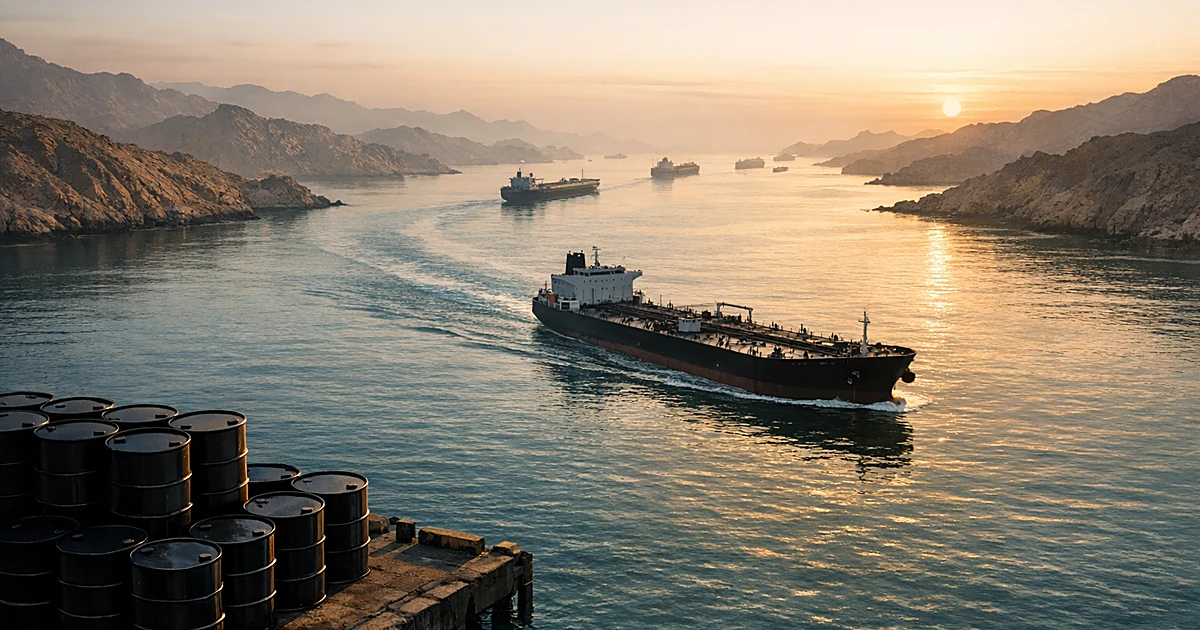
The Strait of Hormuz, a narrow passage between Iran and Oman, is one of the most strategically important chokepoints on earth. Roughly one-fifth of global oil supply passes through it. When Iran moved to restrict access, Trump called on NATO allies to help ensure safe passage for tankers. The response, by his account, was silence, until the problem resolved itself.
That timeline matters. Trump did not reject allied help out of isolationism. He rejected it because it came late. At a Turning Point USA event, the Washington Examiner reported, Trump compared NATO's post-crisis offer to a campaign contribution made after an election is already won. "And NATO, after we won, that doesn't count either, it's the same thing," he said.
British Prime Minister Keir Starmer drew particular fire from Trump. Starmer initially declined Trump's request to use U.K. military bases for strikes on Iran, citing possible international law violations. But after Iran retaliated in March, Starmer reversed course and allowed the U.S. to use Royal Air Force base Fairford for what were described as "defensive" strikes.
The reversal did not earn Starmer any goodwill. When the British prime minister later offered to send two aircraft carriers to the Gulf, Trump rejected the gesture outright. In an earlier Truth Social post, Trump wrote:
"That's OK, Prime Minister Starmer, we don't need them any longer, But we will remember. We don't need people that join Wars after we've already won!"
The pattern, refuse to help, then scramble to participate once the hard part is over, is precisely the dynamic that has fueled Trump's long-running critique of the alliance. It is also the pattern that prompted even some Republicans to weigh in on NATO's future, with Senate Minority Leader Mitch McConnell breaking with the president to defend the alliance.
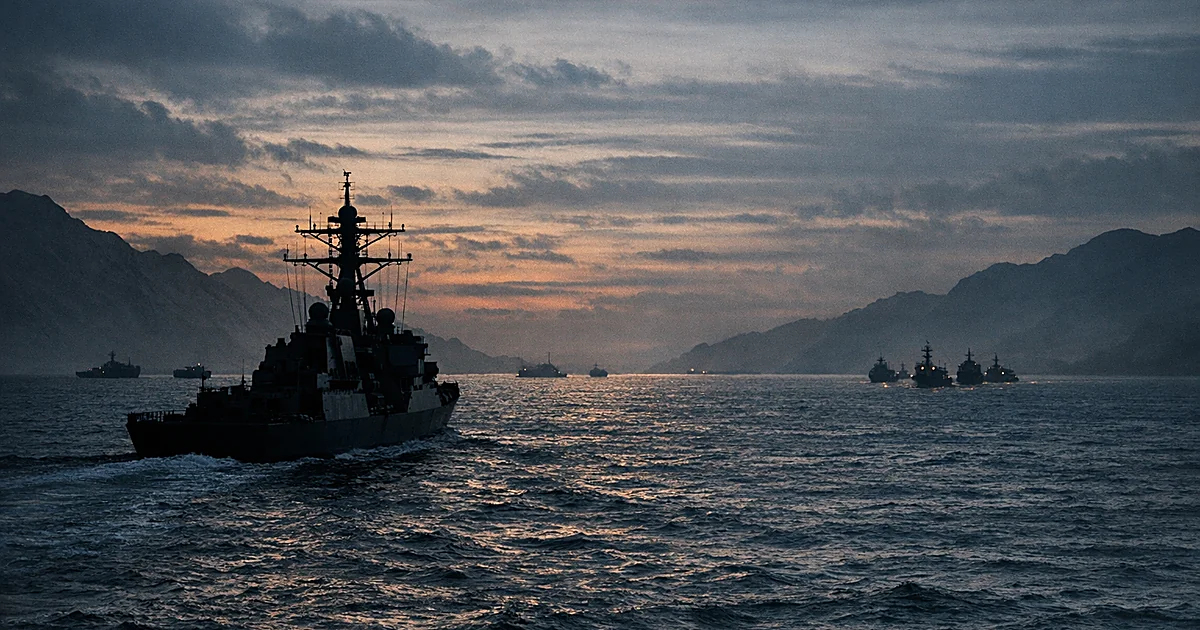
French President Emmanuel Macron and Starmer, meanwhile, announced they would press forward with a separate international mission to restore maritime security in the strait. Starmer said the mission would be deployed "as soon as conditions allow." Military planners are set to meet in London next week. A prior meeting in Paris drew about 50 countries and international organizations, Fortune reported.
France and the U.K. described the planned multinational fleet as "strictly defensive." But the timing is awkward. The mission was announced after Trump had already urged allies to join a similar coalition, and after they had declined.
NATO Secretary-General Mark Rutte offered a partial admission during a speech last week at the Reagan Institute's Center for Peace Through Strength in Washington, D.C. Rutte said the alliance had been "a bit slow" in supporting U.S. efforts against Iran, though he added that Trump bore some responsibility for not informing allies ahead of time.
That concession did not calm the waters. Breitbart reported that even after a private meeting with Rutte, Trump posted that NATO "wasn't there when we needed them." White House press secretary Karoline Leavitt confirmed that Trump had discussed the possibility of leaving NATO with the secretary-general directly.
"They were tested, and they failed," Leavitt said, quoting the president's assessment of the alliance.
Trump's anger extends beyond the Hormuz crisis itself. Some NATO allies, including Spain and France, reportedly forbade or restricted use of their airspace or joint military facilities during U.S. operations against Iran. That kind of obstruction, from treaty partners who expect American protection under Article 5, is what drives the "paper tiger" label.
The White House is not merely venting. The New York Post reported that Trump is weighing concrete steps to punish NATO members he believes failed the United States during the Iran conflict. One proposal would withdraw U.S. troops from countries deemed unhelpful, with Spain and Germany specifically mentioned as possible locations for base closures.
Trump has also publicly mused about pulling the United States out of NATO entirely. "I was never swayed by NATO," he told The Daily Telegraph, as Fox News reported. "I always knew they were a paper tiger, and Putin knows that too, by the way."
Whether Trump follows through on withdrawal remains an open question. But the threat itself reshapes the alliance's internal politics. European leaders now face a president who does not merely grumble about burden-sharing, he names names, keeps score, and signals consequences. The usual diplomatic formula of vague pledges and delayed action no longer buys goodwill in Washington.
The broader pattern of Trump moving on from relationships he views as broken is not limited to foreign policy. Domestically, the president has shown a similar willingness to cut ties when loyalty or competence falls short of his expectations.
The Strait of Hormuz episode laid bare a structural problem that predates Trump. NATO was designed as a collective defense pact. Its credibility depends on the premise that an attack on one is an attack on all. But when the world's most important oil chokepoint was threatened, most of the alliance sat on its hands.
Trump's critics will say he provoked the crisis with Iran in the first place. His supporters will note that the crisis is exactly the kind of scenario NATO was built to address, and that the alliance's absence proved his point. Either way, the result is the same: the United States acted alone, the strait reopened, and NATO showed up afterward asking if anyone needed a hand.
Starmer's trajectory is especially telling. He refused to help, cited international law, reversed himself when Iran escalated, offered aircraft carriers too late, and now plans a defensive mission alongside Macron. That is not an ally acting from conviction. It is a leader reacting to events he never tried to shape.
The domestic political fallout from Trump's Iran posture continues to generate sharp debate in Washington. But overseas, the more pressing question is whether NATO can survive a president who has concluded the alliance adds nothing when it matters most.
Trump's blockade of Iranian ships and ports remains in place. The deal he demands, covering Iran's nuclear program, has not materialized. Military planners will meet in London. European leaders will issue statements. And the United States will continue doing what it did before NATO called: handling the problem itself.
An alliance that only shows up after the fight is over is not an alliance. It is a mailing list.