President Donald Trump said Wednesday that the war with Iran is "very close to being over," describing a regime weakened by American military action and eager to return to the negotiating table, a striking claim that came as U.S. officials across multiple forums signaled preparations for renewed talks within days.
In excerpts from a pre-recorded Fox Business interview with Maria Bartiromo, Trump laid out his case that the combination of airstrikes and a naval blockade had left Tehran with no viable path forward except a deal. The White House amplified clips of the interview on X Tuesday evening, hours before its scheduled broadcast.
The president's message was blunt and direct: Iran can negotiate or face continued devastation.
Trump framed the military campaign as a necessary response to Iran's nuclear ambitions. He told Bartiromo that he redirected resources toward Iran because the alternative was unacceptable.
"I had to divert because if I didn't do that, right now you would have Iran with a nuclear weapon. And if they had a nuclear weapon, you would be calling everybody over there, and you don't want to do that."
When Bartiromo asked whether the war was over, Trump did not hesitate. "I think it's close to over, yeah. I mean, I view it as very close to over," he said. He then added a warning that doubled as leverage: "If I pulled up stakes right now, it would take them 20 years to rebuild that country. And we're not finished. We'll see what happens. I think they want to make a deal very badly."
That 20-year figure was not idle talk. The Washington Examiner reported that U.S. Central Command confirmed the naval blockade of Iranian ports has been fully implemented and has halted maritime trade tied to roughly 90 percent of Iran's economy. Vessels attempting to reach Iranian ports have been turned back. Shipping patterns have already begun to shift.
Trump went further in a separate exchange with the New York Post, saying the U.S. military could destroy Iran's bridges and power plants "in one hour" if negotiations fail. He told the Post earlier Tuesday that discussions "could be happening over the next two days" and that the United States was "more inclined" to return to Islamabad for another round of talks.
The backdrop to Trump's optimism is a set of negotiations that came tantalizingly close, and then fell apart. Over the weekend, from Saturday into early Sunday, roughly 21 hours of Pakistan-mediated talks took place in Islamabad. The sessions marked the first direct engagement between Washington and Tehran in decades.
Vice President JD Vance led the U.S. delegation. He described the atmosphere as serious but cautious. At a Turning Point USA event Tuesday, Vance explained that the president has no interest in half-measures.
"He doesn't want to make... a small deal. He wants to make the grand bargain. That's the trade that he's offering."
The administration's stated terms were sweeping: Iran would permanently abandon its nuclear ambitions and end support for terrorism. In exchange, the United States would offer full economic normalization, allowing Iran, in Vance's word, to "thrive" in a way it hasn't "in my entire life." Any agreement would require Tehran to relinquish its enriched uranium stockpile and accept strict verification measures.
But the talks collapsed. Newsmax reported that Vance left Islamabad without a deal after Tehran insisted on long-term uranium enrichment rights. Vance himself said Iran's delegation lacked the authority to finalize an agreement and needed to return to Tehran for approval.
The administration rejected reports that negotiators had explored a long-term freeze on Iran's enrichment program. Trump made his position clear Monday at the White House: "I've been saying they can't have nuclear weapons. So I don't like the 20 years." A freeze, in other words, was not the same as permanent dismantlement, and the president was not buying.
The president's willingness to set firm terms on major institutional questions has been a consistent theme of this administration, whether the subject is the Supreme Court or the Middle East.
While diplomats talked, the U.S. military acted. On Monday, the United States moved forward with a naval blockade targeting Iranian ports. Trump framed the move as necessary to counter what he described as Tehran's attempt to "blackmail" global energy flows through the Strait of Hormuz.
The economic pressure is real. With 90 percent of Iran's economy tied to the maritime trade now halted by the blockade, the regime faces a choice between negotiation and slow economic strangulation. Just The News reported that Trump claimed the U.S. has "totally" beaten the Iranian regime and that the damage has been extensive enough to require decades of rebuilding.
This is the leverage the administration wants. Deputy White House Chief of Staff Stephen Miller put it in plain terms on Fox News Tuesday night.
"President Trump has put Iran in a box. He's played the checkmate move. America wins."
Miller described the strategy as placing the United States in a "win-win posture", either Iran agrees to dismantle its nuclear program and receives economic relief, or the military and economic pressure continues to degrade the regime's capacity.
The signals Tuesday pointed toward renewed engagement. U.N. Secretary-General António Guterres said it was "highly probable" talks would restart. Trump credited Pakistan's Field Marshal Asim Munir with helping facilitate the original Islamabad negotiations. Mediators were reportedly working to extend a ceasefire and set up another round.
Vance, for his part, acknowledged the difficulty while expressing measured confidence. "There's a lot of mistrust... you're not going to solve that overnight," he said. But he added: "I think the people we're sitting across from wanted to make a deal."
In a separate Fox News interview Monday, Vance said "a lot of progress" had been made and that "the ball really is in [the Iranians'] court." The vice president's tone suggested the administration believes it holds the stronger hand, and is willing to wait.
Trump reinforced that message Monday at the White House, saying the United States had been contacted by the "right people" in Iran who "would like to make a deal, very badly." He added the caveat that has defined his approach from the start: if Tehran does not agree to abandon its nuclear ambitions, "there's no deal."
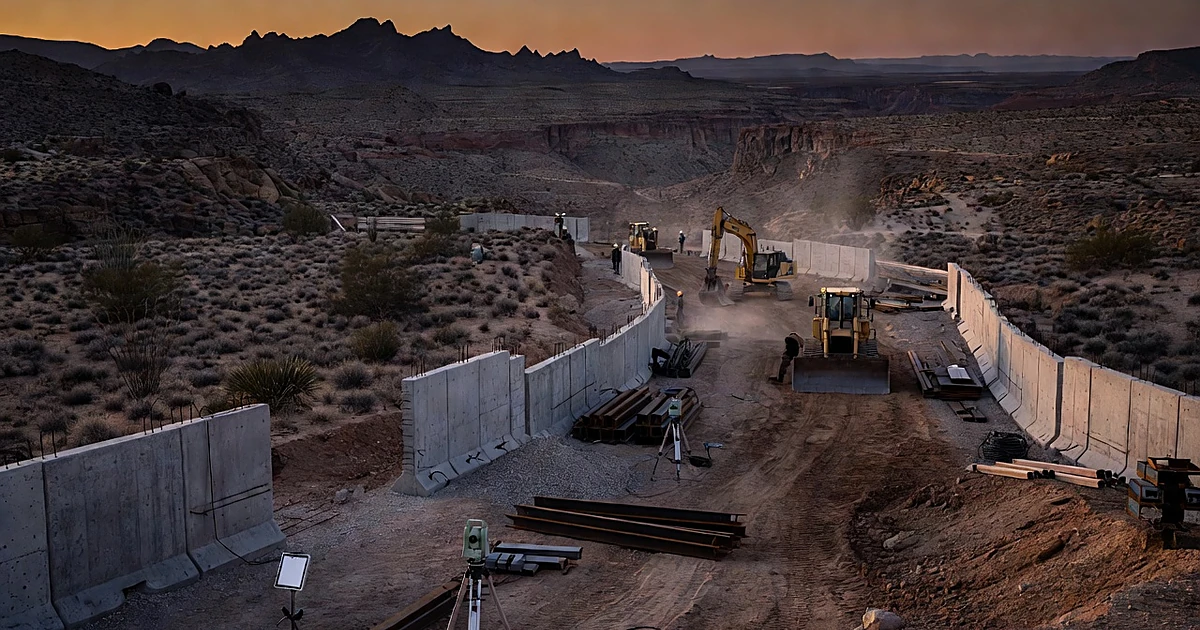
The White House has been busy on multiple fronts in recent weeks, from national security construction projects to this high-stakes diplomatic push. The Iran file, though, carries consequences that dwarf any domestic dispute.
For all the optimism, significant questions hang over the situation. The exact terms discussed during those 21 hours in Islamabad remain unclear. The specific ceasefire arrangements, between which parties, under what conditions, have not been publicly detailed. And Iran's internal decision-making process, which Vance cited as the reason talks stalled, remains opaque.
The administration's insistence on permanent dismantlement rather than a freeze sets a high bar. Whether Tehran's leadership can accept those terms, or whether hardliners inside the regime will block any agreement, is the central unknown.
There is also the question of verification. Vance said any deal would require Iran to hand over its enriched uranium stockpile and submit to strict monitoring. That demand echoes lessons learned from years of failed agreements in which Iran exploited ambiguity to continue its program. This time, the administration appears determined not to repeat those mistakes.
The security environment around the White House itself has been a recurring concern, a reminder that the stakes of presidential decision-making extend far beyond any single negotiation.
The pattern is now clear. The Trump administration used military force to create leverage, imposed a blockade to tighten the economic vise, and sent its vice president to the table with maximalist demands. When Iran's negotiators couldn't deliver, the U.S. walked away, and then publicly signaled willingness to come back.
It is a strategy built on pressure, not patience. And it stands in sharp contrast to the approach of previous administrations, which spent years pursuing incremental agreements that left Iran's nuclear infrastructure largely intact. The Obama-era deal, in particular, allowed Iran to continue enriching uranium under limits that were set to expire, a framework Trump has long rejected.
Whether Tehran's leadership reads the situation the same way Washington does will determine what happens next. Potential meetings were reported as possible as early as the end of this week. The administration has made its offer. The regime has to decide whether to take it.
For years, the foreign-policy establishment insisted that pressure campaigns against Iran wouldn't work, that only careful, incremental diplomacy could move the needle. The regime's apparent eagerness to return to the table suggests the establishment had it exactly backward.