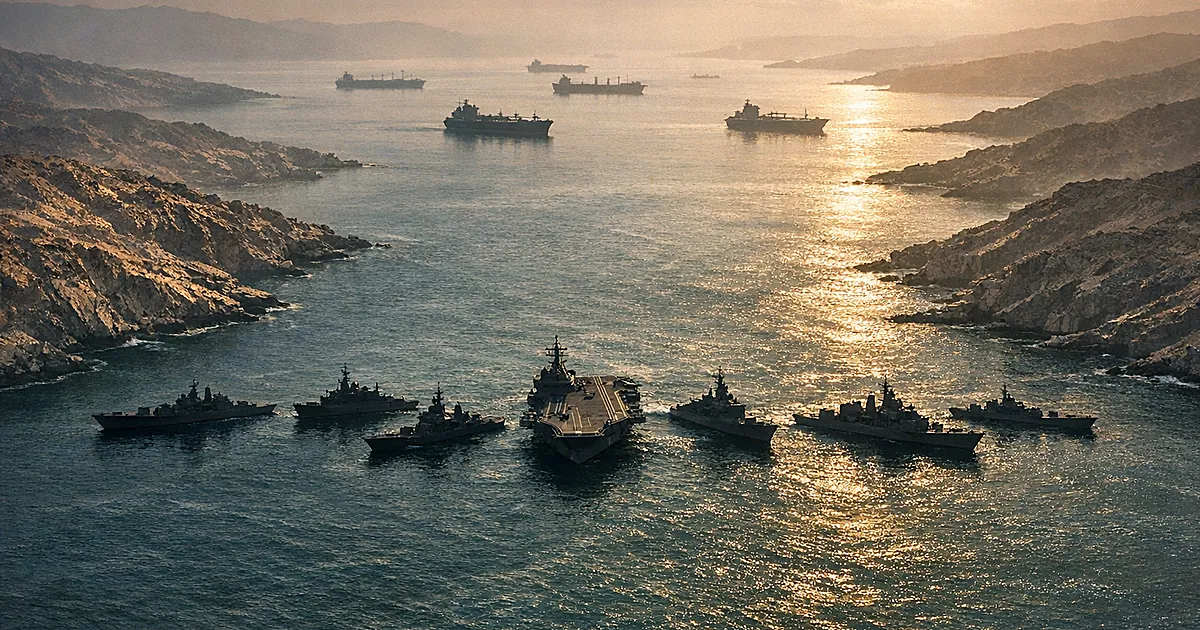
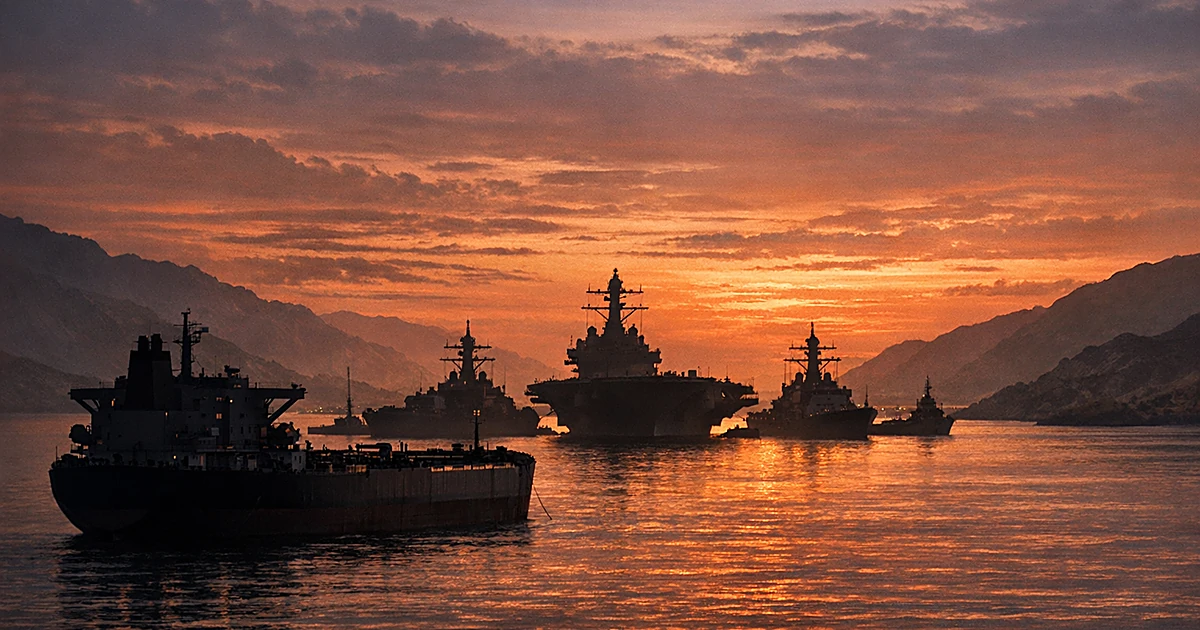
Two U.S. Navy guided-missile destroyers moved into the Arabian Gulf and Strait of Hormuz on Saturday to begin setting conditions for a massive mine-clearing operation, a direct follow-through on President Donald Trump's demand that the critical waterway reopen as a precondition for any ceasefire with Iran.
The USS Frank E. Peterson and USS Michael Murphy are now on station, and U.S. Central Command said additional forces, including underwater drones, will deploy to the strait in the coming days. CENTCOM commander Adm. Brad Cooper announced the operation publicly on Saturday.
The mission matters for one simple reason: roughly one-fifth of global energy supplies transit the Strait of Hormuz, the narrow channel connecting the Persian Gulf and the Gulf of Oman. When mines block that passage, the world's energy markets feel it. And right now, the mines are there because Iran's Islamic Revolutionary Guards Corps put them there.
The New York Times, citing unnamed U.S. officials, reported that IRGC members dropped mines from small boats in the strait in the immediate aftermath of the initial strikes on Iran by Israel and the United States. The paper described the deployment as "haphazardly" executed, a word that carries its own operational risk.
By Friday, reports indicated the American government does not believe the remnants of the regime in Tehran are entirely sure about the location of all the mines its forces dropped. Whether Iran recorded every mine's position, or whether some were deployed in a manner that allowed them to drift, remains unknown.
That uncertainty is the whole problem. A mine whose location is known can be avoided or neutralized. A mine whose location is unknown, or that has drifted from its original position, is a threat to every tanker, cargo vessel, and warship that enters the waterway. The IRGC's reckless deployment turned one of the world's most important shipping lanes into a hazard zone, and the U.S. Navy is now left to clean it up.
Opening the Strait of Hormuz was a key condition laid out by President Trump earlier this week in exchange for a ceasefire. That demand reflected a straightforward calculation: there is no point in halting military operations if the economic chokepoint remains sealed by Iranian ordnance. Trump had previously suspended bombing operations and offered a two-week ceasefire tied specifically to the strait's reopening, making Saturday's naval deployment the operational next step.
On Truth Social Saturday, Trump framed the broader situation in blunt terms:
"The Strait of Hormuz will soon be open, and the empty ships are rushing to the United States to 'load up.' But, if you listen to the Fake News, we're losing!"
In a separate post, the president wrote that "the United States has completely destroyed Iran's Military, including their entire Navy and Air Force, and everything else."
Those claims will be debated. But what cannot be debated is the fact that two American destroyers are now operating in the strait, CENTCOM has publicly committed additional assets including underwater drones, and the Navy, not Iran, is the force moving to restore safe passage for international commerce.
The CENTCOM commander's statement on Saturday was precise and forward-looking. Adm. Brad Cooper said:
"Today, we began the process of establishing a new passage, and we will share this safe pathway with the maritime industry soon to encourage the free flow of commerce."
That language, "share this safe pathway with the maritime industry", signals the Navy intends to chart and clear a verified route through the strait, then publish it for civilian shipping. It is a practical, operational promise, not a political one. The maritime industry needs a lane it can trust, and Cooper is telling them one is coming.
The political backdrop in Washington, meanwhile, has been anything but calm. Some Democratic leaders have used the Iran conflict to escalate attacks on the president's fitness for office, even as the administration pursues both military and diplomatic tracks simultaneously.
While the Navy began mine operations in the strait, American and Iranian negotiators sat down for peace talks in Islamabad on Saturday. Pakistani Prime Minister Shehbaz Sharif hosted the discussions at the Serena Hotel.
Vice President JD Vance led the American delegation, joined by White House envoy Steve Witkoff and Jared Kushner, the president's son-in-law. The Iranian delegation was led by Tehran parliamentary speaker Mohammad Bagher Ghalibaf. Both delegations met with Sharif.
The dual-track approach, military pressure in the strait, diplomatic engagement in Pakistan, is the kind of posture that previous administrations talked about but rarely executed with this kind of speed. Trump laid down a condition. The Navy moved. And the talks opened the same day. Critics from various quarters have questioned the pace and risks of the Iran confrontation, but the administration is clearly operating on multiple fronts at once.
Mine warfare is slow, dangerous, unglamorous work. It does not produce the dramatic footage of missile strikes or carrier operations, but it is among the most consequential missions a navy can undertake. A single uncleared mine can sink a tanker, shut down a shipping lane, and spike energy prices overnight.
The challenge is compounded by the IRGC's apparently chaotic deployment. Mines dropped without precise records, or dropped in ways that allowed them to drift, create a problem that cannot be solved by satellite imagery or signals intelligence alone. It requires ships, divers, and unmanned systems working methodically through the waterway.
And America's allies may not be in a position to help as much as one might expect. Earlier this year, the United Kingdom retired its fleet of minesweeping boats before its next generation of sweepers were ready to come online. That gap in British capability means the burden falls even more squarely on the U.S. Navy. While institutional debates play out in Washington and the courts, the operational reality in the Persian Gulf is straightforward: American sailors are doing the work.
CENTCOM has promised additional forces in the coming days. The underwater drones will be essential for surveying the seabed and identifying mines that may have shifted position since the IRGC dropped them. The two destroyers currently on station provide force protection, they are not minesweepers, but their presence ensures the clearing operation can proceed without interference.
Several questions remain unanswered. How many mines did the IRGC actually deploy? Does Tehran have any records of their placement? Will Iran cooperate with the clearing effort as part of the ceasefire framework, or will the Navy have to proceed blind? And how long will it take before Adm. Cooper can deliver on his promise to share a safe passage with the maritime industry?
The Islamabad talks add another layer of uncertainty. The composition of both delegations, Vance, Witkoff, and Kushner for the Americans; Ghalibaf for the Iranians, suggests both sides sent figures with real authority. But talks can stall, and mines do not negotiate. The administration is managing multiple high-stakes decisions simultaneously, and the Strait of Hormuz operation is one where failure carries immediate, tangible consequences for global energy markets.
Iran's Revolutionary Guards mined the world's most important oil chokepoint in haste and without apparent care for the consequences. Now American sailors are in the water fixing it. That tells you everything you need to know about who builds order and who destroys it.