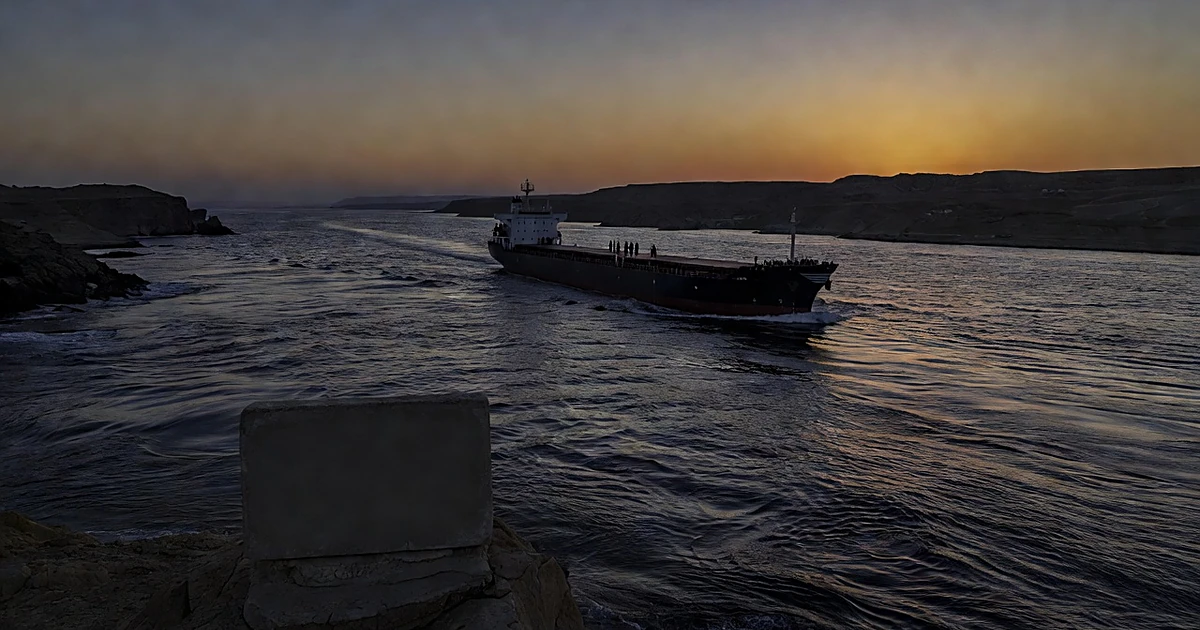
President Trump labeled the Strait of Hormuz the "Trump Strait" on Truth Social after Iran floated conditions to reopen the waterway, a clear signal as missiles and demands keep flying.
Early Saturday morning, President Donald Trump posted an image of the Strait of Hormuz on his Truth Social platform with the waterway marked "Trump Strait." The move came shortly after Tehran put forward a proposal to reopen the chokepoint and restart nuclear talks.
The Associated Press reported the post as the first public indication of Trump's thinking after Iran's offer, which arrived amid ongoing pressure on the regime and fresh claims of Houthi missile fire toward Saudi Arabia.
Iranian Foreign Minister Abbas Araghchi laid out Tehran's terms to journalists Friday night. Iran said it would reopen the Strait of Hormuz and resume nuclear talks within seven days if the United States lifts a naval blockade of Iranian ports, waives sanctions on Iranian oil sales, and observes a ceasefire that would include Lebanon.
The White House on Friday said only that U.S. officials were having positive and constructive conversations with mediators on the Iran war. Trump's map arrived after that careful line, and after Iranian President Masoud Pezeshkian left New York for Tehran following the annual U.N. gathering.
Semiofficial Iranian media reported Pezeshkian's departure. In New York he had pushed back against Trump's earlier threat to "annihilate" the Islamic Republic, while still saying Tehran remains open to diplomacy.
Breitbart noted the same sequence: Trump's early Saturday image of the Strait of Hormuz labeled "Trump Strait" followed Iran's proposal and marked his first public signal after the deal terms surfaced.
Indirect talks between Iran and the United States had already run for hours earlier in the week. The United States has continued economic pressure on Tehran. Iran's conditions would reverse key parts of that pressure and expand a ceasefire beyond Iran itself.
Trump has kept a high public profile through other recent episodes, including a state dinner for Xi Jinping that drew its own attention to how he stages high-stakes diplomacy.
The Washington Examiner reported that the Truth Social map depicted the Strait of Hormuz as a "new U.S. territory," following Trump's recent suggestion to declare the strait U.S. territory amid the conflict with Iran.
Just The News described the graphic as a "Trump Strait" map posted in place of the Strait of Hormuz and said it was shared to troll Iran after the regime's offer, while also noting Trump has teased a possible renaming as part of any deal.
Those accounts sit beside the wire report's plainer description of the labeled image and its timing. The post itself carried the name "Trump Strait" on the waterway that carries a large share of the world's oil traffic.
Early Saturday, Saudi military spokesperson Maj. Gen. Turki al-Malki claimed a ballistic missile launched by Iran-backed Houthi rebels was intercepted and destroyed. He said it was fired toward Khamis Mushait in southwestern Saudi Arabia.
The Associated Press said it could not immediately verify the intercept claim independently. The Houthis issued no immediate statement of responsibility, which can take days.
The Gulf Cooperation Council condemned the latest Houthi attacks as a "grave escalation and threat to regional security" and urged the international community to respond.
Readers tracking Trump's orbit have also seen sharp fights over access and messaging, including when the White House barred CNN from Air Force One for a Tennessee trip after a court fight over ground access.
Iraq's prime minister's office said Baghdad is in direct contact with the United States to secure exemptions from sanctions on Iranian airlines. The goal, it said, is humanitarian flights for medical treatment, education, and religious pilgrimages to sites such as Karbala and Najaf.
In the occupied West Bank, Israeli settlers intensified efforts to seize natural springs and heritage sites. In the Jordan Valley, settlers cut a water pipe to a Palestinian village and redirected it to a pool named after Herod. Israeli rights groups say the move fits a broader push to claim heritage sites. About 2.8 million Palestinians live in the West Bank, where water shortages have been a fact of life since 1967.
Those local fights sit far from the Hormuz map, but they show the same region under strain while diplomats talk and missiles get claimed as shot down.
Trump-centered stories keep drawing intense public interest, from a man who allegedly drove onto a sidewalk near the White House demanding to speak to him, to sharper political arguments inside his own coalition.
Friday's White House line stayed measured: positive and constructive talks with mediators. Friday night brought Iran's public conditions. Early Saturday brought Trump's map and the Saudi intercept claim.
Iran wants the blockade lifted, oil sanctions waived, and a ceasefire that reaches Lebanon, then says the strait and nuclear talks can move within a week. Trump answered with a renamed waterway on the map the world already watches for oil and war risk.
Inner-circle turbulence has followed other Trump chapters this cycle, including when Tucker Carlson's son left Vance's press team as a wider rift deepened. The Hormuz post cut through that noise with a simple label.
Pezeshkian left New York saying diplomacy remains open even after rejecting the tone of Trump's "annihilate" threat. Araghchi put a price on reopening the strait. Trump put his name on it.
Strong nations name the ground they refuse to surrender, and weak ones keep listing conditions while their proxies fire.