Bodycam footage from a Newport News elementary school captures a 6-year-old cursing at staff and daring officers after he shot his teacher, and a jury later hit the assistant principal with a $10 million verdict for ignoring warnings that could have stopped it.
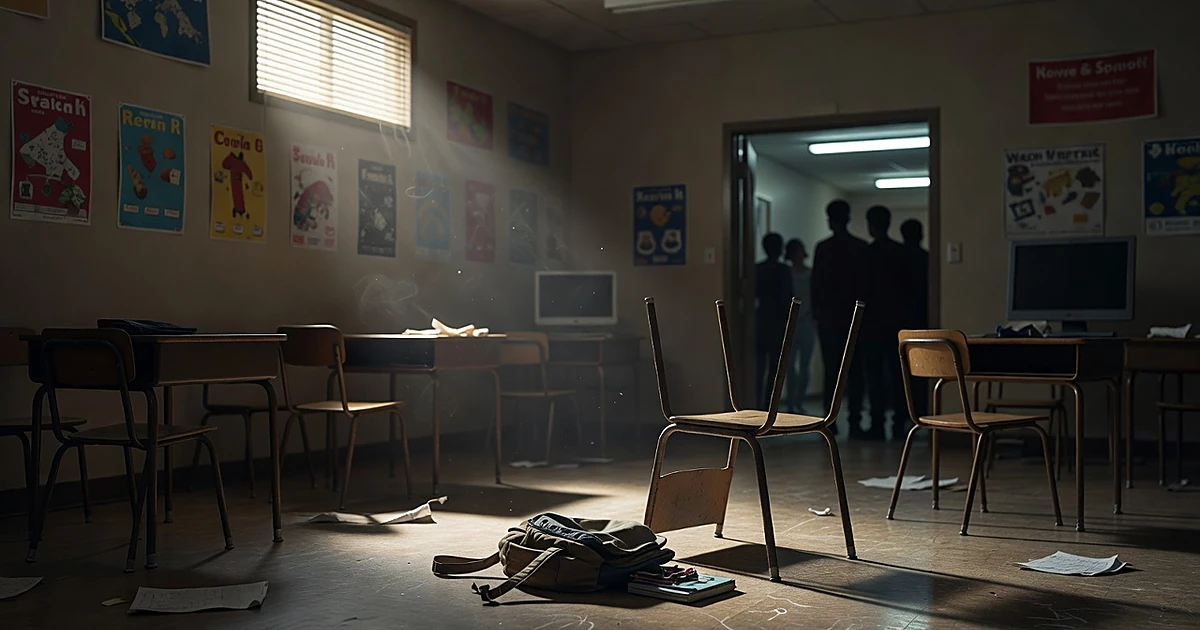
On Jan. 6, 2023, first-grader J.T. pulled a 9 mm Taurus handgun from his jacket pocket during an afternoon reading class at Richneck Elementary School in Newport News, Virginia, and fired a single round at teacher Abby Zwerner from about 10 feet away, striking her hand and chest in front of 16 students.
Reading specialist Amy Kovac rushed in after hearing the gunshot and seeing blood on the teacher, restrained the boy in a bear hug, and called 911. Police bodycam obtained by local outlets and detailed in a New York Post report shows what happened next: a child still swearing, threatening adults, and showing no fear of jail.
Officers recovered the handgun on the classroom floor roughly 15 to 20 feet from the boy. Radio traffic captured the grim line, “We have the shooter,” followed by questions about the child’s age and a request for small handcuffs. Officer Brian Torrez warned colleagues not to touch the boy’s hands because of gun residue.
Three minutes of that bodycam later became a prosecution exhibit. On the video, J.T. yelled at Kovac and the officers with language no first-grader should know.
Kovac told him to stop. He answered with more abuse.
“Both y’all want a f, king piece of me, b, h?!”
He repeated the same attack on Kovac:
“F, k you, b, h.”
Then he escalated again, daring the adults in the room:
“If you want a piece of me, come get it on, b, h. I don’t care if you call backup. I don’t care if I go to jail, b, h.”
Gesturing toward the gun, he also said he “stole that from my mom.” Kovac later testified he punched her in the face hard enough to send her glasses flying. She tried to calm him and reminded him the language was not appropriate. He did not back down.
Court documents say the boy took the gun from his mother’s purse that morning after climbing on her dresser, put it in his backpack, and brought it to school. Kovac told officers it was his first week without his mother coming to school with him, that he was on a modified schedule, and that his mother was supposed to pick him up at 2:30. She also said she had already told the assistant principal there was a threat earlier.
That earlier warning was not a one-off. Teachers at Richneck warned administrators three times in the hours before the shooting that the six-year-old, described as having an acute disability, was threatening classmates with a gun. Officials brushed the reports aside, with one administrator claiming the student could not be carrying a weapon because he had “little pockets,” and no one contacted law enforcement in time. A Washington Free Beacon account tied the inaction to discipline policies that emphasized reducing disparities over immediate safety reporting, including a district practice of routing firearm concerns through a central office before police.
Former assistant principal Ebony Parker faced eight felony child neglect counts tied to the events before the shooting. Prosecutors introduced the bodycam at her May trial. Days later, before the defense had to put on a case, all charges against her were dismissed. Principal Briana Foster Newton and Parker both left the school afterward.
School violence cases keep forcing the same hard questions about who is held to account when warnings are ignored, a pattern also seen when Colt Gray received life without parole for the Apalachee High School attack.
The criminal case against Parker collapsed. The civil case did not. A jury awarded Zwerner $10 million after finding Parker grossly negligent for failing to act on reports from teachers that the boy had a gun, reports that could have prevented the shooting. Just the News reported the clerk’s reading of the verdict and the plain assessment from Zwerner’s attorney Kevin Biniazan: you cannot stick your head in the sand.
A separate article at Breitbart noted Parker allegedly failed to act despite multiple warnings and did not allow a search, that both sides of the school leadership exited, that Zwerner had sought far more than the final award, and that she still has a bullet lodged in her chest. One of her attorneys said a jury of her peers agreed the tragedy could have been prevented. The civil trial against Parker ended in November 2025.
Parents and taxpayers expect schools to protect classrooms first, the same basic duty that surfaces whenever districts face fallout over student safety and federal education rule changes that reshape how campuses operate.
J.T.’s mother, Deja Nicole Taylor, then 29, was sent to state prison for child neglect and to federal prison in part for lying about drug use on the firearm background-check form when she bought the gun used in the shooting. She was released from prison in February. The boy, now around 9 or 10, lives in Newport News in the custody of his great-grandfather.
Zwerner was severely injured. She is no longer working with the school district. The district and her lawyers have disputed whether she was fired or resigned, a bitter coda reported by the Washington Examiner after the classroom attack that ended her time there.
Tragedies involving students do not stay inside one building. Families already know how fast a school day can turn, whether the headline is a shooting or a middle school athlete collapsing at practice.
Kovac’s bodycam statements remain the clearest snapshot of how little margin the staff had left. She told officers the boy was 6, that he was on a modified schedule, and that she had already flagged a threat to the assistant principal. The gun still came out of the jacket. The round still hit Zwerner. The adults who were supposed to clear the danger still failed to stop it.
Other school-centered scandals, including a Nashville officer who resigned after misconduct tied to a middle school, only sharpen public demand for adults who do their jobs when children are at risk.
A six-year-old should never have had a loaded gun in a backpack, and a wounded teacher should never have needed a jury to force basic accountability after repeated warnings were shrugged off.