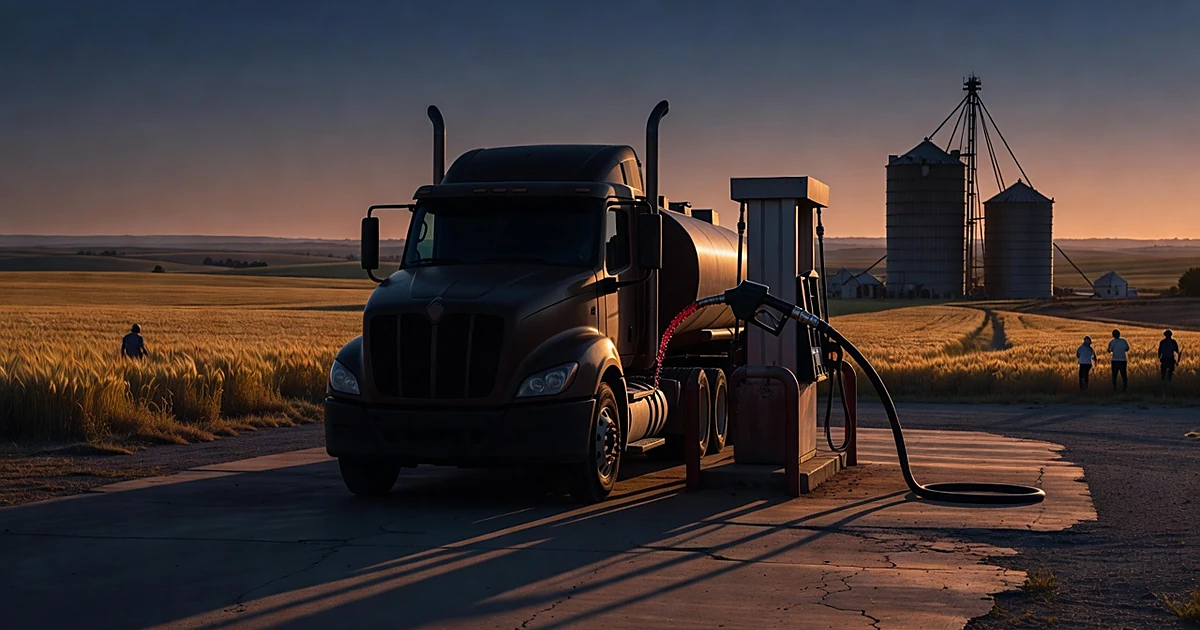
President Trump signed a surprise executive order at a Nebraska rally allowing anyone to buy tax-free red-dyed diesel, delivering direct relief on record fuel prices for farmers and truckers ahead of the midterms.
Trump signed the order onstage Monday during a campaign stop in Grand Island, Nebraska, waiving the long-standing off-road-only rule for tax-exempt red-dyed diesel. The move lets drivers purchase the fuel for any use and defers related federal excise taxes, aiming to ease costs that have hammered agriculture and trucking during harvest season.
Newsmax reported the president is promoting the package of executive actions after weeks of pressure over diesel prices that remain far above year-ago levels. National averages stood at $6.32 per gallon Monday according to AAA data cited in coverage, down 13 cents from the prior week yet still $2.63 higher than the same period last year.
The order comes after Trump ruled out an outright ban on diesel exports Friday. He had repeatedly floated that idea in recent weeks as agriculture-state lawmakers, including GOP Iowa Sen. Chuck Grassley, pressed for stronger steps to boost domestic supply. Energy Secretary Chris Wright and White House energy advisers examined alternatives while the president weighed options.
European countries’ agreement to tap their diesel reserves helped close the door on the export ban. Trump told reporters Friday, “We were never going to do it. I don’t think we were.”
Breitbart detailed how Trump called for the order to be brought out mid-rally and signed it live, framing the step as immediate action on costs. The measure temporarily allows tax-free red-dyed off-road diesel on highways and defers the 24.4 cents per gallon federal diesel tax without penalties through the end of 2026.
Red-dyed diesel is chemically similar to regular diesel but marked with dye because it is normally reserved for off-road uses such as farm equipment and is exempt from certain federal and state fuel taxes. Expanding access removes that restriction so anyone can buy it tax-free.
"So tonight, I’m going to sign a historic executive order to officially waive the off-road requirement and allow anyone to purchase tax-free, red-dye diesel for any reason."
Trump announced the step that way from the stage, according to the reporting. He also tied the relief directly to Republican candidates, telling Sen. Pete Ricketts and Gov. Jim Pillen the move “should absolutely ensure your election, I guarantee you that.”
White House officials and cabinet members praised the rapid response. The administration has blamed part of the price spike on disruptions to global energy markets from the Iran war and Ukrainian attacks on Russian oil refineries. Diesel remains critical for planting, harvesting, and trucking, and elevated prices have frustrated farmers and ranchers at the peak of harvest.
Several Republican governors had already moved on their own. By Friday, ten states representing one-third of U.S. diesel sales had taken steps to expand dyed-diesel use, per ClearView Energy Partners. States including Ohio, Georgia, Kentucky, Alabama, and Texas acted earlier, and some waived taxes on diesel used by agricultural vehicles.
The New York Post reported Trump claimed the average trucker will save more than $100 per fill-up and that lower diesel costs would drive down grocery prices. He presented the order as an unprecedented step to cut costs for truckers and households while boosting GOP prospects in the November elections.
The Treasury Department is also set to review certain diesel-related taxes under the broader package. The executive order directs states to expand access to the tax-exempt fuel, encourages waivers of certain fuel taxes, and steers federal agencies toward nonenforcement of some dyed-diesel restrictions.
Patrick De Haan, head of petroleum analysis at GasBuddy, posted that expanding access to dyed diesel “could save on-road users ~60c/gal. But farmers already use dyed diesel and are still paying record prices. Taxes aren’t the problem, supply is.”
Denton Cinquegrana, chief oil analyst at Dow Jones Energy, flagged the longer-term trade-off on road funding: “when you’re not collecting taxes, you’re just kicking the can down the road, because you have to fix roads and stuff like that.”
Those cautions sit alongside the political reality. High diesel has become a growing problem for Republicans trying to protect congressional majorities. Agriculture-state voters feel the pinch first, and the White House moved after weeks of shifting signals on how far to go.
Democrats have spent the midterm season pitching their own affordability message, yet the onstage signing left little room for a prepared counter. Similar dynamics have played out when Schumer pitches affordability while Republicans force the cost debate onto their preferred ground.
Grassley and other farm-state voices had pushed for the export ban as the cleaner supply fix. Trump’s Friday reversal followed the European reserve releases and kept the focus on taxes and dyed-diesel availability instead. The Monday order still lands as concrete relief during the harvest window.
Trump has kept Democrats off-balance with rapid moves that force them to react. That pattern showed up when the House killed Al Green’s impeachment push and again whenever the president seizes a kitchen-table issue before the other side can frame it.
The Washington Examiner noted the order also directs the Transportation Department to work with states on waiving road diesel taxes. That coordination builds on the steps governors already took and aims to spread the savings beyond the red-dye expansion alone.
Record prices earlier touched $6.52 per gallon in some tracking. Even with the recent 13-cent weekly drop, the year-over-year gap remains wide enough to squeeze margins for truckers hauling goods and farmers running equipment through long harvest days.
The White House has treated fuel costs as a core accountability issue. When Democrats cry foul over other administration messaging, the same contrast appears, voters see action on prices while the opposition stays focused on process fights, as with the patriotic TV spots that drew Democratic complaints.
Trump also used the Nebraska stop to underline political stakes for local Republicans. The guarantee he offered Ricketts and Pillen underscored how directly the White House links pocketbook relief to holding seats in farm country.
Supply remains the deeper constraint analysts keep citing. De Haan’s point that farmers already run dyed diesel yet still face record prices lands as a reminder that tax changes help at the pump but do not create new barrels. The administration’s earlier export-ban debate showed it was willing to consider heavier supply tools before settling on the tax-and-access route once Europe moved on reserves.
For truckers and ranchers watching every gallon, the order’s immediate effect is simpler: lower tax burden and legal access to the cheaper dyed product. Whether states fully match the federal waiver will decide how widely the savings spread. Ten states already moved; the executive order is designed to pull more along.
Senate Democrats have faced their own pressure to engage Trump initiatives rather than block them outright, a dynamic visible when they were pushed on the anti-fraud division after the House vote. Cost-of-living fights leave less room for delay.
The package keeps the focus where voters feel it, fuel bills that roll into food prices and freight rates. Trump’s decision to sign in front of a Nebraska crowd rather than issue a quiet paper release made the politics unmistakable: Republicans intend to own the cost-cutting lane through Election Day.
Farmers and truckers needed the relief. Washington finally delivered it without waiting for another round of hearings.