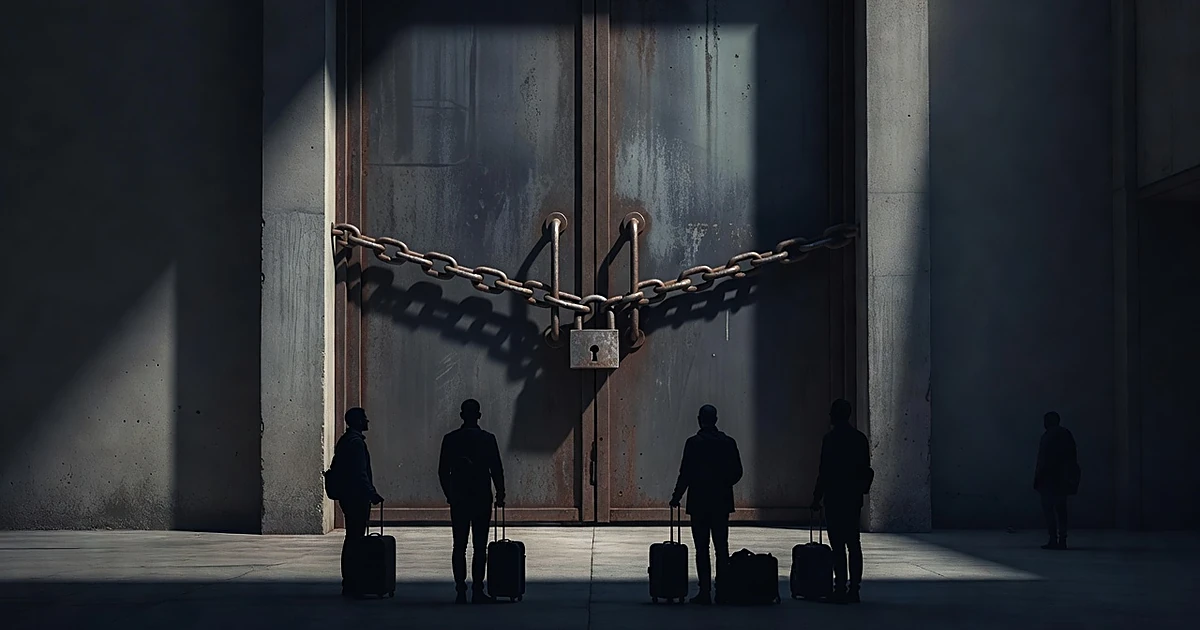
As Independence Day approaches, the Trump White House is reportedly weighing a sweeping clemency initiative that would issue 250 presidential pardons to mark the nation's semiquincentennial, and the prospect has turned Washington's lobbying corridors into a free-for-all.
The concept, dubbed "250 pardons for 250 years," has not been finalized. A White House official told the Daily Mail that "while there are always ongoing policy conversations about how to best act on the President's priorities, no decisions have been made nor has any action been taken." But the mere possibility has set off a lobbying frenzy that one unnamed defense attorney described as "a three-ring circus."
The Wall Street Journal first reported the plan last month. Since then, attorneys, lobbyists, and current and former Trump officials have scrambled to position clients and allies for potential inclusion. The scale of the reported proposal, layered atop the more than 1,700 pardons Trump has already granted in his second term, would represent a use of executive clemency without modern precedent.
The numbers tell the story. Clemency petitions filed with the Justice Department surged from roughly 5,100 in 2024 to more than 16,000 in 2025 after Trump took office, the Washington Examiner reported. High-profile convicts including Martin Shkreli and Elizabeth Holmes have filed for clemency. Shkreli told the Examiner that the "250 pardons for 250 years" idea was "one of the catalysts that brought me to just finally file."
That flood has overwhelmed the DOJ's Office of the Pardon Attorney, the traditional channel for evaluating pardon applications before they reach the president's desk. Sources told The Atlantic that an informal network of intermediaries has effectively replaced that formal process. The shift has created a market. Unnamed individuals in Trump's orbit with no legal or pardon experience have reportedly cited "$1 million to $2 million" as the going rate for securing a pardon.
One attorney told The Atlantic flatly: "It is general knowledge in our practice that for $2 million, you can have a pardon."
Another attorney offered a blunter assessment of the workload:
"I'm exhausted. In 30 years of practicing law, I've never seen anything like this."
One unnamed lobbyist reportedly turned off his phone entirely after receiving what were described as "aggressive" requests for pardon assistance. Whether those fee claims reflect actual transactions or merely the inflated expectations of a gold-rush atmosphere remains an open question, no named source or primary document has corroborated that money changed hands for pardons.
The proposal has split Trump's own advisors. Some reportedly believe a large-scale clemency event would appeal to core MAGA supporters and portray the president as merciful. Others have raised concerns about the political optics ahead of the 2026 midterm elections, warning that a mass pardon could hand Democrats a potent attack line. The Newsmax report on the plan noted that potential announcement dates under discussion include June 14, Flag Day and Trump's birthday, or the Fourth of July itself.
A former Trump official, speaking anonymously, described the 250-pardon concept as "bats*** crazy." That characterization, however harsh, reflects a genuine tension within the administration between those who see clemency as a constitutional prerogative worth exercising boldly and those who worry about the downstream consequences of doing so at industrial scale.
The president himself has shown little hesitation. Trump told reporters last year, "I have a lot of people who've asked me for pardons." And according to Maggie Haberman and Jonathan Swan's book Regime Change, Trump told confidantes he would pardon "anyone who came within 250 feet of the Oval Office."
Even without the 250-pardon plan, Trump's second-term use of the pardon power dwarfs that of his predecessors. He has pardoned more than 1,700 individuals since returning to office last January. That figure includes January 6 defendants, whom he pardoned almost immediately upon taking office. He later pardoned reality TV stars Todd and Julie Chrisley and commuted the sentence of former Republican Representative George Santos.
By comparison, Joe Biden pardoned 80 individuals during his presidency and commuted the sentences of more than 4,100. The sheer volume on both sides of the aisle suggests that presidential clemency has become less an act of considered mercy and more a political instrument, one that each administration wields with fewer restraints than the last.
The formal pardon process, routed through the DOJ's Office of the Pardon Attorney, was designed to impose a layer of institutional review. Applications were evaluated on their merits before any recommendation reached the Oval Office. If the reports from The Atlantic are accurate, that process has been substantially sidelined in favor of personal connections and paid intermediaries. The Pardon Attorney's office has not publicly commented on whether its role has been diminished.
That institutional erosion matters. The pardon power is absolute, the Constitution places no numerical limit on it and requires no congressional approval. But the informal guardrails that once shaped its use existed for a reason: to ensure that clemency served justice rather than access. When the going rate for a pardon is openly discussed in legal circles, those guardrails have plainly failed.
The 250-pardon discussion fits within a broader second-term pattern of aggressive executive action. House Republicans have been building a case to expunge Trump's two impeachments from the record, a move that reflects the same institutional confidence driving the clemency push.
Meanwhile, the administration has pressed forward on other fronts that have drawn sharp reactions from Democrats and the institutional left. The White House has shown no appetite for pulling punches on enforcement priorities, from immigration to federal funding decisions.
The HHS decision to pull federal funding from New York's Medicaid fraud unit over its weak prosecution record is one example of the administration using executive authority to impose accountability where state governments have failed.
And the legal and political battles surrounding January 6 continue to generate friction. Officers involved in the Capitol breach have filed federal lawsuits challenging Trump's $1.776 billion anti-weaponization fund, adding another front to the ongoing clash between the administration and its critics.
Sources familiar with the pardon deliberations told The Atlantic that criminals sentenced by judges appointed by Barack Obama are expected to fare better in the pardon process, a detail that, if accurate, suggests the initiative may carry a corrective dimension aimed at sentences the administration views as politically motivated or excessively harsh.
Alice Johnson, the woman Trump has informally designated as his "Pardon Czar," reportedly supports the 250-pardon effort. Johnson's own story, she received clemency from Trump during his first term after serving more than two decades on a nonviolent drug conviction, has made her a symbol of the case for broad presidential mercy. Edward R. Martin Jr., a DOJ attorney, is also reported to back the initiative.
Neither Johnson's official title within the administration nor Martin's precise role within the Justice Department has been publicly clarified. That ambiguity is itself part of the problem. When the people steering a mass clemency initiative operate without clear institutional authority, the process invites exactly the kind of pay-to-play perception that the reported fee structure has already created.
The presidential pardon power exists for good reason. It is a constitutional safety valve, a tool for correcting injustice, showing mercy, and tempering the rigidity of the criminal justice system. Trump has used it to free people who spent years behind bars on sentences many Americans would consider disproportionate. That is a legitimate exercise of authority.
But a constitutional power exercised without institutional discipline becomes something else. When intermediaries with no legal credentials reportedly quote seven-figure fees, when the formal DOJ review process is sidelined, and when the sheer volume of clemency actions outpaces any serious case-by-case evaluation, the pardon power risks becoming a commodity rather than an act of justice.
The White House says no decisions have been made. That may be true. But the lobbying industry has already made its decision, and the phones, by all accounts, have not stopped ringing.
Declassified documents continue to raise questions about the political motivations behind efforts to constrain Trump's first term. If the 250-pardon plan moves forward, the administration should ensure it cannot be similarly second-guessed, not by scaling it back, but by making the case for every name on the list.
A president who wants to be merciful should be. A president who wants to be taken seriously about it should show his work.