Peter Max, the German-born artist whose vivid, kaleidoscopic work became the visual signature of 1960s counterculture, has died at 88 after a long battle with Alzheimer's disease, closing a chapter in American pop art.
Max died Monday at a Manhattan hospital, his son Adam Max confirmed to The New York Times. Michael Pagnotta, a close friend and spokesman, separately confirmed the death to Rolling Stone on Wednesday, UPI reported. The Times reported that Max had long suffered from dementia.
He is survived by his son Adam and daughter Libra Max.
Max was born in Berlin in 1937 to Jewish parents. Still an infant, he and his family fled Nazi Germany for China, where they spent several years during his youth. In 1953, at 16, the family moved from Europe to Brooklyn.
Three years later, after graduating high school, Max enrolled in the Art Students League of New York, a training ground where he received classical instruction in drawing, anatomy, and painting. He opened his own studio after finishing there and, as a Park West Gallery biography describes, "became a New York ad world star almost overnight."
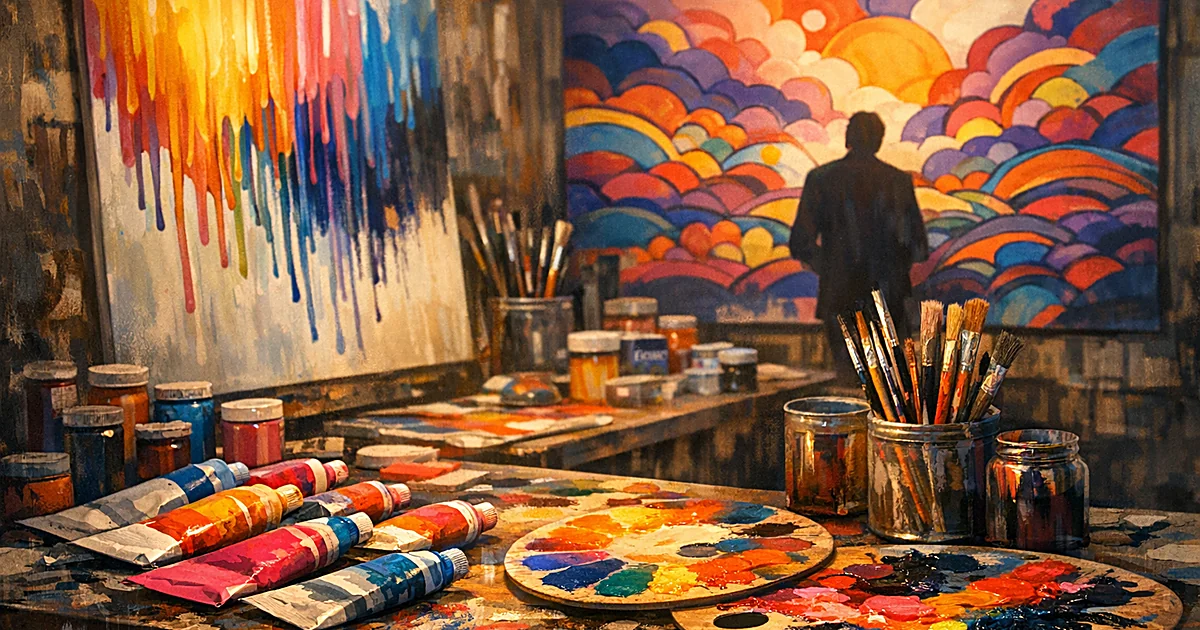
That trajectory, refugee child to commercial art sensation, set the stage for what came next. By the late 1960s, Max had burst into the mainstream with Pop Art works that married bright, swirling color to the Flower Power movement's optimism. His colorful depictions of the Statue of Liberty became iconic. He painted portraits of The Beatles and Jimi Hendrix. He even designed a psychedelic paint scheme for NASCAR great Dale Earnhardt's car.
It was a body of work that crossed boundaries few fine artists ever attempt. Max did not confine himself to galleries. He wanted ordinary people to see his art, own it, and feel something.
Pagnotta, who knew Max well, told Rolling Stone that the artist's ambition was never limited to the elite art world:
"He had a very expansive mind. As much as the Beatles provided a soundtrack for that era and for that generation, Peter visualized it, and he just exploded onto the scene in the late 1960s."
That explosion was no accident. Max drew from the spiritual currents running through the era, Eastern philosophy, post-war American optimism, a restless desire for something beyond the conventional. Pagnotta described the mix in vivid terms:
"Whatever kind of post-war optimism existed in the country, even though it was very turbulent times, Peter was able to capture that and marry it to that sort of spiritual eastern magical mystery thing, and it worked perfectly. And he believed in the mass appeal of what he was doing. He believed in making art accessible to people."
That commitment to accessibility set Max apart from many of his contemporaries. He was not interested in making work that only critics and collectors could appreciate. He wanted the truck driver and the teenager to recognize his style, and they did.
Max's final years were marked by the slow erosion of the same expansive mind Pagnotta celebrated. Pagnotta confirmed that Max died after a long battle with Alzheimer's disease. The New York Times reported separately that Max had long suffered from dementia. The specific Manhattan hospital where he died was not identified.
His death comes during a period when the country has lost several figures whose creative work shaped how Americans see themselves. Legendary costume designer Bob Mackie died recently at 87, another artist who made visual spectacle part of the national vocabulary.
Max's story, born into danger, carried across continents as a child, trained in the classical tradition, then remaking that tradition into something loud and joyful and democratic, is an American story in the best sense. He arrived in Brooklyn as a teenage refugee. He left as one of the most recognized artists in the country.
The art world has also grappled in recent months with darker losses. The violent death of opera singer Jubilant Sykes reminded the public how fragile even celebrated lives can be.
Max's passing, by contrast, was quiet, the end of a long decline, not a sudden shock. But the work endures. His Statue of Liberty paintings, his celebrity portraits, his psychedelic NASCAR design, all of it remains embedded in the American visual landscape, as familiar as the flag itself.
A man who fled one of history's worst regimes spent his life painting in the brightest colors he could find. That says more about America than any policy paper ever will.