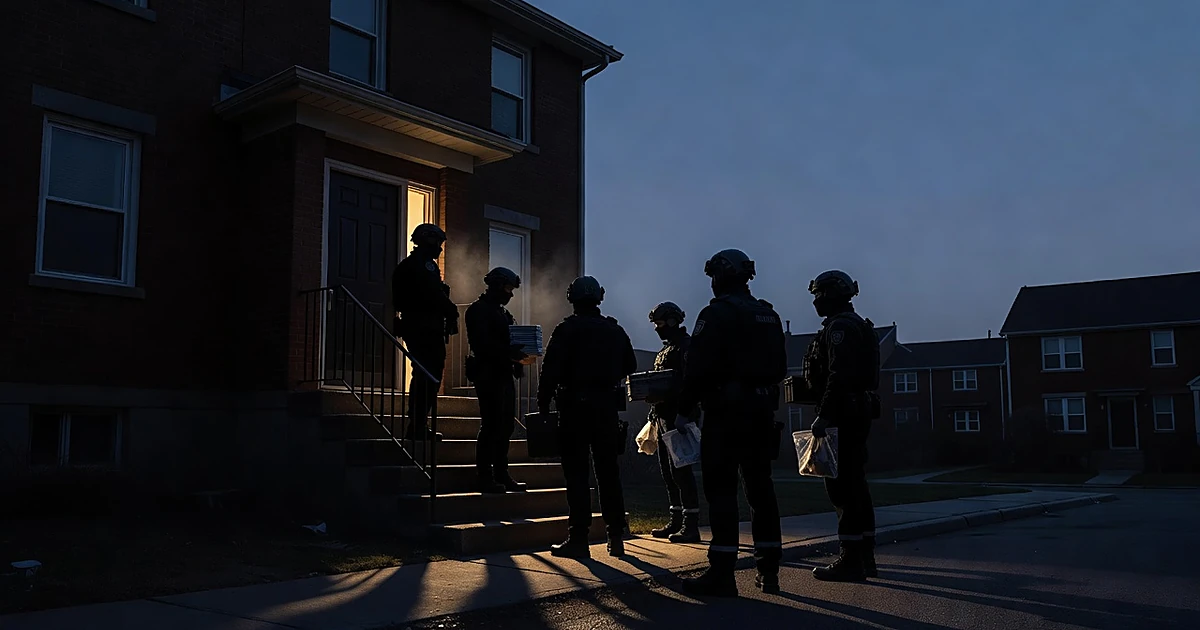
ICE agents arrested 131 alleged gang members nationwide in a single week, including MS-13 and Tren de Aragua suspects with violent records, as DHS ties the sweep to tougher Trump-era enforcement.
U.S. Immigration and Customs Enforcement agents took 131 gang-affiliated people into custody between Oct. 4 and 10, the Department of Homeland Security said, including 22 tied to MS-13 and 13 tied to Tren de Aragua.
More than 100 of those arrested were suspected gang members present in the country illegally. The haul stretched from Las Vegas and Denver to Tallahassee and Washington, D.C., and featured suspects wanted for homicide, rape, attempted murder, and other serious crimes.
The New York Post reported the figures after DHS provided the details, along with case summaries that put names and rap sheets on the week’s enforcement push.
DHS Secretary Markwayne Mullin framed the arrests as frontline work against people he called a direct threat to the public.
"In less than a week, the brave patriots of ICE have arrested more than 100 gang members across the country, including members of MS-13 and Tren de Aragua,"
Mullin added:
"The best that America has to offer are on the frontlines every day to ensure that the worst of humanity cannot threaten or harm innocent Americans."
Mullin praised President Donald Trump’s leadership for helping ICE smash “gangs and cartels,” saying the pressure makes it impossible for them to do business in America and removes their members from the country.
“Arresting and deporting illegal aliens, especially gang members, is how we make America safe again,” he said.
DHS put ICE’s gang-related arrest total at 12,018 since Trump took office again in 2025. That cumulative figure sits behind the single-week tally and shows the agency is treating gang enforcement as a sustained priority, not a one-off headline.
The same enforcement climate has shown up in other recent operations, including an ICE sweep in the D.C. area that removed more than 1,300 illegal immigrants over two weeks.
One of the week’s highest-profile collars came in Las Vegas on Wednesday. ICE arrested Gustavo Adolfo Flores-Ramirez, a Salvadoran national DHS identified as an MS-13 member.
El Salvador wants him for aggravated homicide, aggravated femicide, rape of a minor or incapacitated person, illegal handling of firearms, illicit grouping, and crimes involving public peace, DHS said.
This was not his first brush with U.S. immigration enforcement. Authorities arrested him in the United States in September 2021 and deported him to Mexico. He later illegally re-entered, a felony under U.S. law, after that removal. DHS did not state when he first entered or when he came back after the 2021 deportation.
The pattern is plain on the record provided: prior arrest, deportation, illegal return, and a fresh ICE collar while wanted on some of the gravest charges on any docket.
In Tallahassee, Florida, agents on Wednesday arrested Jose Luis Perez-Arrias, a Venezuelan national DHS described as a Tren de Aragua member and suspected hitman for the gang.
He illegally entered the country in October 2023 while former President Joe Biden was in office. Border Patrol agents arrested him and then released him into the country, DHS said.
Years later, ICE picked him up in Florida as a suspected TdA enforcer. The gap between the 2023 entry-and-release and the 2025, 2026 gang enforcement push is the policy story the case file draft without extra commentary.
Similar pressure has marked other corridors of enforcement, including a stretch when ICE more than doubled airport arrests as removal efforts gained momentum.
On Tuesday in Washington, D.C., ICE arrested Emerson Jossiel Calderon-Hernandez, a Salvadoran national and suspected MS-13 member.
He illegally entered in August 2012 while former President Barack Obama was in office and was released into the country, DHS said. His U.S. criminal history, as listed by the department, includes second-degree assault, attempted first-degree murder, attempted second-degree murder, armed robbery, first-degree assault, reckless endangerment, and false imprisonment.
That is not a low-level immigration file. It is a long rap sheet attached to a man first released more than a decade ago and only now pulled back in under a gang-focused ICE operation.
Large city-level actions have followed the same track. An Atlanta ICE operation recently netted more than 1,200 illegal immigrants, including convicted sex offenders, in another show of scale against criminal targets.
Also on Tuesday, agents in Denver arrested an unnamed 14-year-old from Venezuela. DHS said he is associated with the Los Piratas Gang, described as a faction of Tren de Aragua.
At the time of his arrest he illegally carried a Glock 48 pistol, the department said. He faces charges of first-degree murder, criminal attempt with extreme indifference; first-degree assault with extreme indifference; first-degree kidnapping; aggravated criminal extortion; illegal discharge of a weapon; and conspiracy.
A teenager on that charge list, linked by DHS to a TdA faction and armed at arrest, is the kind of case that makes “gang-affiliated” more than a bureaucratic label. It is a public-safety file with a firearm and attempted-murder counts attached.
The Oct. 4, 10 window produced 131 gang-affiliated arrests. Twenty-two were tied to MS-13. Thirteen were tied to Tren de Aragua. DHS said more than 100 were suspected gang members in the country illegally.
Stack that week against the 12,018 gang-related ICE arrests claimed since Trump returned to office in 2025, and the single-week number reads as a pulse check on a broader campaign rather than an isolated blitz.
Mullin has also pushed back in other settings against claims that immigration arrests mostly sweep up people who pose no public safety threat, a point he pressed when he rejected Jayapal’s claim on that score.
The named cases from this week supply the concrete counter-examples: a re-entrant wanted for homicide and rape; a suspected TdA hitman released after a 2023 entry; a suspected MS-13 member with attempted-murder and armed-robbery arrests after a 2012 release; and a 14-year-old TdA-faction associate facing attempted-murder and gun charges in Denver.
Three of the highlighted suspects share a through-line. They entered illegally under prior administrations, met some form of arrest or encounter, and were released into the United States, only to surface again on ICE’s gang docket years later.
Flores-Ramirez was deported to Mexico after a September 2021 U.S. arrest and came back illegally. Perez-Arrias entered in October 2023, was arrested by Border Patrol, and was released. Calderon-Hernandez entered in August 2012 and was released. DHS now lists all three as gang-linked targets with serious criminal allegations or histories.
That timeline does not require invented motives. It shows what catch-and-release produced when the people coming back across the radar were MS-13 and TdA suspects, not abstract “newcomers.”
Broader migration trends have shifted in the same political season. The White House has touted a 96% drop in legal immigration from Muslim-majority countries as Republicans cheered the tighter posture.
The department’s account leaves operational gaps. It does not detail warrants, task-force structure, or the exact criteria used to brand each arrestee gang-affiliated beyond DHS attribution. It does not give the calendar year in the body text for the Oct. 4, 10 window, though the reporting places the sweep in the current enforcement period after Trump’s 2025 return.
Post-arrest paths, immigration charges, state prosecutions, detention status, are not spelled out for each named suspect. The 14-year-old remains unnamed in the material released, and no docket numbers appear for the El Salvador wants or the Colorado counts.
Even with those limits, the verified core holds. ICE recorded 131 gang-affiliated arrests in roughly a week. MS-13 and Tren de Aragua names and suspected roles are on the list. Several of the featured suspects had already passed through U.S. custody or Border Patrol once and been turned loose.
Mullin’s closing argument matches the cases DHS chose to highlight. Arrest and deportation of illegal aliens, especially gang members, is how his department says it makes America safe again. The week’s roster, homicide wants, attempted murder, a juvenile with a Glock and extreme-indifference murder-attempt charges, is the evidence file they put on the table.
When ICE clears 131 alleged gang members in seven days, and the rap sheets read like this, the choice is not between kindness and cruelty. It is between removal and waiting for the next victim.