Defense Secretary Pete Hegseth is launching a new Office of Religious Affairs that reports directly to him for first-class chaplain support, critics claim it elevates Christianity in military policy.
Defense Secretary Pete Hegseth announced the Office of Religious Affairs during a Wednesday speech at Marine Corps Base Quantico in Virginia, saying the office will deliver “first-class religious support” and answer straight to him.
A Pentagon statement said the office will advocate for military chaplains and religious support “at the highest level of the Department.” It added the office will not “compel religious participation, favor one faith, or diminish the rights of personnel of any faith or lack thereof.”
Hegseth framed the move in spiritual terms. “Our department is, you might say, putting on the full armor of God, because while we wage physical war, we all know the real battle is spiritual,” he told the audience.
"Our department is, you might say, putting on the full armor of God, because while we wage physical war, we all know the real battle is spiritual."
He has already hosted Christian worship services for employees and spoken of the United States as a Christian nation. He has also pushed the military school system toward coursework drawn from conservative and Christian influences. Those steps fit a broader pattern of restoring open faith focus inside the building after years of therapeutic drift.
Breitbart noted the office will coordinate spiritual resources, including faith-based homeschool support for military families and faith-based initiatives aimed at Department-wide suicide reduction. The director has not yet been named.
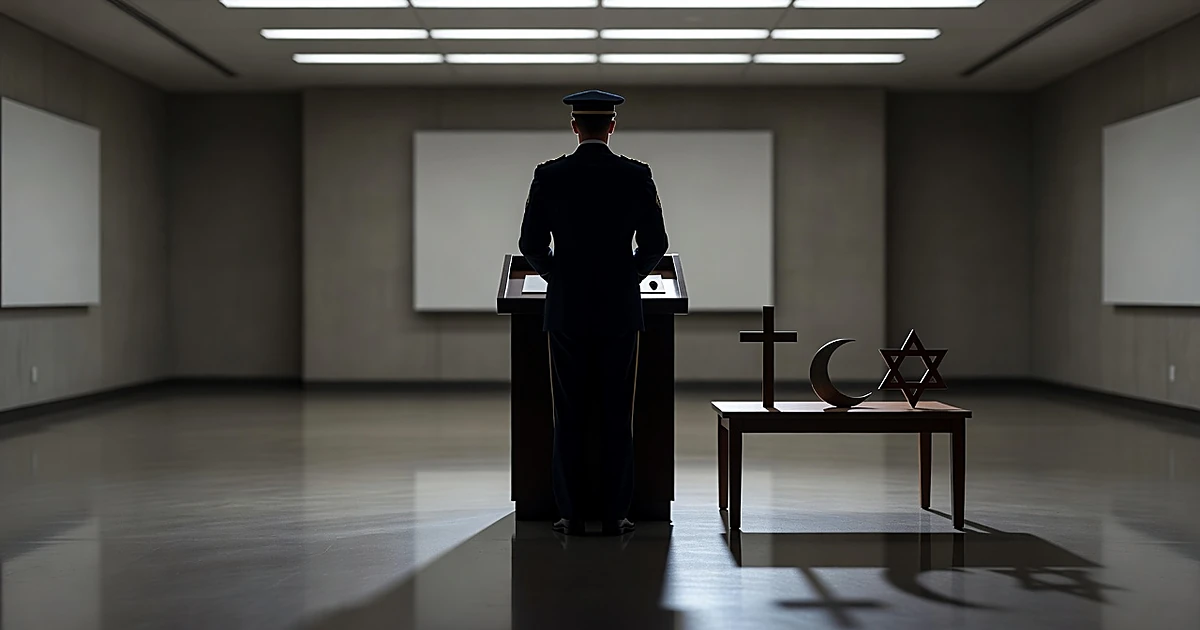
Chaplains have become a frontline resource for troops facing rising mental-health distress. Hegseth wants them focused more on God and less on self-help and self-care. He ordered chaplains to stop wearing rank insignia on their uniforms and instead be identified by religious symbols so their calling stands clear.
In remarks to chaplains at Quantico he was direct: “Live your calling. Stand firm. Preach truth. Minister to the flock.” He closed with Scripture: “The Lord is on my side; I will not fear. What can man do unto me?”
The Defense Department under Hegseth has also cut the list of officially recognized religious affiliations from more than 200 down to 31. Atheists, Unitarian Universalists, pagans and Wiccans no longer appear. The change streamlines recognition while keeping the chaplain corps centered on actual faith traditions that serve the force.
Rachel Laser, head of Americans United for Separation of Church, condemned the office. Her group has already sued the Pentagon over its worship services. “The Pentagon owes it to the nation’s service members to defend religious freedom,” she said. “Hegseth’s latest announcement violates that promise by elevating Christianity to an even higher role in shaping U.S. military policy.”
Faith-based offices are not new in Washington. They appeared under President George W. Bush and continued in different forms under later administrations. President Donald Trump established a White House Faith Office and ran a similar effort in his first term. What is new is placing religious affairs at the secretary’s own desk inside the Pentagon.
The Washington Examiner reported the office gives chaplains a direct channel to top officials and forms part of Hegseth’s wider reform push that also covers autonomous warfare and military technology.
Shaun Casey, the religion scholar who once led the State Department’s Office of Religion and Global Affairs under Obama, underscored the contrast. That earlier office, he said, “was there to understand what were the political implications of lived religion in the various hot spots around the world.” It did not promote religion or spiritual well-being. Hegseth’s office does the opposite: it backs the chaplains who actually care for troops.
Hegseth has faced steady political heat, including calls from some senators for his removal, yet he keeps pressing structural changes inside the building.
The same direct style showed when he planned a Quantico address aimed at junior troops rather than filtering everything through senior layers.
His broader effort to reshape the upper ranks has also drawn notice, with a plan to thin top brass meeting cool Senate reactions even as he moves forward.
Through it all he has rejected outside speculation about White House second-guessing, pushing back on reports of a search to replace his deputy and keeping the focus on the department’s own priorities.
A Pentagon memo makes clear the new religious affairs director will handle spiritual resources for families and suicide-prevention efforts rooted in faith. That is practical help for people who wear the uniform and the spouses who keep the home front running.
Service members already lean on chaplains when the weight gets heavy. Giving those chaplains a seat at the highest table and telling them to preach truth instead of soft therapy is common sense, not coercion. The department’s own statement bars any forced participation or favoritism. Troops of every background keep their rights; the ones who want real spiritual support finally get an advocate who reports to the secretary.
Critics will keep filing lawsuits and issuing statements. Hegseth is choosing the troops and the chaplains who serve them. That is the right call.