The U.S. military finished withdrawing every American troop from Iraq by the Sept. 30 deadline, closing a 12-year anti-ISIS mission Trump called a costly hellish excursion even as Kurds warn of Iran-backed threats.
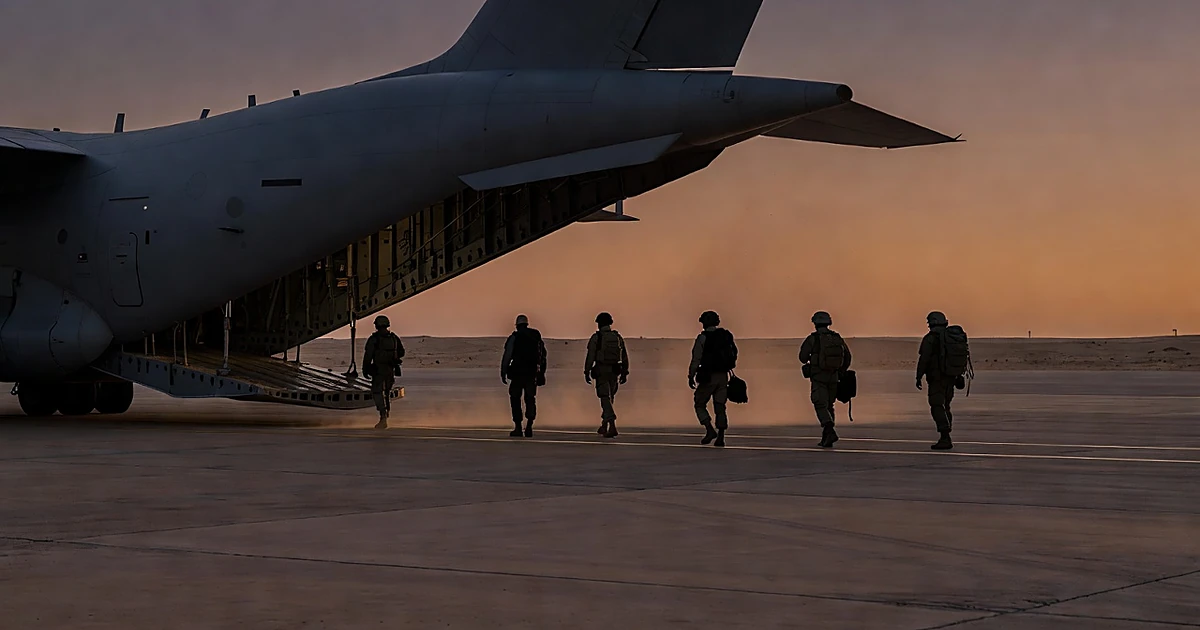
Last U.S. forces left the air base in Irbil in northern Iraq’s semi-autonomous Kurdish region under a deal Baghdad and Washington struck two years earlier. Pentagon officials described an orderly departure of troops and gear that ends the wartime coalition footprint while shifting to Iraqi-led security with limited American training and intelligence help still available.
President Donald Trump marked the moment as a clear win. He said the pullout was orderly and closed “a very expensive excursion into Hell.” In a social media post he added that bad past decisions dragged America into the quagmire, but that chapter would soon become history.
Pentagon spokesperson Sean Parnell framed the same exit as proof the long campaign worked.
Newsmax carried the official line that the milestone shows a 12-year effort defeated ISIS as an organized military threat across Iraq and the wider region. Parnell said the change moves the relationship from wartime coalition status to a more normal bilateral security partnership.
"This milestone reflects the success of a 12-year campaign that defeated ISIS as an organized military threat in Iraq and across the region."
He confirmed U.S. troops and equipment completed the departure from the Irbil base and that targeted training plus intelligence support for Iraqi partners will continue.
Iraqi Prime Minister Ali al-Zaidi presided over the handover ceremony and cast the exit as the start of a stronger national chapter. He said the new phase rests on Iraq’s sovereignty, stronger institutions, ready forces, unified decisions, and balanced partnerships. Al-Zaidi also pledged that Iraqi security forces will keep fighting Islamic State remnants and that the government will make sure non-state groups no longer hold weapons.
That pledge collides with reality on the ground. Baghdad initially tied the Sept. 30 U.S. exit deadline to militia disarmament. Al-Zaidi later walked the timeline back. He told The New York Times earlier this month the deadline for disarming those groups had slipped to June 2027. Only a handful of less-influential outfits agreed to hand over arms. The powerful Iran-linked factions refused or set their own conditions.
Trump has shown he can lock in lasting security arrangements elsewhere, including when he secured a sweeping Greenland military deal through firm diplomacy. The Iraq exit follows the same preference for clear endpoints over open-ended deployments.
Abu Mujahid al-Assaf, a security official with the powerful Kataib Hezbollah militia, celebrated the American departure in blunt terms. He called it the expulsion of defeated occupation forces and the start of full sovereignty. He then warned al-Zaidi’s government against following American plans and threatened that any government failing to work for the people would be overthrown by all means.
"The expulsion of the occupation forces, defeated, from the land of Iraq is the beginning of full sovereignty."
The Islamic Resistance in Iraq, another Iran-aligned umbrella, said talks with the government over weapons rules produced no agreement. The group declared it was not bound by any timeline or deal announced by officials and remained open only to dialogue that protects Iraqi sovereignty and dignity.
Officials in the Kurdish region sounded a different note. The Peshmerga Ministry, which oversees the region’s own forces, said the U.S. departure under complex regional conditions without a defense system in place is a matter of concern. American air defenses left with the troops.
During the recent U.S.-Iran conflict that began Feb. 28 and is nearing its seventh month, the Kurdish region absorbed more than 1,000 drone and ballistic-missile attacks. Bases there came under regular fire. Iran-backed Iraqi militias have also coordinated in the past with Yemen’s Houthi rebels on strikes against Saudi Arabia. Local leaders now fear both an ISIS comeback from sleeper cells and fresh pressure from those same Iran-linked groups.
Washington has signaled a broader shift of focus from the Middle East toward Asia. The Iraq withdrawal fits that reorientation after U.S. forces invaded in 2003 to topple Saddam Hussein, left in 2011, then returned three years later at Baghdad’s request to beat back the Islamic State’s territorial rampage. Most American bases emptied last year; only hundreds of troops remained in the Kurdish north until this final exit.
Those same decisive instincts appear in other theaters where Trump has locked down permanent posture changes, such as the agreement that gave the United States permanent military rights in Greenland. Ending the Iraq mission removes another open-ended commitment while preserving targeted tools.
ISIS no longer holds cities or runs a caliphate. Pentagon statements describe it as reduced to scattered sleeper cells. Iraqi forces are supposed to finish the job. Yet the same non-state armed groups that once fired on U.S. troops still operate with heavy weapons and political clout. Al-Zaidi’s government has sought to rein them in with little success so far.
The pattern is familiar to anyone who watched earlier chapters. American troops left once before. Conditions deteriorated. They returned. This time the exit arrives with explicit language about Iraqi lead responsibility and continued U.S. training support rather than a complete cut-off. Whether Baghdad can actually enforce its own monopoly on force remains the open test.
Trump’s approach has repeatedly favored measurable results over endless process, a stance also visible when the White House barred CNN from Air Force One after access disputes. In Iraq the result is a completed withdrawal on the stated deadline.
Iran-backed factions openly treat the American exit as their political victory and issue threats against the Iraqi prime minister. Kurdish authorities, who lived under the rocket fire, are left asking who supplies the next layer of air defense. The U.S. side calls the campaign a success that destroyed ISIS as a conventional army and now hands the lead to Baghdad.
Accountability at home has been another consistent theme, including pressure on lawmakers to back Trump’s anti-fraud division after the House already voted. The same demand for follow-through applies abroad: Iraq’s leaders now own the security file they requested.
The last American boots are gone from Irbil. The training channel stays open. The militias still have their guns. And the clock on real disarmament now runs to 2027.
American forces finished the job they returned to do against ISIS; Baghdad must now prove it can keep the country from sliding back under the thumb of Iran’s armed proxies.