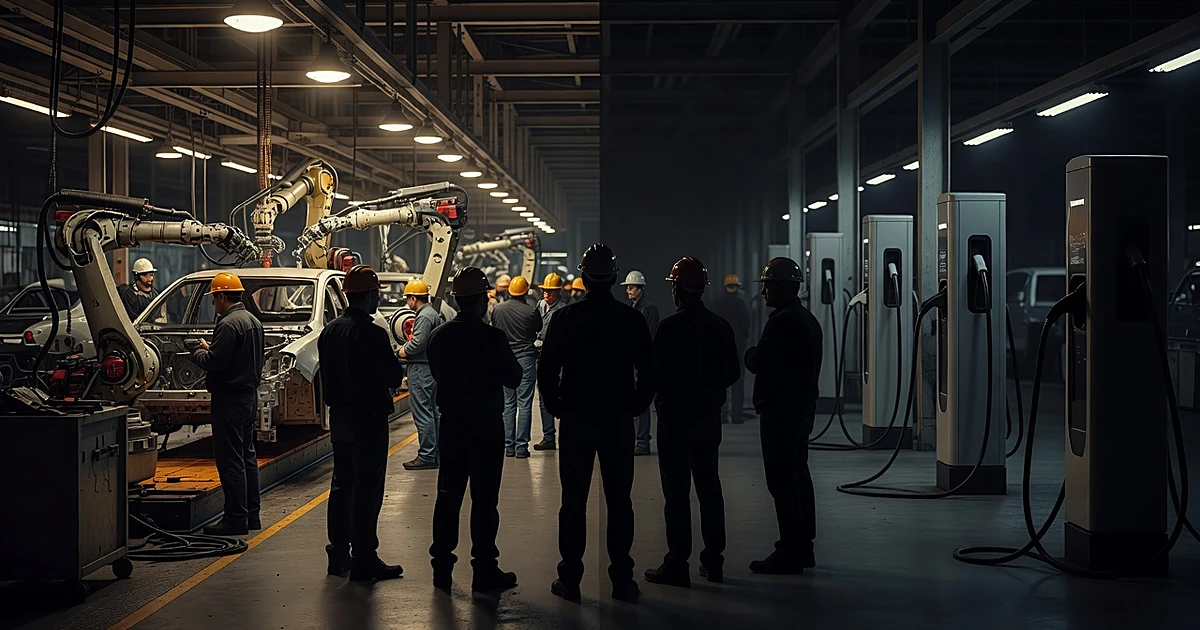
President Trump approved new fuel economy standards that he says will end the Biden-era EV mandate and save families thousands on new cars, while bringing auto plants and jobs back home.
On Saturday, President Trump said he had just signed off on the standards and framed the move as a direct break from the prior administration’s electric-vehicle push. Just the News reported his announcement and the statements that followed.
Trump cast the change as relief for both auto workers and buyers who had been pushed toward vehicles many never wanted. He tied the old rules to billions in manufacturer costs and unused charging infrastructure.
In posts describing the decision, Trump wrote that the new standards terminate what he called the previous EV mandate.
"BIG DAY FOR AMERICAN AUTO WORKERS AND CAR BUYERS! I have just approved new Fuel Economy Standards that TERMINATE Sleepy Joe Biden and Pete Boot-EDGE-EDGE's ridiculous EV Mandate. The Dumocrats cost our Great Auto Manufacturers $Billions, forced Americans into cars they never wanted, and wasted Billions on Chargers that were never built,"
He argued the shift strips waste out of U.S. car production and delivers lower sticker prices.
"These new Standards will take the waste out of building cars in America. That means LOWER PRICES, saving families thousands on a new, beautiful, and safe car, Far better than the Environmental Monsters that we were building heretofore. Every Manufacturer, from General Motors to Ford to Stellantis, has called me wanting to build here, and now they can!"
Trump also pointed to fresh capital flowing into domestic auto production under his watch. He said more than $100 billion is already being invested in American autos, with plants and jobs returning to Michigan, Ohio, Indiana, South Carolina, and across the country.
The Washington Examiner covered the same announcement, noting Trump’s order undoes Biden-era policy that had burdened manufacturers and consumers while pouring money into chargers that went unused.
That reporting aligns with Trump’s claim that the earlier approach forced unwanted cars onto the market and drained industry resources. The new standards, in his telling, clear the way for General Motors, Ford, Stellantis, and others to expand U.S. production without the same regulatory weight.
Similar administration moves that put American workers first have drawn strong public notice, including when the Trump administration pulled 28,000 trucker licenses from non-citizens and turned to veterans to fill those seats.
Breitbart reported that the prior CAFE rules had targeted roughly 50 mpg by 2031 and that the rollback should favor profitable pickup trucks and SUVs while giving buyers more choice. The outlet noted EV demand has lagged, and weaker standards reverse a policy back-and-forth that had left manufacturers guessing.
Trump presented the change as the start of a broader comeback for domestic auto making rather than a one-day announcement. He said the investment already underway is “just the beginning.”
Trump named Michigan, Ohio, Indiana, and South Carolina as places where plants are coming back and jobs are returning. Those states have long anchored American vehicle production, and his message put workers and buyers ahead of the prior green timeline.
The same focus on concrete results for Americans appears in other recent orders, such as the decision that deported more than 25,000 people to third countries since the administration took office.
No independent regulatory text, docket number, or agency filing was detailed in the initial reporting. Trump’s statements remain the clearest public account of what the new fuel economy standards contain and what they replace.
He has treated the EV mandate as a costly experiment that raised prices and limited choice. The new standards, he said, reverse that by letting manufacturers build cars people will actually buy at prices families can afford.
Supporters of the earlier rules had sold aggressive electric-vehicle targets as the path to cleaner air and industrial leadership. Trump’s account is that those targets instead produced expensive vehicles, unfinished chargers, and pressure on companies that still make most of their money on trucks and SUVs.
Readers watching official actions that reset prior priorities also followed the administration’s move to cap 2027 refugee admissions at 17,500 while reserving most slots for South African Afrikaners.
Trump’s auto announcement fits the same pattern: an executive decision that discards a Biden-era framework and replaces it with one he says serves workers and consumers first. He named the manufacturers that contacted him and the states he expects to gain plants and payrolls.
Whether the promised price cuts and plant openings materialize will be measured in showroom tags and hiring numbers. For now the president has put the claim in plain terms, lower prices, less waste, and American factories back in the game.
Other high-profile steps, from a sweeping Greenland military deal to pressure on Senate Democrats over an anti-fraud division, have kept the same emphasis on results over ideology.
Car buyers and auto workers were told for years that electric mandates were inevitable. Trump’s new fuel economy standards reject that premise and bet on choice, cost, and domestic production instead.