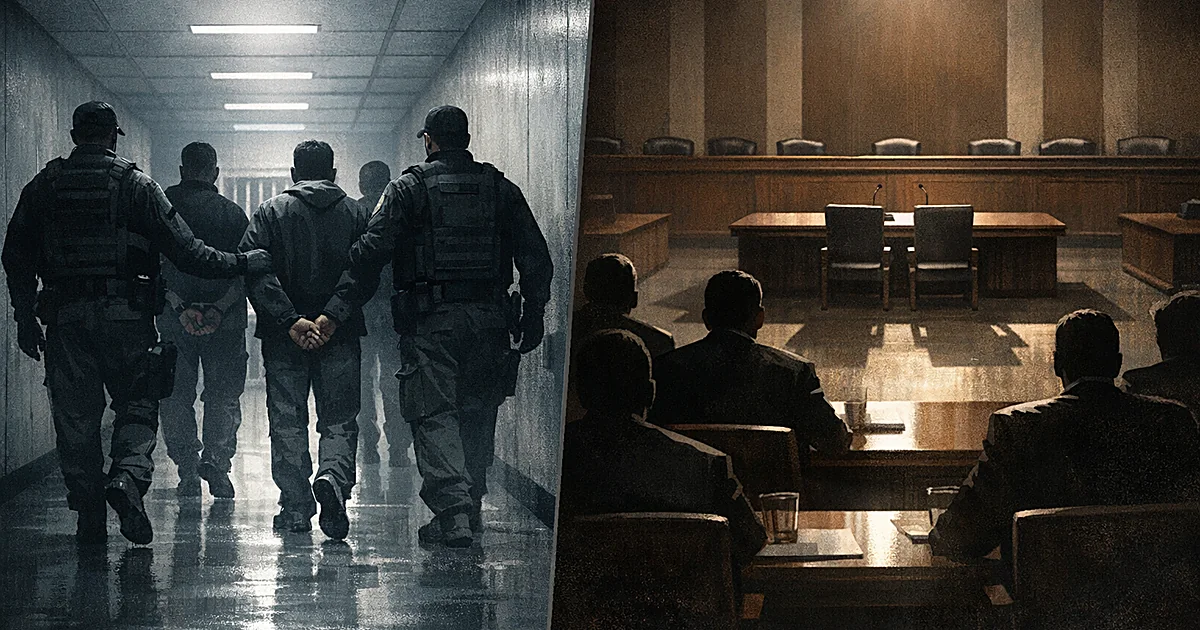
A man was arrested Tuesday at Trump National Doral Golf Club in Florida after he allegedly became disruptive at a security checkpoint, refused to follow orders, and made physical contact with a Secret Service agent, authorities said.
The incident occurred around 4:15 p.m. at a screening area staffed by Secret Service personnel and local police, Fox News reported. Doral police took the man into custody at the scene and charged him with disorderly conduct and resisting without violence.
President Trump was not on the property at the time. The Secret Service said the confrontation did not compromise security operations or affect plans for future visits by protectees.
Michael Townsend, the acting special agent in charge of the Secret Service's Miami field office, laid out the sequence in a statement:
"During the encounter, the individual became disruptive and failed to comply with lawful orders. He then made physical contact with a member of the Secret Service and was taken into custody without further incident."
Townsend added that the situation was quickly contained. He stressed that the president's absence from the club meant no protectee was at risk during the encounter.
"The president was not on site at the time of the incident. At no point did this situation impact the established security posture for any upcoming visits to Trump Doral National Golf Club by Secret Service protectees."
Video from the scene, shared on social media by an account identified as @Beardvet and distributed through Storyful, shows a man being taken into custody. The person recording described the suspect as "getting the business now." Beyond the footage, few details about the man's identity or motives have emerged publicly.
Officials directed further questions about the suspect and the charges to the Doral Police Department. Authorities have not disclosed what brought the individual to the checkpoint, what specific physical contact occurred, or whether anyone was injured in the encounter.
The arrest comes during a period of heightened security concerns around the president and his properties. The New York Post reported that the Doral incident occurred roughly a week after a separate high-profile armed attack scare, underscoring the pressure on Secret Service protective details at Trump-affiliated locations.
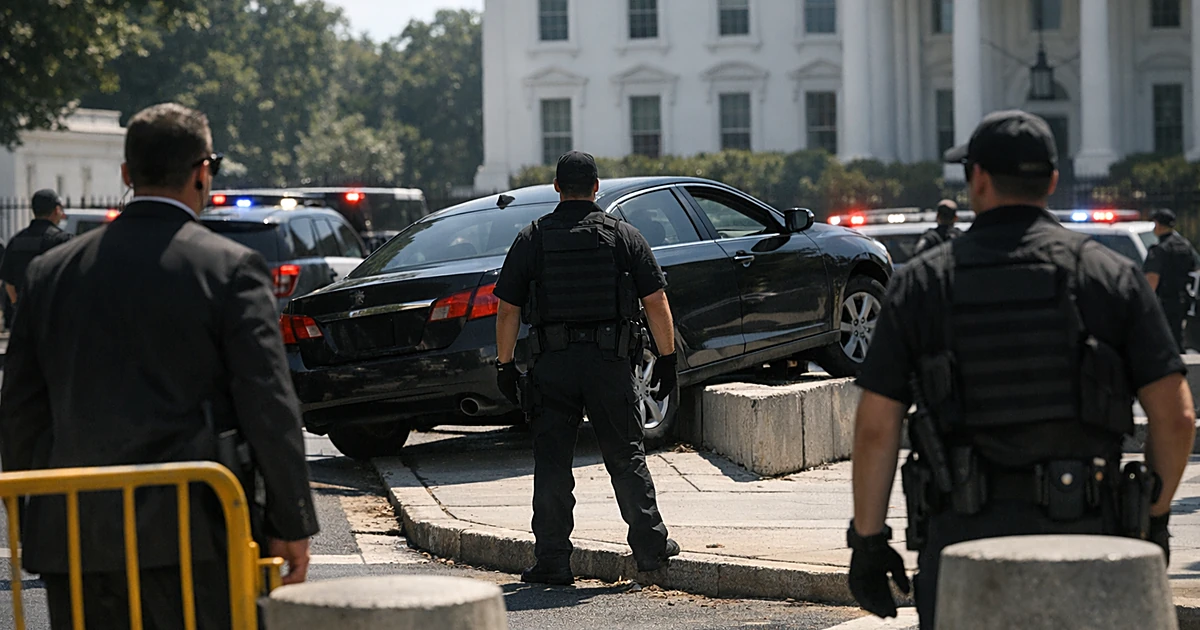
The pattern is not new. The Secret Service has faced a string of security challenges tied to the president in recent years. Earlier, the agency investigated gunfire near the White House while Trump was inside, an episode that raised pointed questions about perimeter defense and response protocols.
Those questions only sharpened after the Butler, Pennsylvania, assassination attempt, which Ivanka Trump later described in wrenching personal terms. She recounted watching the shooting unfold in real time, saying of her father, "It wasn't his time." The Butler attack forced a broader reckoning with how well the Secret Service was equipped to protect the president in open-air settings and at private venues.
More recently, a thwarted attack at the White House Correspondents' Dinner prompted former President Obama to urge Americans to reject political violence. Each incident adds weight to the argument that the protective mission around this president demands resources and vigilance well beyond the historical norm.
The two charges filed against the suspect, disorderly conduct and resisting without violence, are relatively low-level under Florida law. Neither carries the severity of an assault charge, which suggests authorities concluded the physical contact with the agent, while unlawful, did not rise to that threshold. Still, any physical confrontation at a Secret Service checkpoint is treated with the utmost seriousness in the current threat climate.
The administration has moved to strengthen its security apparatus. Trump recently tapped Sen. Markwayne Mullin to lead the Department of Homeland Security, a choice that signals a preference for hands-on leadership atop the agency that oversees the Secret Service.
Several basic facts remain unknown. Authorities have not released the arrested man's name, his reason for approaching the checkpoint, or any indication of whether the encounter was politically motivated, a random disturbance, or something else entirely. No court date has been publicly announced.
The Secret Service's statement was notably careful in scope, confirming the arrest, affirming that the president was elsewhere, and insisting that the security posture for future protectee visits was unaffected. What it did not address is whether the man had any prior contact with law enforcement, whether he was known to intelligence databases, or whether additional charges could follow.
For the agents and officers who staff these checkpoints day after day, the Doral arrest is a reminder that threats do not always arrive with advance warning or clear intent. Sometimes they walk up to a screening area in broad daylight. The system held on Tuesday, the man was stopped, subdued, and charged before he got past the perimeter.
That is what a functioning security operation looks like. But the fact that confrontations at presidential properties keep happening, at golf courses, at the White House, at public events, tells its own story about the environment the Secret Service now operates in.
The charges are minor. The pattern is not. When people feel entitled to push past a Secret Service checkpoint and put hands on a federal agent, something in the public order has frayed, and it falls on law enforcement, not luck, to hold the line.