President Donald Trump took aim at Republican-appointed Supreme Court justices Wednesday morning, accusing them of handing Democrats repeated victories and predicting the court will rule against his administration in the birthright citizenship case, a decision he warned would "cost America its DIGNITY."
The broadside, posted on Truth Social, came weeks after Breitbart reported that Chief Justice John Roberts and Justices Amy Coney Barrett and Neil Gorsuch voted in February to strike down Trump's tariffs imposed under the International Economic Emergency Powers Act. That decision, in the case of Learning Resources, Inc. v. Trump, required the refund of more than $150 billion.
Trump framed the tariff ruling and the pending birthright citizenship case as proof that the court's conservative wing has gone soft, and that Democratic-appointed justices operate as a unified voting bloc while Republican appointees splinter.
The president's post laid out a blunt indictment. Trump wrote that Democratic justices "stick together like glue, NEVER failing to wander from the warped and perverse policies, ideas, and cases put before them." He contrasted that with what he described as a pattern of Republican justices breaking ranks on consequential rulings.
Trump wrote on Truth Social:
"The Republican Justices don't stick together, they give the Democrats win after win, like a 159 Billion Dollar pile of cash on a completely ridiculous Tariff decision, and nasty, one sided questions on the country destroying subject of Birthright Citizenship, something which virtually NO OTHER COUNTRY IN THE WORLD IS STUPID ENOUGH TO ALLOW."
He went further, writing that the Fourteenth Amendment's citizenship provision "was meant for the babies of slaves, not for the babies of Chinese Billionaires." And he said certain Republican justices "have just gone weak" and were "completely violating what they 'supposedly' stood for."
The frustration is not abstract. The tariff decision alone carries a price tag Trump pegged at $159 billion. He called it "an unnecessary and expensive slap in the face to the U.S.A., and a giant victory for its opponents," adding that "one little sentence would have stoped [sic] this record setting payment from having to be made."
The president has previously signaled a willingness to reshape the court's composition. He has indicated he is prepared to fill multiple Supreme Court vacancies if the opportunity arises.
Trump's sharpest language was reserved for the birthright citizenship fight. The Supreme Court heard oral arguments in Trump v. Barbara on April 1, and the president's post suggested he already knows how the decision will land.
He wrote:
"If they rule against our Country on Birthright Citizenship, which they probably will, it will be even worse, if that's possible. It will cost America massive amounts of money but, more importantly, it will cost America its DIGNITY!"
That prediction, the president of the United States publicly forecasting defeat at the hands of a court he helped build, is striking. Three of the nine sitting justices owe their seats to Trump's nominations. Yet Trump's post treats the court not as an institution where he holds influence, but as one that has already been "packed" against him by the opposition.
Reporting from earlier this month indicated that the court appeared poised to reject the executive order on birthright citizenship after oral arguments.
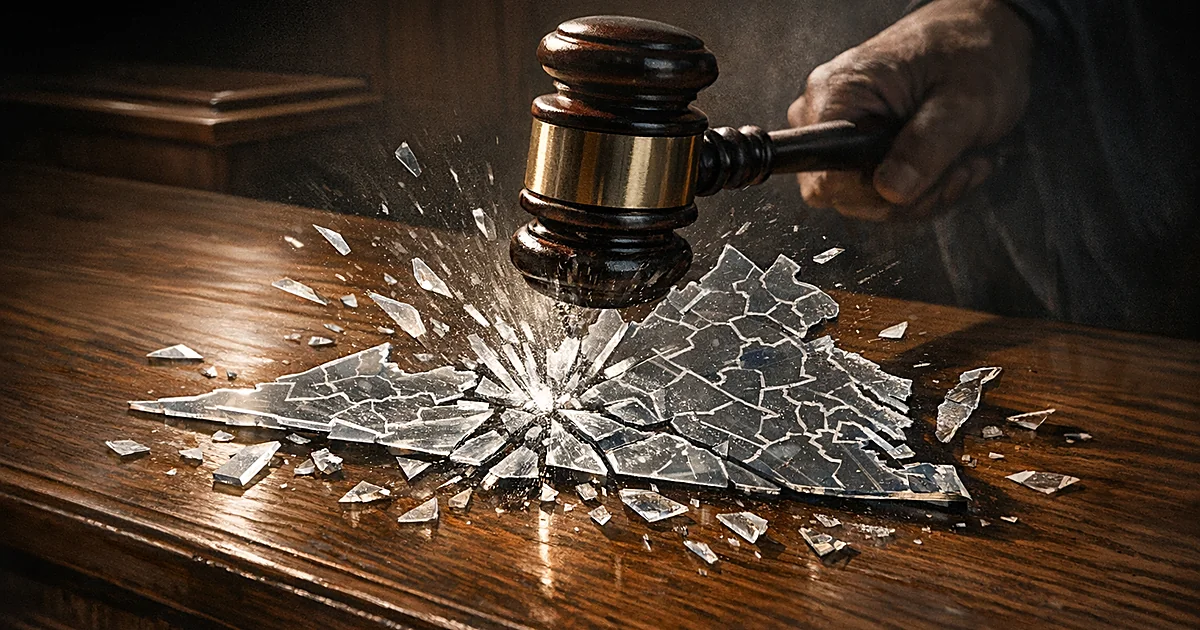
The February tariff ruling was the immediate catalyst for Trump's frustration. Roberts, Barrett, and Gorsuch, all Republican appointees, joined the court's liberal wing to strike down the IEEPA tariffs. The refund obligation exceeds $150 billion, a figure that makes it one of the most financially consequential Supreme Court decisions in recent memory.
Trump has already begun adjusting his approach on trade policy. After the ruling, the president signaled a new tariff strategy and said he would not seek a congressional vote to restore the authority the court stripped away.
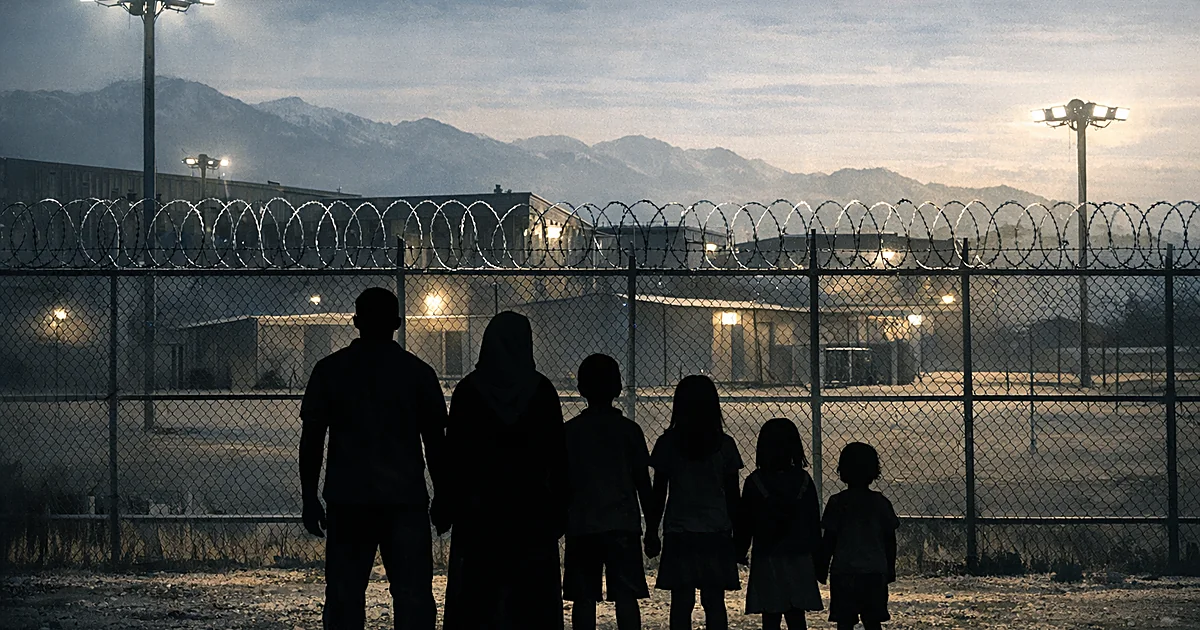
The birthright citizenship case represents a different kind of stakes. If the court rules against the administration, it would foreclose one of Trump's signature immigration policy goals, the effort to end automatic citizenship for children born on U.S. soil to parents who are in the country illegally. Trump argued in his post that the practice is nearly unique to the United States and was never intended to apply broadly.
Meanwhile, the administration continues to press other high-profile cases before the justices, including a request for the Supreme Court to restore authority to end Temporary Protected Status for 350,000 Haitian migrants.
Trump's core complaint is structural, not personal, even if his language was pointed. He argues that Democratic-appointed justices vote as a reliable unit while Republican appointees fracture on the cases that matter most. Whether one agrees with that framing or not, the tariff case bears it out in at least one instance: three Republican-appointed justices crossed over to form the majority.
The dynamic is not new. Justice Sonia Sotomayor has complained publicly about the administration's emergency appeals to the court, even as the court has frequently sided with Trump on procedural matters. But on the marquee constitutional questions, tariff authority, birthright citizenship, Trump sees a different picture emerging.
The president's prediction of defeat in the birthright citizenship case is also a political signal. It lowers the bar for what constitutes a win. If the court rules against him, Trump can point to the post and say he told the country the court was stacked. If the court surprises him, he claims a victory against the odds.
Several open questions remain. The Supreme Court has not yet issued its opinion in Trump v. Barbara, and the timing of that decision is unknown. The full scope of the $150 billion-plus refund obligation from the tariff ruling, and how the administration plans to manage it, has not been detailed. Whether Trump will pursue any structural response to the court, beyond public criticism, is unclear.
What is clear is the president's assessment of where things stand. He believes the court's conservative majority is unreliable on the issues he cares about most, trade enforcement and immigration enforcement, and he is willing to say so publicly, loudly, and before the ruling even drops.
When a president builds a court and then expects to lose there, the problem is either with the builders, the building, or the blueprint. Trump has made his diagnosis. The rest of the country will find out soon enough whether he's right.