Venezuela’s political landscape just got a seismic shakeup with Nicolas Maduro’s capture by U.S. forces.
In a stunning turn of events, Venezuela’s Supreme Court has directed Vice President Delcy Rodriguez to step in as interim president after Maduro was detained during a U.S. military operation and is now held in a federal facility in New York City, awaiting trial as early as Monday.
For hardworking American taxpayers, this saga raises serious questions about the financial burden of international operations like this one, with potential costs in the millions for military and legal proceedings. From a conservative standpoint, every dime spent must be justified, and the Biden administration—or whoever’s calling the shots—better be ready for a full accounting. We can’t just write blank checks for global escapades while folks at home struggle with inflation.
Let’s rewind to the start: Maduro, Venezuela’s longtime leader, was nabbed by U.S. forces in a bold military move. Now he’s cooling his heels in a New York detention center. His trial, set to kick off soon, could expose layers of corruption that conservatives have long suspected.
Following this bombshell, Venezuela’s Supreme Court moved swiftly on Saturday night, citing “administrative continuity” and the nation’s constitution, which allows the vice president to take over during a leader’s absence. They declared Maduro in a state of “material and temporary impossibility” to govern. It’s a legal maneuver, sure, but one that smells of desperation to keep the socialist machine humming.
Enter Delcy Rodriguez, now tapped as interim president, though her exact whereabouts are murkier than a swamp after U.S. strikes on Caracas. Some reports hinted she might be in Russia, yet she managed a televised address to Venezuelans on Saturday. That’s quite the magic trick if she’s dodging bombs and borders.
In her address, Rodriguez insisted that Maduro remains the “only” president of Venezuela, a claim that clashes with the court’s ruling and her supposed new title. Her defiance sounds noble to some, but let’s be real—it’s a weak jab at reality when your boss is behind bars in the Big Apple. Conservatives see this as a refusal to face the music.
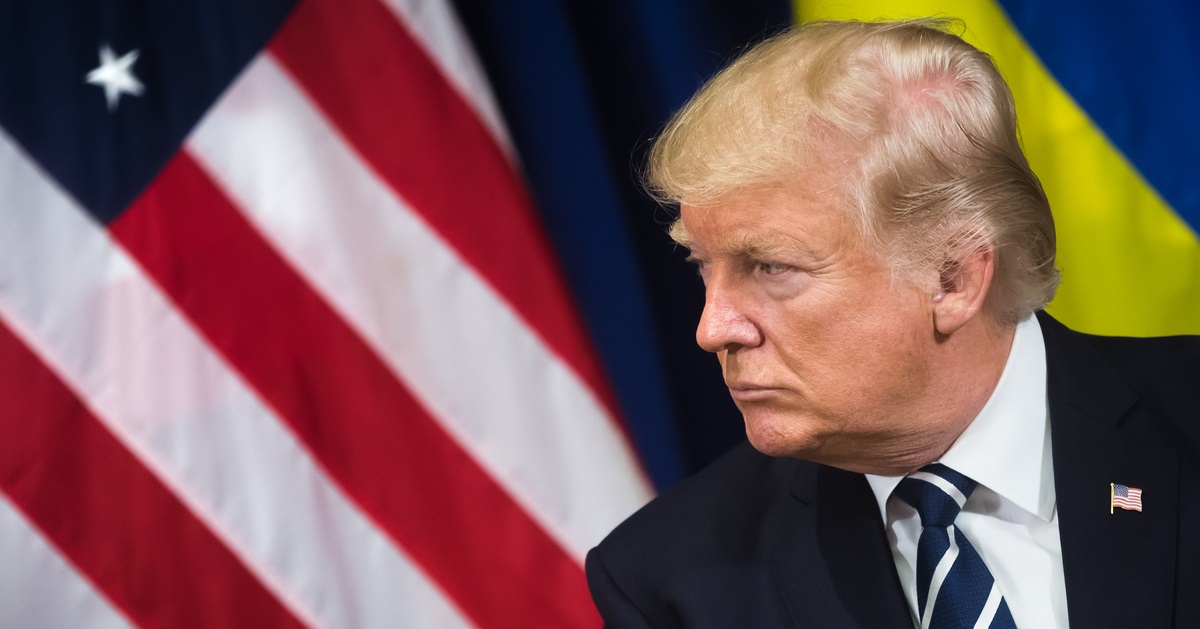
Meanwhile, President Donald Trump chimed in, stating, “She was sworn in as president just a little while ago.” He added that Rodriguez had a chat with Marco Rubio and seemed cooperative, saying, “We’ll do whatever you need.” (Donald Trump) Well, that’s a nice sentiment, but actions speak louder than sweet talk, and her loyalty to Maduro’s regime raises red flags.
Trump also dropped a bombshell, claiming the U.S. would temporarily “run” Venezuela. That’s a bold assertion, and for many conservative voters, it’s a double-edged sword—necessary intervention versus the risk of overreach. We’ve got to tread carefully to avoid another endless foreign entanglement.
Still, Trump’s comments on Rodriguez hint at uncertainty about her future, as she’s a remnant of Maduro’s inner circle. Will the U.S. push for her removal, or is this a pragmatic play to stabilize the region? For now, that’s anyone’s guess, and conservatives demand clarity on the endgame.
For Venezuelan citizens, this chaos likely means more hardship, and from a right-of-center view, it’s a tragic reminder of socialism’s failures. The U.S. has a moral duty to help, but not at the expense of American interests or resources. Balance, not blank checks, should guide policy here.
Rodriguez’s televised defiance and Trump’s statements paint a picture of a nation teetering on the edge. Her claim that Maduro is still the true leader feels like clinging to a sinking ship. Most conservatives would argue it’s time for fresh leadership, not recycled rhetoric.
As Maduro awaits trial, the legal implications for him—and potentially Rodriguez—could reshape Venezuela’s future. If corruption charges stick, it might finally break the back of a regime that’s long oppressed its people. Justice must be thorough, no stone left unturned.
Yet, with Rodriguez’s location unclear and her intentions murky, stability seems a distant dream for Venezuela. For American observers, especially those wary of progressive overreach, this is a cautionary tale about unchecked power. We must support freedom without becoming the world’s babysitter.
Ultimately, this unfolding drama demands vigilance from a conservative perspective—holding leaders accountable, questioning U.S. involvement’s scope, and prioritizing American taxpayers’ interests. Venezuela’s crisis is real, but so are our own borders and budgets. Let’s hope for clarity, and soon, before this turns into another geopolitical quagmire.