President Trump signed an executive order on Tuesday, tightening the rules around mail-in voting, directing federal agencies to build state-by-state citizenship verification lists that will determine who receives an absentee ballot ahead of the 2026 midterm elections.
The order is straightforward in its mechanics: only voters confirmed as citizens will be mailed ballots. Ballots will arrive in secure envelopes with barcodes to track them. The Department of Homeland Security, working with the Social Security Administration, will create the voter lists. The Department of Justice will investigate any wrongdoing in mail-in ballot distribution.
States that disobey the order may lose federal funds.
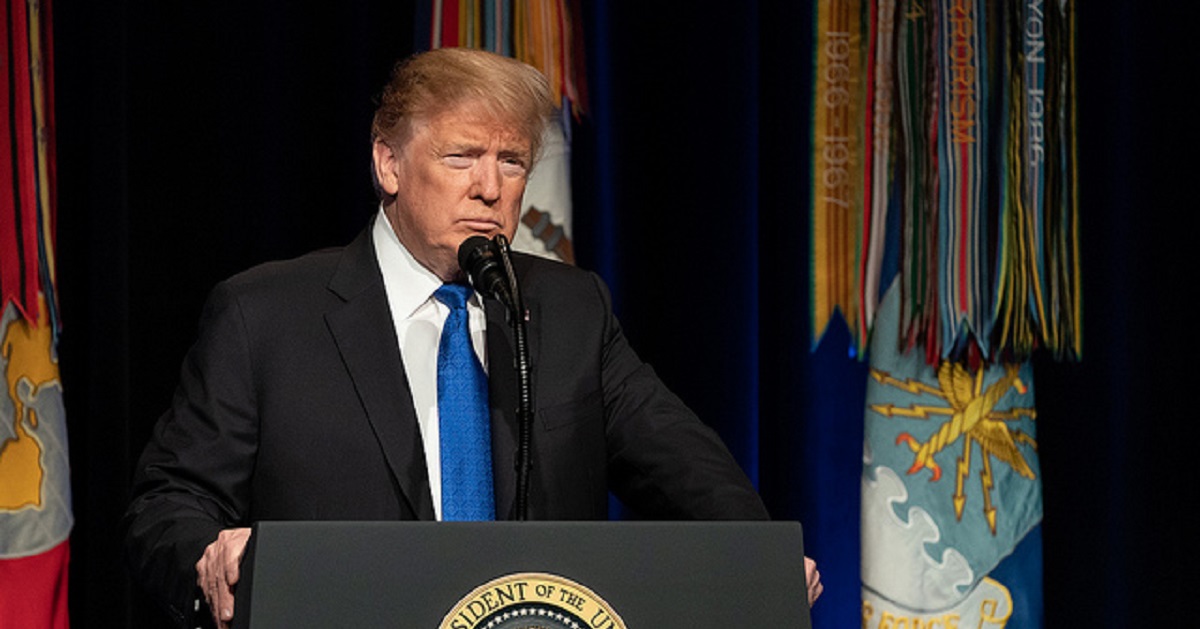
Trump signed the order during an Oval Office ceremony, framing it in terms that cut to the core of the issue.
"We want to have honest voting in our country, because if you don't have honest voting, you can't have, really, a nation if you want to know the truth."
According to the New York Post, the executive order requires a list to be created in each state of citizens who are eligible to vote. Absentee ballots will only be sent to those on the approved list. Trump has directed DHS to establish a system to compile and transmit the "state citizenship list" within 90 days, which puts the deadline at the end of June.
That timeline matters. Midterm primary elections are already underway in many states, and Election Day is November 3. The administration is moving to get the infrastructure in place well before voters head to the polls.
The concept is not radical. It is, in fact, the bare minimum of what election administration should look like: verify that the person receiving a ballot is a citizen, and track the ballot to ensure it arrives where it's supposed to. The fact that this requires an executive order tells you everything about how degraded the system has become.
Trump has pushed heavily for the Save America Act, which would require proof of U.S. citizenship, such as a passport or birth certificate, to register to vote in federal elections. He has said he is in favor of the act.
But the legislation remains stuck in a legislative logjam on Capitol Hill. The executive order functions as a parallel track, achieving through administrative action what Congress has failed to deliver through legislation. It targets the specific vulnerability of mail-in voting rather than the broader registration system, but the principle is the same: if you aren't a citizen, you don't get to participate in choosing American leaders.
This is not a controversial proposition anywhere outside Washington. Every other serious democracy on the planet manages to verify voter identity. The resistance to doing so in the United States has always been more revealing than the arguments against it.
Mail-in voting, by design, removes the voter from any point of human verification. No poll worker is checking an ID. There is no signature compared in real time. There is a ballot, an envelope, and a mailbox. The opportunities for error, and for something worse than error, multiply at every step of that chain.
A long-standing vocal critic of mail-in voting, Trump has consistently identified this as a structural weakness in the system. The executive order addresses it not by eliminating mail-in voting but by imposing verification requirements that should have existed from the start.
Citizenship lists built from DHS and Social Security Administration records represent the most reliable data the federal government has. Cross-referencing those databases to confirm that a ballot recipient is actually an American citizen is not suppression. It is competence.
The mail-in voting reforms are all but certain to face legal challenge in the courts. That much is predictable. Every election integrity measure of the last decade has been met with litigation from groups that treat verification as an obstacle rather than a safeguard.
The arguments write themselves: claims of disenfranchisement, allegations of disparate impact, procedural objections to executive authority. The playbook hasn't changed. But the legal landscape has shifted, and the administration clearly built this order with court battles in mind.
Trump himself seemed unbothered by the prospect, expressing confidence in the durability of the order.
"I believe it's foolproof, and maybe it'll be tested. Maybe it won't."
Watch how opponents of this order frame their objections. They will not say they oppose verifying citizenship. They will say the process is too burdensome, the timeline too tight, the databases too imperfect. They will argue around the principle because they cannot argue against it.
No serious person believes that non-citizens should vote in American elections. But a remarkable number of serious people have spent years building a system where it is functionally impossible to confirm that they don't. Every proposal to close that gap meets the same wall of procedural outrage.
The executive order forces a simple question into the open: if you oppose verifying that mail-in ballots go only to citizens, what exactly are you protecting?
Midterm Election Day is November 3. The clock is running. The lists are being built.