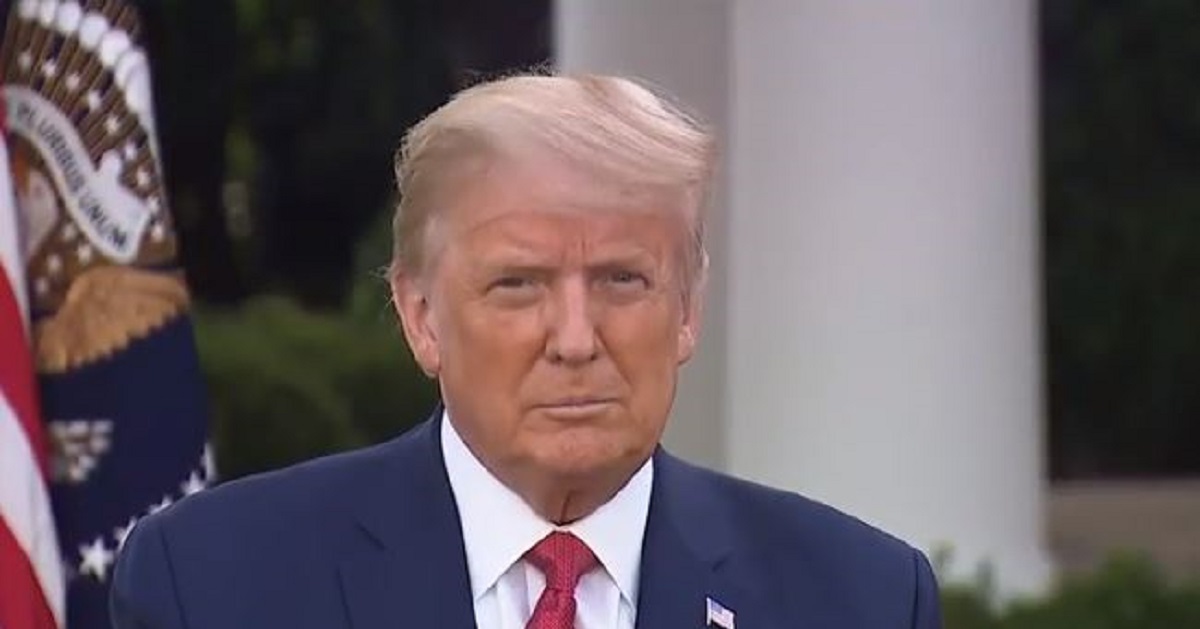
President Trump told NBC News on Saturday that Iran wants to end the conflict, but he's holding the line. The terms Tehran is offering aren't sufficient, and until they are, the United States has no intention of easing up.
"Iran wants to make a deal, and I don't want to make it because the terms aren't good enough yet."
The comments came as Operation Epic Fury headed into day 16, with Trump signaling that a full Iranian abandonment of nuclear ambitions would be central to any agreement. He also raised the possibility of additional strikes on Kharg Island, Iran's critical oil export hub, which U.S. forces hit with over 90 military targets on Friday.
"We totally demolished Kharg Island, but we may hit it a few more times just for fun."
Trump noted the United States had intentionally spared the island's energy infrastructure, a detail worth absorbing. The world's most powerful military leveled every military target on the island while threading the needle around oil facilities. That's not recklessness. That's precision with a message attached.
A Reuters report cited a senior White House official saying the administration had rebuffed efforts by Middle Eastern allies to launch ceasefire talks. Trump, the official said, is "not interested" in those discussions "right now" and intends to continue the mission "unabated."
This is the posture that decades of failed diplomacy with Iran demanded. The previous playbook was familiar, according to Breitbart: Tehran provokes, the international community convenes, a deal gets signed that Iran violates before the ink dries, and the cycle resets. Trump is refusing to enter that loop.
There's a reason the regime wants to talk. It's not because they've found religion in nonproliferation. It's because, as Trump put it in the interview, the damage is stacking up fast.
"We've knocked out most of their missiles. We've knocked out most of their drones. We knocked out their manufacturing of missiles and drones, largely. Within two days, it'll be totally decimated."
When a regime that has spent decades building proxy armies and missile arsenals suddenly discovers the virtues of negotiation, the correct response is not gratitude. It's leverage.
Trump also addressed what may be the most strategically significant piece of this conflict: the Strait of Hormuz, through which roughly one-fifth of the world's oil normally passes.
On Truth Social earlier Saturday, the president said "many countries" would be sending warships alongside the United States to keep the strait "open and safe," naming:
He described these as "numerous countries that are affected by the thuggery of Iran." In the NBC interview, he added that these nations had not merely agreed but embraced the mission.
"They've not only committed, but they think it's a great idea."
Trump said the United States will be "sweeping the strait very strongly" but declined to discuss specific operational details on escorting ships through the waterway. That's the right call. You don't broadcast tactics to a regime that has spent years threatening to weaponize the chokepoint.
The coalition itself tells a story. When China, a nation that typically avoids anything resembling alignment with Washington, agrees to send warships to counter Iranian aggression, the regime's isolation is no longer theoretical. It's naval.
Perhaps the most striking moment of the interview came when Trump questioned the status of Iran's newly installed supreme leader, Mojtaba Khamenei, who succeeded his father, Ali Khamenei, after the elder ruler was killed in the opening phase of the operation.
"I don't know if he's even alive. So far, nobody's been able to show him."
Trump called reports of his death "a rumor" but did not dismiss them. The questions have intensified since Mojtaba Khamenei issued what was described as his first statement as the supreme leader without appearing on camera. No visual confirmation. No public appearance. Just words attributed to a man no one can verify is breathing.
"I'm hearing he's not alive, and if he is, he should do something very smart for his country, and that's surrender."
A regime that cannot produce its own leader on camera is not projecting strength. It is projecting exactly what it has become: a government that has spent its credibility, its arsenal, and possibly its leadership in the span of two weeks.
The pattern here is unmistakable. On Friday, Trump announced that U.S. forces had carried out what he described as "one of the most powerful bombing raids in the History of the Middle East" and "totally obliterated every MILITARY target" on Kharg Island. By Saturday, he was fielding questions about ceasefire talks and brushing them aside. When asked whether additional strikes on Kharg Island were possible, his answer was one word: "possible."
Every element of this, the military strikes, the coalition formation, the refusal to negotiate prematurely, the public questioning of Iran's leadership, works in concert. Trump is not simply prosecuting a military campaign. He is systematically dismantling the regime's ability to negotiate from anything other than desperation.
Iran has spent years banking on the assumption that American presidents would eventually come to the table because the alternative was too costly. That calculation no longer holds. The alternative arrived, and it brought warships from five continents.
Fifteen days in, and the regime can't show the world its own supreme leader. The terms aren't good enough yet. They shouldn't be.