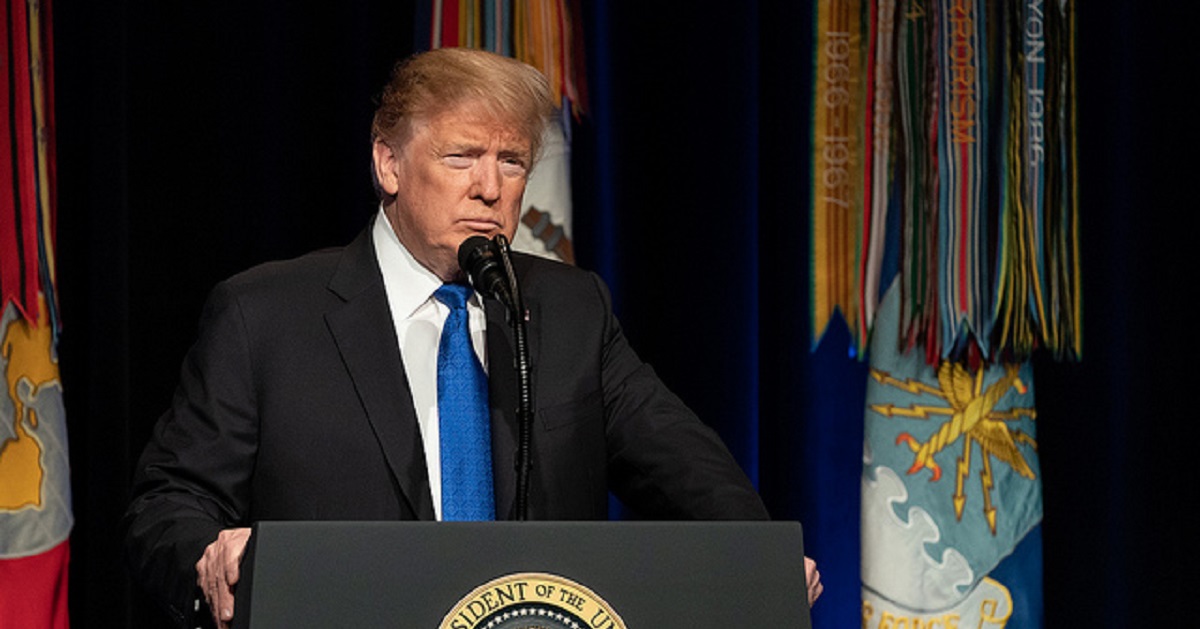
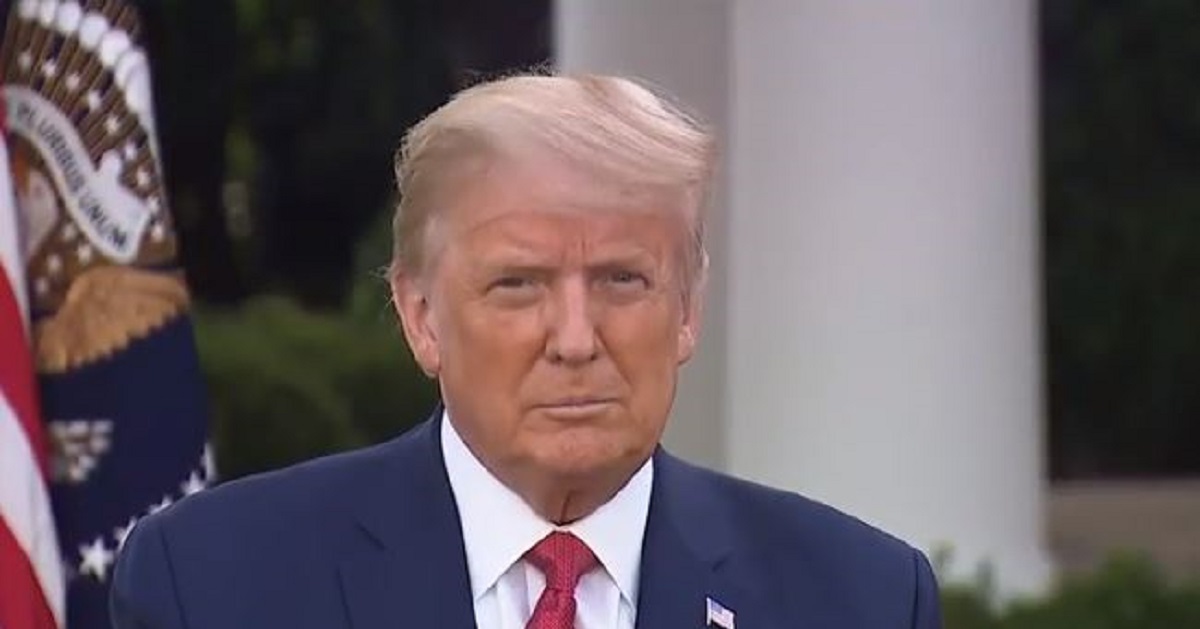
President Trump proclaimed on Friday, opening the Northeast Canyons and Seamounts Marine National Monument to commercial fishing, revoking prohibitions that had locked American fishermen out of nearly 5,000 square miles of Atlantic waters off the New England coast.
The White House branded the move part of Trump's "America First Fishing Policy" — a direct reversal of restrictions first imposed by Barack Obama in 2016 and reinstated by Joe Biden after Trump lifted them during his first term.
Three presidential terms. Three reversals. The 4,913-square-mile monument has become a regulatory ping-pong ball, and the people who actually make their living on the water have paid the price every time the pendulum swings toward Washington's environmental bureaucracy.
The White House made a straightforward argument: the fishing ban was never necessary in the first place.
"Prohibiting commercial fishing is not necessary for the proper care and management of the Monument, as many fish species are highly migratory, not unique to the area, and are already protected through existing laws, such as the Magnuson-Stevens Fishery Conservation and Management Act."
That last point matters more than environmentalists want to admit. The Magnuson-Stevens Act is one of the most successful fishery management laws in the world. It already governs catch limits, habitat protections, and sustainability standards across U.S. waters. Layering a blanket commercial fishing ban on top of it wasn't science — it was symbolism, as Breitbart reports.
Obama established the monument in 2016, describing it as a way to protect vulnerable undersea corals and ecosystems. The timing — the final year of his presidency — was characteristic of an administration that loved using executive authority to lock up natural resources on its way out the door. Biden's restoration of the ban followed the same instinct: regulate first, ask fishermen later.
The White House statement framed the proclamation in broader economic terms:
"President Trump is committed to removing unnecessary restrictions on American fishermen in order to strengthen the U.S. economy, support coastal communities, and restore fairness to an industry disadvantaged by overregulation and unfair foreign competition."
John Williams, president and owner of the Atlantic Red Crab Company in New Bedford, Massachusetts, put it plainly to the Associated Press:
"We deserve to be rewarded, not penalized. We're demonstrating that we can fish sustainably and continue to harvest on a sustainable level in perpetuity."
Williams represents the kind of working Americans who rarely get a seat at the table when Washington decides how to manage the ocean. New England's fishing communities are not abstract stakeholders in a policy debate. They are families, businesses, and towns whose economic survival depends on access to the waters their industry has worked for generations.
The conservation establishment treats commercial fishermen as the problem. The fishermen themselves — the ones who depend on healthy fish stocks for their livelihoods — understand sustainability better than most of the advocates who lobby against them from offices hundreds of miles inland.
Gib Brogan, fisheries campaign director at the environmental group Oceana, offered the predictable counter to the Associated Press:
"The Northeast Canyons and Seamounts Marine National Monument was created to provide strong protections for the wide range of marine life that live in these unique habitats."
Note what's missing from that statement: any specific claim that commercial fishing in the monument area has caused measurable ecological harm. Brogan describes why the monument was created. He doesn't demonstrate that the fishing ban achieved anything that the Magnuson-Stevens Act couldn't.
This is the pattern with environmental opposition to resource access. The argument is always about intention — what the policy was "created to" do — never about whether the restriction actually accomplished more than existing law. It's preservation by declaration, where drawing a line on a map substitutes for evidence-based management.
When the federal government closes off nearly 5,000 square miles of ocean to commercial fishing without demonstrating that existing regulations are inadequate, it isn't protecting the environment. It's choosing environmentalist aesthetics over the livelihoods of coastal Americans. The fish in that monument are highly migratory — they don't respect the boundaries Obama drew. But the fishermen who lost access to those waters felt every mile of them.
Trump announced the move on Truth Social, calling it:
"another BIG WIN for Maine, and all of New England."
He also aimed at the whiplash the industry has endured:
"In my first term, I reversed the prohibitions placed on commercial fishing, but Joe Biden, or whoever was using the AUTOPEN, foolishly reinstated them. Since Day One, I have taken historic action to end these disastrous policies."
The broader story here extends well beyond one marine monument. For decades, the progressive approach to conservation has followed a simple formula: restrict access, claim moral authority, and force the people who actually work the land and sea to prove they deserve permission to keep doing what they've always done.
It's a framework that treats American industry as guilty until proven innocent — and even then, the restrictions rarely come off. Obama imposed the ban. Trump lifted it. Biden reimposed it. The only constant was uncertainty for the fishermen caught in the middle.
The White House statement connected the proclamation to broader economic goals:
"By revoking the Obama-Biden restrictions, President Trump's proclamation supports New England's fishing communities, in turn fostering economic growth and job creation in coastal regions."
Coastal New England doesn't need another layer of federal protection from an industry that already operates under one of the world's most stringent fishery management frameworks. It needs Washington to stop treating working Americans as collateral damage in a conservation branding exercise.
The monument is open. The fishermen can fish. And the waters will be just fine — managed, as they already were, by the law.