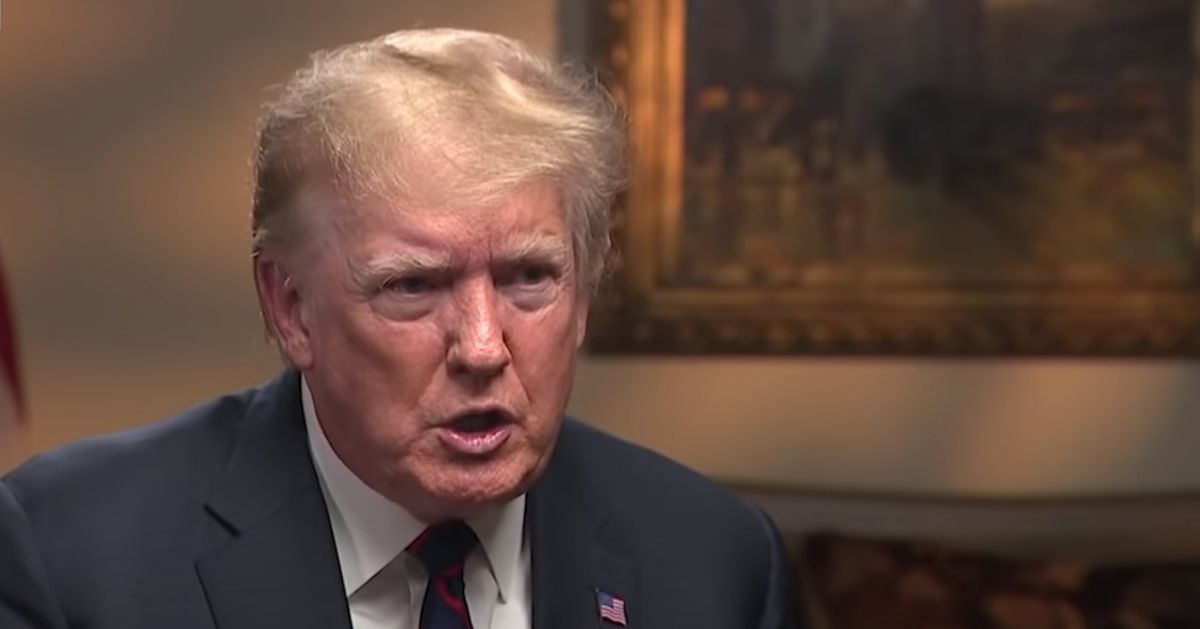
President Donald Trump has taken a bold step against Cuba, declaring it a national security threat with a sweeping executive order signed on Thursday.
Breitbart reported that on Thursday, Trump signed an executive order labeling Cuba a national emergency due to its perceived threats to U.S. security and foreign policy. The order targets Cuba’s Communist regime under a “maximum pressure” campaign, citing its support for terrorism and regional instability.
It also establishes a mechanism to impose tariffs on any nation directly or indirectly supplying oil to Cuba, aiming to cripple the regime’s barely functional infrastructure.
The move comes after a long history of tension, with Cuba first placed on the U.S. State Sponsors of Terrorism list in 1982, removed in 2015 under President Barack Obama, re-added by Trump in January 2021, and nearly removed again by President Joe Biden in January 2025 before Trump revoked that action in the first hours of his second term.
Supporters of the executive order argue it’s a long-overdue response to Cuba’s troubling alliances with anti-U.S. regimes like Russia, Iran, and Venezuela.
For over six decades, the Castro regime has been accused of backing terrorist groups such as Hamas, Hezbollah, and Colombia’s FARC and ELN guerrillas. This isn’t just posturing—it’s a direct challenge to a regime that’s dodged accountability for too long.
Trump’s order also highlights Cuba’s alleged persecution of dissidents, suppression of free speech, and role in spreading communism across the region. These aren’t abstract complaints; they’re documented issues that have destabilized the Western Hemisphere. The White House is signaling that enough is enough.
“President Trump has consistently confronted regimes that threaten U.S. security and interests, delivering where others have failed to hold adversaries accountable,” the White House stated. That’s a sharp jab at past administrations, especially Obama’s “Cuban Thaw,” which many see as a misguided olive branch to a hostile government. The message now is clear: no more concessions.
The executive order’s most immediate bite is its focus on oil, a critical resource for Cuba’s struggling infrastructure. By threatening tariffs on any country supplying oil to Havana, Trump aims to choke off a key lifeline—especially after Venezuela’s socialist regime, a former supplier, collapsed following U.S. operations to remove Nicolás Maduro.
Mexico, which has supplied oil since 2023, recently canceled a shipment under pressure, though President Claudia Sheinbaum remains cagey on plans.
Cuba’s figurehead president, Miguel Díaz-Canel, fired back on Friday with a social media tirade, accusing Trump of trying to “stifle the Cuban economy” with baseless claims. That’s a predictable deflection from a regime that’s mastered the art of victimhood. If the economy is suffering, perhaps it’s time to look inward at decades of failed policies.
Díaz-Canel also sneered, “Didn’t the Secretary of State and his buffoons say that the blockade didn’t exist?” It’s a tired rhetorical trick—call it a blockade, not an embargo, to paint the U.S. as the aggressor. But actions like supporting terrorist groups and anti-U.S. regimes aren’t exactly winning Cuba any sympathy.
Trump’s stance on Cuba isn’t an isolated move; it’s part of a broader strategy to confront adversarial regimes. Recent months have seen strikes on Iran’s nuclear facilities and decisive action against Maduro in Venezuela, cutting off Cuba’s oil supply from that ally. The White House is flexing muscle, not just issuing empty threats.
On January 11, Trump posted on Truth Social, warning Cuba directly with a blunt ultimatum. The all-caps message was unmistakable: no more oil, no more money, and a narrow window to negotiate. It’s a high-stakes gamble, but one that signals zero tolerance for hostile actors in America’s backyard.
The U.S. embassy in Havana echoed this resolve on Friday morning, quoting Secretary of State Marco Rubio on the need to keep the Western Hemisphere free of adversaries. That’s not just diplomacy—it’s a reminder that geography matters, and the U.S. won’t let its neighborhood become a launchpad for threats.
Cuba’s alliances with nations like Iran, Syria, and North Korea—fellow members of the State Sponsors of Terrorism list—only fuel the urgency of Trump’s order. These aren’t harmless partnerships; they’re networks that undermine U.S. interests and embolden instability. Tariffs on oil suppliers could force a reckoning, or at least a rethink, among Cuba’s enablers.
While the order allows for modifications if Cuba or affected nations address U.S. security concerns, the ball is squarely in Havana’s court. Trump has made it clear over the past few days that Cuba is a priority target for his foreign policy. Will this pressure finally crack the regime’s defiance, or just harden its resolve?