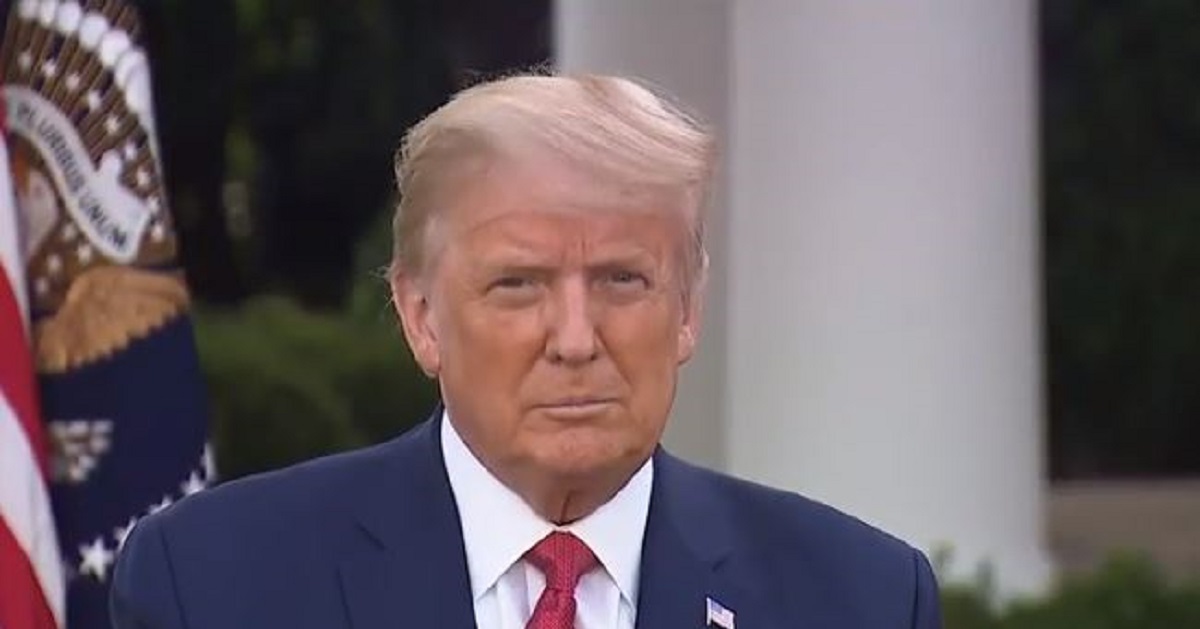
President Donald Trump has dropped a major policy shift that could reshape state budgets and immigration enforcement across the nation.
Trump declared on Wednesday via a social media post that federal funding to states harboring so-called sanctuary cities will cease as of Feb. 1. The announcement, made without naming specific states or cities, comes amid the administration’s ongoing efforts to strengthen immigration enforcement.
While the administration pushes for stricter enforcement, there’s growing concern over recent enforcement tactics, especially following a tragic incident in Minneapolis where a federal officer fatally shot a motorist.
This policy targets jurisdictions perceived as limiting cooperation with federal immigration authorities, as previously highlighted by the Justice Department in a list published last August identifying states like California, Illinois, Minnesota, New York, and Washington, and cities including Chicago, Boston, Denver, New York City, Los Angeles, and Seattle, according to NewsNation.
Trump didn’t hold back in his social media statement, framing these jurisdictions in sharp terms. He wrote, “effective February first, no more payments will be made by the federal government to states for their corrupt criminal protection centers.” That’s a bold line in the sand, signaling a no-nonsense approach to what he sees as defiance of federal law.
But let’s unpack this—cutting federal dollars isn’t just a financial penalty; it’s a message to states that the administration won’t tolerate policies shielding unauthorized migrants from deportation. The question is whether this move will force compliance or simply deepen the divide between state and federal priorities.
Trump doubled down with another pointed remark: “All they do is breed crime and violence!” He added, “If states want them, they will have to pay for them!” This isn’t just rhetoric; it’s a direct challenge to state governments to foot the bill if they insist on maintaining these controversial policies.
Now, while the frustration over crime tied to lax enforcement resonates with many, the blanket accusation of breeding violence feels like a heavy brushstroke. There’s a real concern about public safety, but painting every sanctuary jurisdiction as a hotbed of chaos risks oversimplifying a complex issue.
Looking at the Justice Department’s August report, it’s clear the administration has been building its case for months. That list—calling out states and cities for policies that “impede enforcement of federal immigration laws”—set the stage for this funding halt. It’s a calculated escalation, not a sudden whim.
States like California and New York, alongside cities such as Los Angeles and Chicago, were flagged in that report for obstructing federal efforts. While Trump hasn’t specified who’ll face the cuts come Feb. 1, the writing’s on the wall for these jurisdictions. They’re now staring down a fiscal cliff unless they rethink their stance.
The timing of this announcement, amid a broader crackdown on illegal immigration, adds another layer of tension. Public pushback has been mounting, particularly after the Minneapolis shooting, which has fueled distrust in federal tactics. It’s a messy backdrop for a policy that’s already divisive.
Supporters of the funding halt argue it’s high time states align with federal law instead of pushing a progressive agenda that undermines national security. They see this as a necessary step to ensure accountability and protect communities from potential risks tied to non-cooperation.
On the flip side, critics contend that slashing funds punishes entire states for local policies, potentially harming unrelated programs like education or infrastructure. There’s a valid worry that vulnerable populations could bear the brunt of these cuts, even if the intent is to target specific jurisdictions.
Immigration enforcement is a thorny issue, and any discussion must acknowledge the human element before diving into policy critiques. Families and communities are often caught in the middle of these debates, and while border security matters, so does ensuring fair treatment during enforcement actions.
Ultimately, Trump’s decision to pull federal funding starting Feb. 1 is a gamble. It might pressure states to fall in line, but it could just as easily harden resistance from those who view sanctuary policies as a moral stand.
As this policy unfolds, the nation will be watching whether it’s a turning point in immigration enforcement or just another chapter in a long-running tug-of-war. One thing’s certain: the debate over state autonomy versus federal power isn’t going away anytime soon.