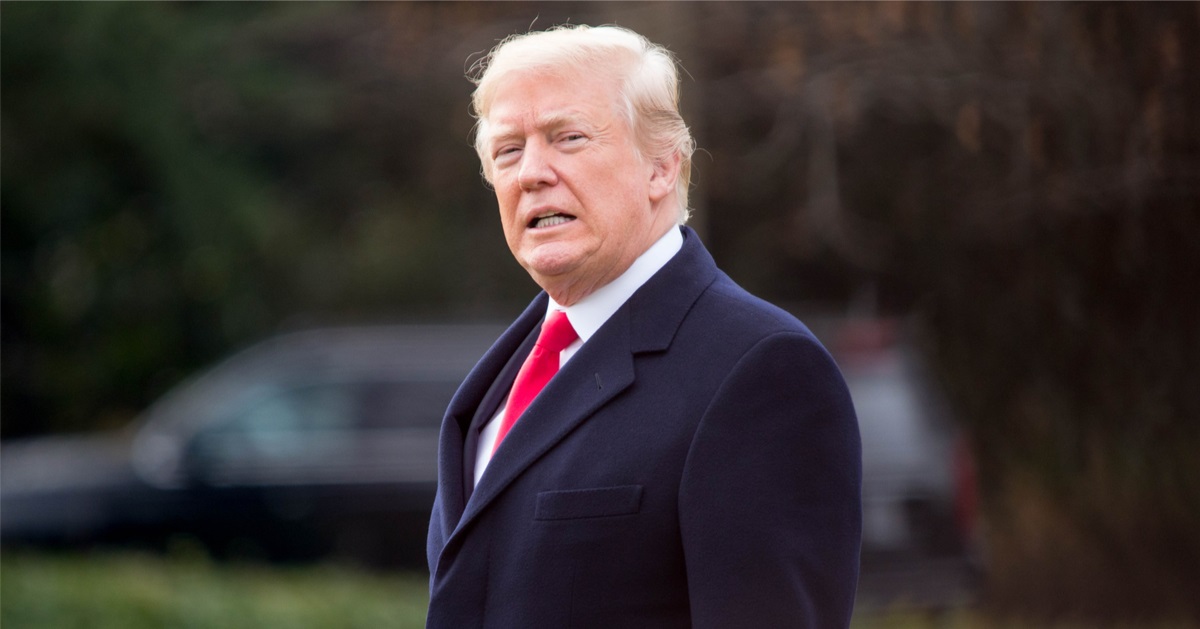
The Trump administration announced Thursday it has finalized a new rule creating a government employment classification called "Schedule Policy/Career"—a designation that converts a wide range of federal policy-related employees into a status similar to political appointees who can be fired at will. Up to 50,000 federal workers stand to be impacted by the change.
The rule takes effect on March 7, Just the News reported.
Office of Personnel Management Director Scott Kupor framed the move as a straightforward accountability measure, not an ideological litmus test:
"This is not about people's views or ideas. This is about whether they are refusing to actually affect their duties on behalf of the American people consistent with the objectives of this administration."
That distinction matters. The federal bureaucracy has long operated under a comfortable fiction: that career employees merely execute policy rather than shape it. Anyone who has watched an administration's agenda die quietly in the rulemaking process knows better.
The American civil service was designed to insulate government workers from partisan spoils. That was a reasonable reform in 1883. Over the intervening century and a half, the insulation calcified into something else entirely: a nearly impenetrable shield that protects not just competent, nonpartisan workers but also those who actively sabotage elected leadership.
Every president discovers this. Directives travel from the Oval Office through layers of career staff who slow-walk implementation, rewrite guidance to blunt its impact, or simply ignore instructions they find disagreeable. The result is a permanent government that answers to no one—not to the president the voters chose, and certainly not to the voters themselves.
Schedule Policy/Career targets the specific layer of federal employees whose roles are inherently policy-related. These are not rank-and-file letter carriers or park rangers. They are the people drafting regulations, interpreting statutes, and making the discretionary calls that determine whether an administration's platform becomes reality or vanishes into interagency review.
Kupor addressed this directly:
"The only impact Policy/Career has is if their disagreement leads them to then try to actively thwart or undermine the execution of those priorities, then that [is] behavior that we want to declare to people is not acceptable."
In other words: think whatever you want. Vote however you choose. But if your job is to implement the policy direction set by an elected president, implement it—or find a different line of work.
The rule also changes how federal employees reclassified under Schedule Policy/Career can report waste, fraud, or abuse. Instead of taking complaints to the Office of Special Counsel, these employees will be required to make complaints of wrongdoing to their own agency.
This provision will draw the loudest criticism. Opponents will cast it as a silencing mechanism. But consider the dynamic it replaces: a system in which disgruntled employees could route policy disagreements through whistleblower channels at an independent office, dressing up insubordination as conscience. The Office of Special Counsel became, in practice, an alternative chain of command for bureaucrats who didn't like their actual chain of command.
Routing complaints through the agency itself doesn't eliminate oversight. It restores a basic organizational principle—that problems get addressed within the institution responsible for solving them, under leaders accountable for the outcome. Agencies still answer to Congress, to inspectors general, and to the courts. The avenue narrows; it doesn't close.
Unions have opposed the change, arguing it politicizes the federal workforce, which was previously intended to be neutral and expertise-oriented. No specific union representatives have gone on record with detailed objections in the available reporting, which tells its own story. The opposition is general, reflexive, institutional—the bureaucracy defending itself the way any organism defends itself against a threat to its survival.
The "neutral and expertise-oriented" framing deserves scrutiny. Federal employee unions donate overwhelmingly to one political party. The workforce they represent in Washington, D.C., votes overwhelmingly in one direction. The agencies they populate have spent years embedding policy preferences into regulatory structures that persist across administrations. Calling this arrangement "neutral" requires a definition of neutrality that no honest observer would recognize.
What unions are really defending isn't neutrality. It's permanence. The ability to outlast any president who challenges the bureaucratic consensus, knowing that civil service protections make removal so difficult and time-consuming that most administrations don't bother trying.
Self-government means something, or it doesn't. Americans vote for a president. The president sets a policy direction. The federal workforce exists to carry it out. When career employees substitute their own judgment for the elected president's—not on questions of legality, but on questions of policy priority and direction—they aren't exercising expertise. They're exercising power they were never granted.
This is the core tension that Schedule Policy/Career addresses. Not the tension between expertise and politics, as critics frame it, but the tension between democratic accountability and bureaucratic autonomy. A government that cannot be redirected by elections is not a democracy in any meaningful sense. It is an administrative state that tolerates elections as a formality.
The number—up to 50,000 employees—sounds large until you remember that the federal civilian workforce numbers over two million. This rule touches roughly two percent. The two percent whose jobs are, by definition, about shaping policy outcomes. If any subset of federal workers should be accountable to the elected leadership that sets those outcomes, it is precisely this group.
Legal challenges are virtually guaranteed. The same coalition of unions, advocacy groups, and sympathetic judges that has contested nearly every structural reform of the federal workforce will mobilize before the March 7 effective date. The question is whether any court will issue an injunction—and whether such an injunction could survive appeal.
The administration has the advantage of finalization. This is not a proposal or an executive order that can be characterized as hasty. It is a completed rulemaking process through OPM, the agency specifically charged with managing the federal workforce. That procedural foundation matters in court.
It also matters politically. Every legal challenge becomes a public argument about whether federal employees should be able to defy the president who signs their paychecks. That is not an argument the bureaucracy's defenders want to have in front of the American public.
There is a difference between punishing federal workers and holding them accountable. Schedule Policy/Career does not strip anyone of their salary for holding the wrong opinions. It does not create an ideological test. It establishes a straightforward proposition: if your role is to execute policy, and you refuse to execute it, your employer can replace you. This is how every private-sector organization on earth operates. It is how every state government operates. It is how the military operates.
The federal bureaucracy's exemption from this basic principle was always an anomaly, not a virtue. The anomaly survived because it served the interests of the people inside the system—and because reforming it required the kind of sustained political will that most administrations lacked.
That will now exist. The rule is finalized. March 7 is five weeks away.
Fifty thousand federal employees are about to learn what accountability feels like. For most of them—the ones doing their jobs faithfully—nothing will change. For the rest, the message from OPM Director Kupor is unambiguous: the era of bureaucratic resistance disguised as public service is over.