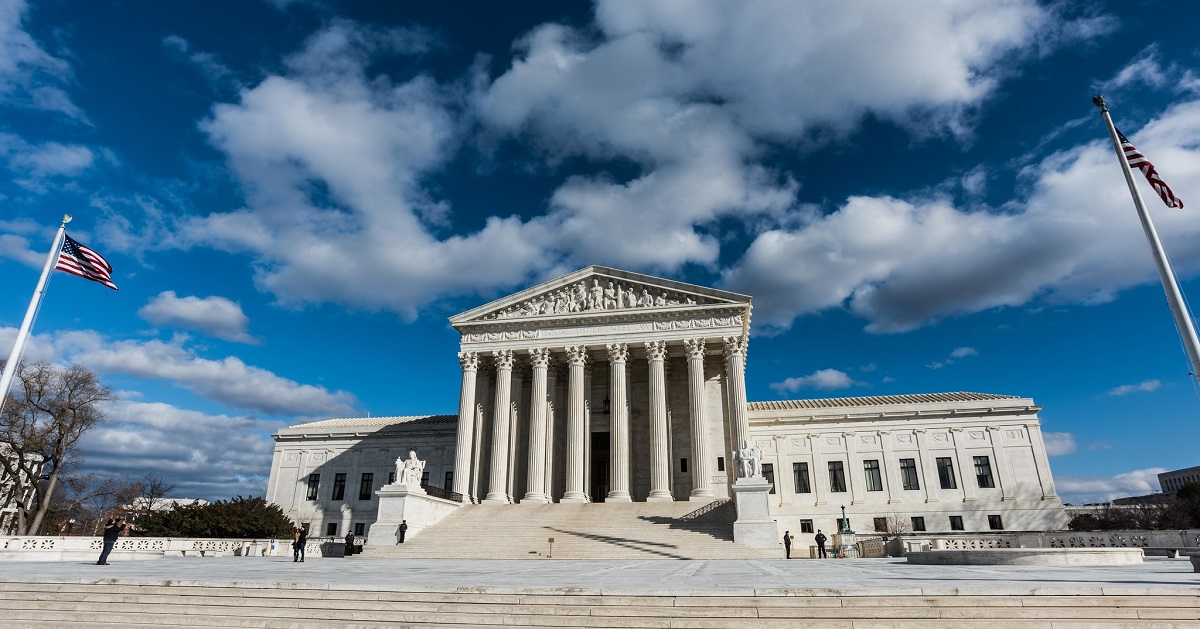
The Supreme Court last week handed down a unanimous decision reversing a billion-dollar copyright verdict against Cox Communications, ruling that the internet service provider cannot be held liable for copyright infringement committed by its own subscribers. The decision, written by Justice Clarence Thomas, dismantles years of lower court rulings that had treated ISPs as de facto enforcers of the recording industry's intellectual property claims.
The ruling overturns decisions by the U.S. Court of Appeals for the Fourth Circuit, which had upheld findings of willful contributory infringement against Cox. The case has been remanded for further proceedings consistent with the Court's opinion.
For anyone who believes the government shouldn't conscript private companies into policing the behavior of their customers, this is a significant win.
Justice Thomas, joined by seven justices, wrote for the court with a clarity that left little room for reinterpretation, according to Just the News. The opinion drew a firm line between providing a general-purpose service and actively facilitating illegal activity:
"Cox neither induced its users' infringement nor provided a service tailored to infringement."
That distinction matters enormously. The record labels, led by Sony Music Entertainment, had argued that Cox's mere knowledge that some subscribers used its network to pirate music was enough to make the company a contributory infringer. Thomas rejected that theory outright:
"Under our precedents, a company is not liable as a copyright infringer for merely providing a service to the general public with knowledge that it will be used by some to infringe copyrights."
Thomas also noted that ISPs have limited ability to monitor or control individual behavior beyond enforcing contractual terms that prohibit infringement. In other words, Cox already told its subscribers not to pirate. What more, exactly, was it supposed to do?
Cox Communications serves about 6 million subscribers across the country. A jury had awarded the record labels damages exceeding $1 billion. Pause on that number. A billion dollars, not because Cox itself copied a single song, but because some of the millions of people who pay for internet access used that access to break the law.
The legal theory behind the original verdict would have transformed every internet provider in America into a copyright enforcement arm of the entertainment industry. If sustained, it would have created a regime where ISPs faced existential financial liability for failing to sufficiently surveil and punish their own customers. The incentive structure is obvious: cut off users at the first accusation, ask questions never.
Cox itself framed the ruling in a public statement as "a decisive victory for the broadband industry and for the American people who depend on reliable internet service." The company also made a point that should have been obvious from the start: ISPs "are not copyright police and should not be held liable for the actions of their customers."
Justice Sotomayor, joined by Justice Jackson, concurred in the judgment but wrote separately. She agreed Cox could not be held liable on these facts but expressed concern that the majority opinion unnecessarily narrowed potential common-law theories of secondary liability, such as aiding and abetting.
Translation: she wanted to leave the door open for future plaintiffs to try different legal theories against ISPs. The majority chose to close that door more firmly. Given the stakes involved, that was the right instinct. Vague, expansive theories of secondary liability are precisely the kind of legal ambiguity that invites litigation-as-business-model strategies from industries that would rather sue intermediaries than adapt to the digital marketplace.
This case fits a familiar template. A legacy industry, confronted with technological disruption, turns to the courts to force intermediaries into doing its enforcement work. The recording industry has spent two decades cycling through targets:
Each escalation represents the same underlying refusal to accept that the internet changed the economics of content distribution permanently. Rather than innovate pricing and access models (which, to be fair, streaming services eventually did), the industry's legal apparatus kept searching for a deep-pocketed defendant to hold responsible for consumer behavior.
The Supreme Court just told them the ISP isn't it.
Digital rights advocates and internet access groups praised the decision. Representatives of the music industry warned of potential consequences, though the record labels have not yet publicly commented on their next steps.
The practical implications are straightforward. ISPs will not be forced to become surveillance networks monitoring what their subscribers download. They will not face billion-dollar judgments for providing the same general-purpose internet access that every American household and business depends on. And the principle that providing a lawful service does not make you liable for every unlawful use of that service remains intact.
For conservatives who have watched with alarm as corporations are increasingly deputized to police speech, behavior, and content on behalf of powerful interests, this ruling reinforces a critical boundary. There is a difference between a platform and a publisher, between a conduit and a co-conspirator, between a service provider and an accomplice.
The Court saw that line. Nine justices agreed it exists. That unanimity, in this era, is worth noting all by itself.