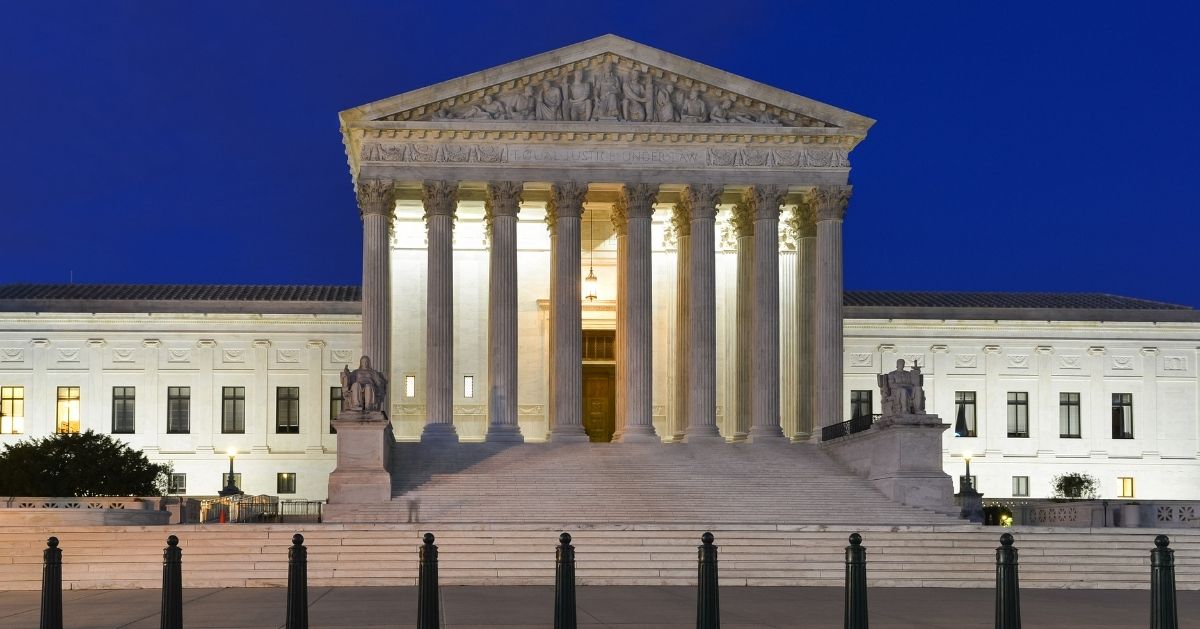
The Supreme Court announced Tuesday that it has developed new software to help justices identify potential conflicts of interest, a move that adds automated teeth to the ethics framework the court adopted in 2023.
The new system will run automated recusal checks by comparing party and attorney information against conflict lists maintained by each justice's chamber. Attorneys filing cases before the court will now be required to provide stock ticker symbols of all publicly traded companies involved in their cases. The changes take effect on March 16.
According to Newsmax, The court explained the mechanics in a statement on Tuesday:
"Most of the changes are designed to support operation of newly developed software that will assist in identifying potential conflicts for the justices, and the revisions impose a number of new requirements upon filers to support the software."
The logic is straightforward. Justices maintain individual conflict lists in their chambers. The software cross-references those lists against the parties and attorneys in each case. When a match surfaces, the justice is flagged. The ticker symbol requirement ensures that corporate affiliations, the kind most likely to create a financial conflict, don't slip through under layers of subsidiary names and legal entities.
It's the kind of procedural improvement that sounds boring and matters enormously. Recusal decisions have historically relied on justices' self-policing their own conflicts, a system that works only as well as each justice's memory and diligence. Software doesn't forget a stock holding.
In 2023, the justices adopted a written statement of ethical principles governing their conduct, the first formal Code of Conduct for Justices of the Supreme Court of the United States. That move came after years of heightened scrutiny over justices' financial disclosures, book deals, and relationships with wealthy benefactors who provided luxury travel.
The court's Tuesday statement made clear the software was a direct outgrowth of that code:
"When issuing the Code of Conduct for Justices of the Supreme Court of the United States, the justices directed court officers to evaluate whether such software might be useful for the Court."
Critics at the time said the 2023 code lacked an enforcement mechanism. The new software doesn't fully answer that objection, but it does something more practical: it reduces the likelihood that a conflict goes unnoticed in the first place. Prevention is a form of enforcement.
Since the start of the current court term in October, justices have recused themselves more than 30 times, according to a review of the court's docket by The Hill. That figure suggests the court already takes conflicts seriously, and it undercuts the narrative that justices blithely ignore their financial entanglements.
Justices traditionally recuse themselves when they have a financial interest in a case, a prior involvement with a party, or some other relationship that could reasonably call their impartiality into question. The new software simply makes the screening process faster and more reliable.
The left has spent years treating Supreme Court ethics as a political weapon, less interested in actual reform than in delegitimizing a conservative court. Every disclosure story, every travel report, every breathless investigative piece served the same purpose: erode public confidence in an institution that progressives can no longer control through appointments.
That campaign makes this announcement particularly significant. The court isn't responding to political pressure with a press conference or a defensive op-ed. It's building infrastructure. Automated systems. Mandatory filing requirements. Concrete procedural changes with a specific implementation date.
This is what institutional self-governance looks like when it's serious. Not a panel discussion. Not a blue-ribbon commission that reports in eighteen months. Software that goes live on March 16.
The same people who demanded ethics reforms will likely find reasons to dismiss this one. It doesn't give Congress oversight authority. It doesn't create an external enforcement body. It doesn't, in other words, hand the left a lever to use against justices whose rulings they dislike. That was always the real ask.
But for anyone genuinely concerned about conflicts of interest rather than court-packing pretexts, this is a serious step. The court identified a weakness in its process, directed its officers to find a solution, and implemented one. The justices policed themselves, and the result is a system that's harder to game, not easier.
Lower federal judges have long been bound by a formal code of conduct. The Supreme Court operated for decades without one, relying on custom and individual judgment. The 2023 code closed that gap on paper. The new software closes it in practice.
That distinction matters more than the critics will admit.