New York City Mayor Zohran Mamdani announced Thursday that he will sign an executive order creating an Office of Community Safety, housed within the mayor's office and overseen by a newly appointed deputy mayor.
Fox News reported that the office will centralize a constellation of existing programs, from gun violence prevention to community mental health, under a single bureaucratic roof. The price tag: $1.1 billion.
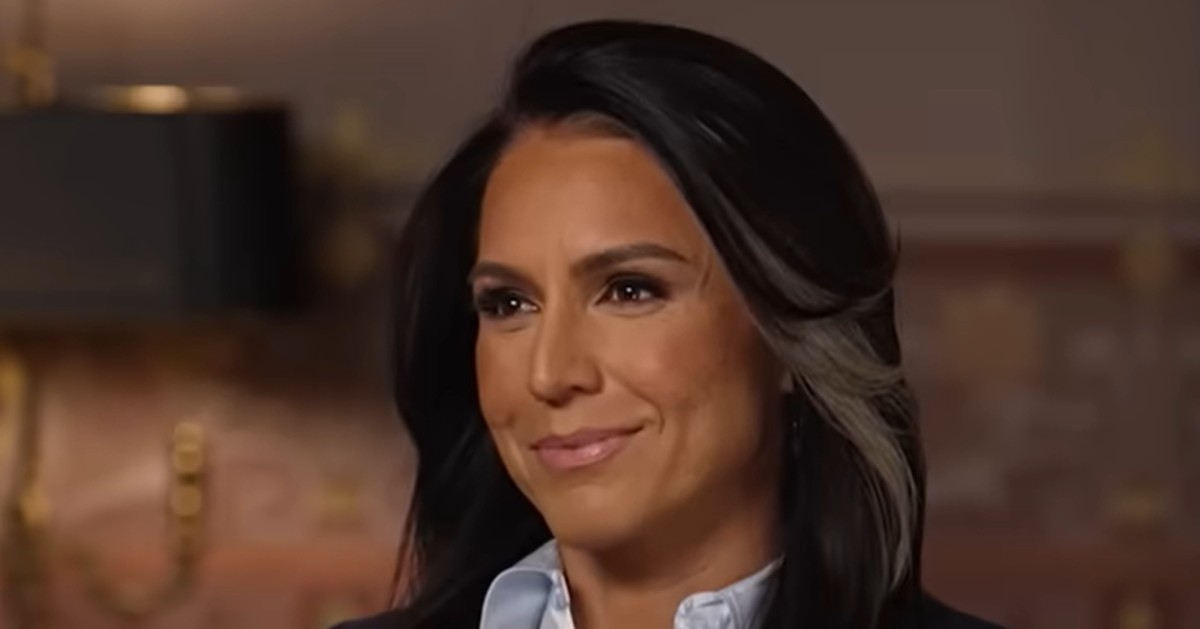
Renita Francois, a veteran of the de Blasio administration's Office of Criminal Justice, will serve as deputy mayor for community safety. According to Mamdani, she won't just manage her own portfolio. She'll sit "in every single room where we are making the most critical decisions about the future of this city, ensuring that the lens of community safety is also being applied."
Every room. Every decision. Through the "lens of community safety." If that sounds like a parallel power structure layered on top of the NYPD, that's because it is.
The Office of Community Safety will absorb several existing city offices under one umbrella:
Mamdani framed the consolidation as a corrective to years of fragmented governance. He told reporters:
"Crime is one of the most complex issues we face, and yet our city's approach for far too long has been to rely on a patchwork of programs to deal with interconnected problems."
The mayor pledged to revise the city's police response in non-criminal emergencies, including mental health crises. A centerpiece of that effort is the expansion of B-HEARD, the Behavioral Health Emergency Assistance Response Division, a pilot program launched in 2021 that sends non-police teams to respond to 911 mental health calls.
Mamdani said the executive order gives Francois the "policymaking expertise and power to ensure that B-HEARD is actually living up to the spirit of its intention."
Note the framing. B-HEARD has been running for five years. The mayor isn't celebrating their success. He's admitting it hasn't lived up to its own intentions and proposing to fix it by giving one appointee more power over its direction. The solution to a government program that underperformed is, naturally, a bigger government program with a broader mandate.
Mamdani's language was careful but unmistakable. He described the initiative as a response to "ever-expanding expectations on the police department" and said the city has asked officers "to address every failure of our social safety net." The implication is clear: policing isn't the answer to New York's problems. Social services are.
This is the ideological core of the progressive public safety movement, dressed in the language of administrative efficiency. Consolidating offices and appointing a deputy mayor sounds like streamlining.
In practice, it creates a parallel authority whose explicit purpose is to pull responsibilities away from law enforcement and hand them to social workers, mental health counselors, and community organizations.
NYPD Commissioner Jessica Tisch stated after the announcement that read as diplomatically as one might expect from a commissioner who now shares the public safety portfolio with a deputy mayor.
She said that keeping New Yorkers safe "requires more than one approach" and emphasized making sure people have access to resources, whether that's career training, an after-school program, or a police response."
Police response came last on that list. Read into that what you will.
Renita Francois served in the Office of Criminal Justice during the de Blasio administration. Mamdani praised her background, saying her "commitment to justice began in her childhood in South Central LA, continued in her early career working in Brooklyn Family Court, and has been guided by the many years she has spent trying to transform both the way that government approaches public safety and the outcomes it can deliver."
Transforming the way government approaches public safety. That phrase does a lot of work. For New Yorkers who lived through the de Blasio years, when the city's quality of life visibly deteriorated, subway crime surged, and officers were demoralized by a mayor who seemed to view them as the problem, the appointment of a de Blasio-era criminal justice official to oversee a $1.1 billion alternative-to-policing apparatus is not reassuring. It is a signal.
Perhaps the most revealing moment of the announcement came from Public Advocate Jumaane Williams, who preemptively acknowledged what everyone already suspects. He told the press:
"There will be some mistakes. That happens everywhere. It happens in the police department."
Williams then urged cooperation, calling the initiative "the correct journey" and insisting "the nation is watching us." He asked critics to help "pave out" the bumps in the road rather than resist the program.
This is the tell. Before a single case is handled, before a single 911 mental health call is rerouted to a non-police team under the new structure, city leaders are already building the rhetorical framework for when things go wrong. Mistakes will happen. Don't blame us. Blame the bumps.
When a police officer makes a mistake, the progressive establishment demands systemic reform, independent review boards, budget cuts, and firings. When a progressive social experiment produces the same kinds of failures, the ask is for patience and understanding. The asymmetry tells you everything about who these policies are designed to serve. It isn't the public.
New York is not the first city to try this. Progressive mayors across the country have experimented with rerouting emergency calls away from police, standing up "violence interrupter" programs, and creating new bureaucracies to manage public safety without the inconvenience of actual law enforcement. The results have been, charitably, mixed. In many cities, they have been catastrophic.
The fundamental problem with the approach is not that social services have no role in public safety. They do. The problem is that progressive leaders consistently treat policing and social services as a zero-sum equation.
Every dollar, every responsibility, every ounce of institutional authority given to the new office is framed as something taken from the police. Mamdani said it plainly: stop asking police to do the job of everyone.
Nobody asked the police to do the job of everyone. New Yorkers asked police to keep them safe. The question Mamdani has never convincingly answered is whether a $1.1 billion bureaucracy overseen by a de Blasio-era appointee will do that job better than the officers already doing it.
New York is about to run the experiment. Again. Williams was right about one thing. The nation is watching.