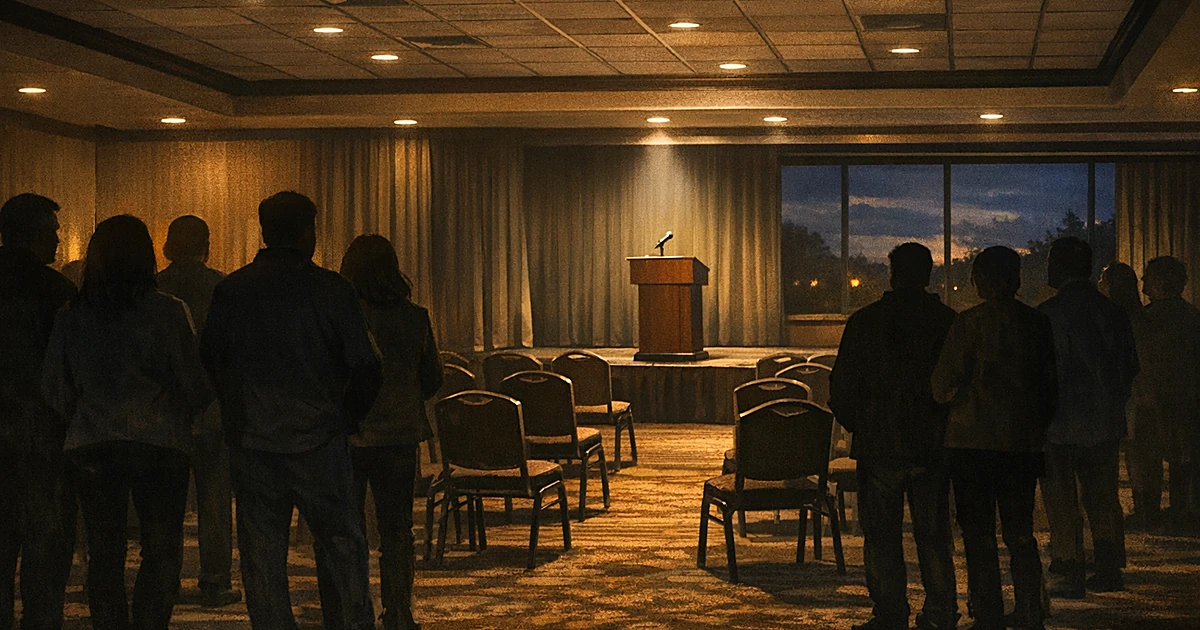
Judge Maria Lazar conceded her Wisconsin Supreme Court bid Tuesday night after Judge Chris Taylor opened a commanding lead, roughly 20 percentage points, within about 40 minutes of polls closing. Standing before a few dozen supporters at her watch party in Pewaukee, Lazar said she had already called Taylor to congratulate her, then told the room not to hang their heads.
The speed of the call told the story. Networks and wire services barely had time to tally precincts before the margin made further counting a formality. For Wisconsin Republicans, the loss extends a painful streak in statewide judicial contests, and raises hard questions about whether the party's infrastructure and donor base are keeping pace with the left's investment in state courts.
Wisconsin Republican Party Chairman Brian Schimming pointed to one factor before the final numbers even settled. He told WKOW's 27 News earlier in the evening that lack of funding played a role in the outcome, in part because the seat at stake would not have changed the court's ideological balance. That calculus, don't spend where the math doesn't flip, may be rational on a spreadsheet. It is cold comfort on election night.
Lazar struck a tone that was gracious but unmistakably forward-looking. She called the campaign "the opportunity of a lifetime" and said she had run the kind of race she always promised.
As she told the room in Pewaukee:
"I care about the courts so much, and I have led the type of campaign I always said I would. I have been honest, I have been transparent, I have been above board, I have led with integrity and I want you to know that is how we need to run races in the state of Wisconsin."
She added simply: "the fight isn't over." Whether that signals another run or a broader rallying cry for conservative judicial candidates, she did not say. What she did say is that she will return to her seat on the Wisconsin Court of Appeals, a bench where she can still shape the law, even if the top court slipped away.
Lazar also urged that future judicial races include at least three televised debates, a proposal that cuts in a clear direction. Candidates who believe their ideas hold up under scrutiny tend to want more debates, not fewer. The suggestion is worth watching, particularly as both parties gear up for the next cycle of judicial elections in a state where the courts have become a proxy battlefield for national politics.
The Pewaukee watch party drew notable Republican figures. Former Governor Scott Walker attended. So did Fond du Lac County District Attorney Eric Toney, who is running for state attorney general. And Brad Schimel, himself a former Wisconsin Supreme Court candidate, was on hand, a reminder that this ground has been contested before, and lost before.
Schimel lost his own high-profile Supreme Court race last year to Democratic-backed candidate Susan Crawford. That defeat, followed now by Lazar's, amounts to back-to-back setbacks for conservatives trying to compete for Wisconsin's highest bench. The ideological composition of the court matters enormously. State supreme courts increasingly decide cases on redistricting, election law, regulatory authority, and individual rights, issues that shape national policy as much as any federal ruling.
When Schimming cited the funding gap, he was identifying a structural problem, not making an excuse. Democratic-aligned groups have poured enormous resources into state court races across the country in recent cycles. If the Republican establishment treats a seat as expendable because it won't change the majority, it cedes the field, and the narrative, to the other side.
Schimming did not provide specific dollar figures, and the exact spending disparity between the two campaigns was not detailed Tuesday night. But his candid acknowledgment matters. It suggests the party's own leadership recognizes that conservative judicial candidates are being outspent, and that the decision not to invest heavily was at least partly strategic rather than accidental.
That strategy deserves scrutiny. A 20-point margin is not a close race. But margins like that don't materialize in a vacuum. They reflect months of organizing, advertising, and voter contact, or the absence of it. Conservatives who want to compete for state courts will need to decide whether they are willing to fund races even when the immediate payoff is uncertain. Building a bench, in both senses of the word, requires sustained investment.
The dynamics at the state level mirror tensions playing out at the U.S. Supreme Court, where ideological fault lines continue to generate friction. Recent clashes between justices, including a rare public exchange between Justice Jackson and Justice Kavanaugh over the emergency docket, illustrate how much the composition of any high court shapes the direction of the law.
Lazar returns to the Court of Appeals, where her judicial philosophy will continue to influence Wisconsin law. The question is whether her loss, and Schimel's before her, will prompt a strategic reassessment on the right. State supreme courts are not consolation prizes. They are where redistricting maps get drawn or redrawn, where election-law challenges land, and where regulatory overreach gets checked or blessed.
Chris Taylor, for her part, did not appear in the reporting from Lazar's watch party. Her margin spoke for itself. She will take the seat, and the court's ideological balance will remain unchanged, which is precisely the outcome Schimming suggested made donors reluctant to open their wallets.
The broader landscape of judicial power continues to shift. The U.S. Supreme Court's own docket, from cases involving gun rights and marijuana use to rulings on sovereign immunity and discrimination claims, shows how much rides on who sits on the bench. The same is true in Madison.
Lazar told her supporters she met people all across the state during the campaign who care deeply about the courts. She said she cares too. The room was small, a few dozen, not a few thousand. But small rooms have launched comebacks before.
The real test for Wisconsin conservatives isn't whether they can find candidates willing to run with integrity. Maria Lazar proved they can. The test is whether the party and its donors will show up for the fight before it's already lost.