A homeless encampment stretching 12 blocks along Manhattan's West Side keeps expanding between the Intrepid Museum and the Jacob Javits Center, and the New York Police Department says it hasn't been authorized to do anything about it.
Tents, trash, and reports of drug use and prostitution now line the corridor near 45th Street, a stretch of prime waterfront real estate that tourists, commuters, and construction workers pass daily. The city's response so far, witnesses say, has amounted to outreach workers picking up garbage.
Mayor Zohran Mamdani told reporters the site "has been noticed and it will be cleared," but offered no date. His revised removal policy requires a full seven days of outreach before any encampment can be dismantled, a timeline that, in practice, has left this one standing and growing while the clock ticks. The question New Yorkers are asking is simple: who gave the order to stand down, and when does the city plan to enforce its own rules?
When Mamdani took office, he stopped encampment sweeps. That was a campaign promise. He replaced the prior approach with what Breitbart's Lowell Cauffiel described as a "revised removal policy", one that gives homeless-services teams seven days of outreach before an encampment can be taken down.
In theory, those seven days are supposed to feature city workers connecting encampment residents with shelter beds, medical care, and social services. In practice, according to on-the-ground accounts, the outreach teams that showed up this week mostly collected trash.
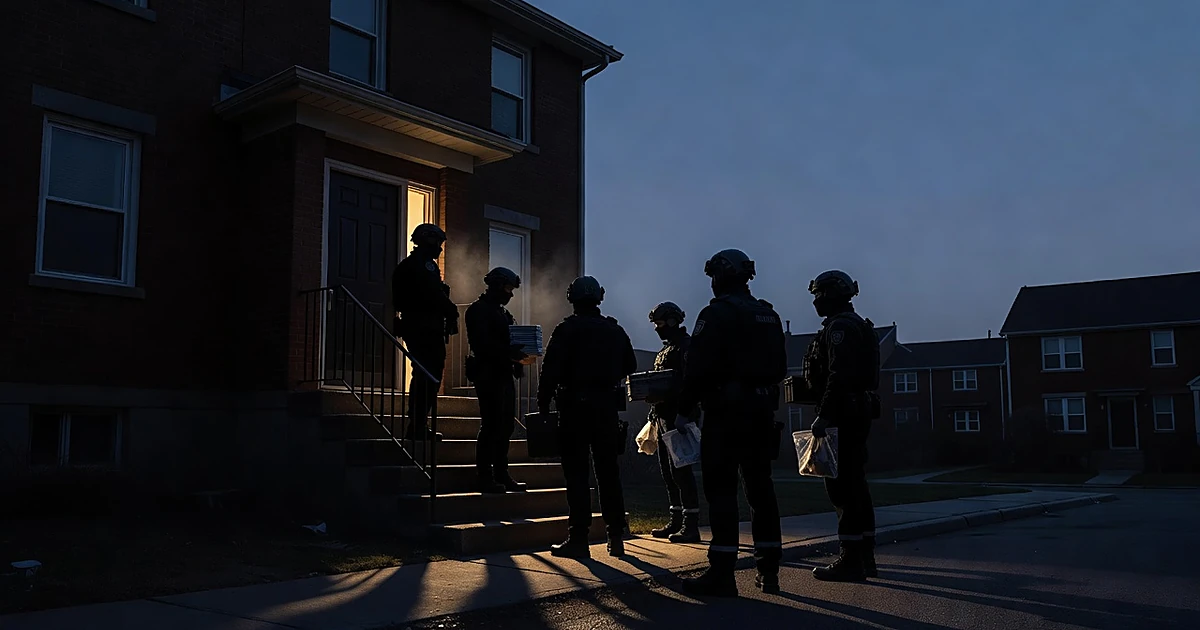
An NYPD spokesperson put the department's position bluntly to Fox News Digital:
"The NYPD has not been given the green light to clean this encampment up, but we are ready to do so."
That single sentence tells you everything about where authority sits in Mamdani's New York. The police are ready. The mayor's office has not acted. And the encampment grows another day.
This is not the first time Mamdani's leadership style has put the NYPD in an awkward position. An NYPD captain was recently reassigned after publicly criticizing the mayor on camera, a move that sent a clear message about how dissent is handled inside the administration.
The witnesses Fox News Digital spoke to near the encampment did not hold back. A woman identified only as Joan G., who asked for anonymity, offered a two-word verdict: "I think it's embarrassing."
A nearby construction-site security guard known as "Joe the Dog Man" was more detailed. He described conditions along the corridor in terms that suggest a public-safety problem, not just a housing shortage.
"It's terrible. Drugs, prostitution, and everything else in between."
Joe also took direct aim at the mayor's seven-day outreach framework:
"They gotta clean them up, they gotta keep on top of them. This seven-day stuff, or whatever it is now, is really not working."
His frustration is worth pausing on. The seven-day policy is supposed to be the mechanism that balances compassion with order. But if the clock doesn't start, or if outreach workers treat the visit as a trash run, the policy functions as a permission slip for indefinite occupation of public space.
Reports also surfaced this week of encampment residents drawing electrical power from nearby utility poles. No arrests or citations connected to the encampment have been reported.
New York once had its own infamous skid row: the Bowery. Over recent decades, that neighborhood was cleaned up and gentrified. The notion that Manhattan might grow a new open-air encampment district, this time on the West Side, steps from a major convention center and a military museum, would have sounded far-fetched a few years ago.
Yet that is what appears to be taking shape. The comparison to Los Angeles is hard to avoid. L.A.'s long-established downtown skid row expanded significantly this decade, and tent encampments spread across the city around the time of the Covid pandemic.
During his unsuccessful mayoral campaign in Los Angeles, candidate Spencer Pratt offered a blunt assessment of what drives encampments, one that challenges the standard progressive framing. Speaking to ABC7 in May, Pratt said:
"Well, they're not homeless. They're drug addicts. Most of these people are addicted to fentanyl and meth. This isn't Spencer making that up. There is places for all of these people to sleep in L.A. No matter what anybody tells you, we have housing and shelter for everyone that's living on the street. They are choosing to be on the streets because they want to do drugs. They don't want rules. They don't want to listen."
Pratt lost his race. But the argument he made, that available shelter beds go unused because encampment residents prefer the absence of rules, is one that New Yorkers dealing with this 12-block corridor may find uncomfortably familiar.
The encampment standoff fits a broader pattern under Mamdani. This is a mayor who has signaled defiance of the Supreme Court's TPS ruling, pledging the city would "not ever accept" the decision. It is a mayor who has prioritized ideological positioning over institutional norms.
He skipped the Israel Day Parade, breaking six decades of mayoral tradition at a moment when antisemitic incidents in the city were climbing. That choice drew sharp criticism from across the political spectrum.
And his political endorsements have raised their own questions. Mamdani backed a DSA congressional candidate whose radical social media history became a liability, a decision that said more about the mayor's ideological commitments than his political judgment.
Meanwhile, the business community has started pushing back. Citadel, the financial giant, warned that a $6 billion New York City project may not happen after clashing with Mamdani over tax policy, a signal that capital is watching how this administration governs and drawing its own conclusions.
Several basic questions remain unanswered. How many people are living in the 12-block encampment? No official count has been reported. When did the seven-day outreach clock start for this specific site, or has it started at all? Mamdani told the New York Post the site would be cleared but could not say when.
Who, specifically, would need to authorize the NYPD to act? The department says it's ready. The mayor says outreach comes first. The outreach workers, by all accounts, are collecting trash. And the encampment keeps growing.
The reports of drugs, prostitution, and power theft come from witnesses, not from police blotters. No arrests have been reported. That absence is itself telling, not because crime isn't occurring, but because the enforcement apparatus appears to have been told to look the other way.
Mamdani's own words frame the problem neatly. He promised seven days of outreach "characterized by" city workers connecting residents with services. If the outreach amounts to picking up litter, the policy is not being executed, it is being used as a shield against action.
Cities that tolerate open-air encampments do not contain them. They watch them metastasize. Los Angeles learned this. San Francisco learned this. Portland learned this. The pattern is consistent: a progressive mayor halts enforcement in the name of compassion, encampments expand, conditions deteriorate, and the surrounding community, the workers, the residents, the small-business owners, the tourists, absorbs the cost.
New York's West Side is now on that trajectory. Twelve blocks of tents between two of Manhattan's most recognizable landmarks. An NYPD ready to act but waiting for permission. A mayor who says the right words, "it will be cleared", but sets no date and enforces no deadline.
The people who live and work near 45th Street didn't vote for a 12-block encampment. They got one anyway, courtesy of a policy that treats inaction as compassion and enforcement as cruelty. That's not governance. That's abandonment dressed up in the language of care.