Iran unleashed a barrage of drone and missile strikes against civilian and military targets across nine countries on Saturday, killing at least six people and sending residents and military personnel scrambling for shelter from the Middle East to the Persian Gulf. The strikes targeted locations in the UAE, Bahrain, Israel, Syria, Iraq, Qatar, Kuwait, Jordan, and Saudi Arabia in what Tehran framed as retaliation for Operation Epic Fury.
Among the targets: a US Navy base in Bahrain, Dubai International Airport, Prince Sultan Air Base outside Riyadh, and residential neighborhoods in Tel Aviv and Abu Dhabi. The scope was enormous. The damage was real. And the message from Tehran was unmistakable.
This wave of violence followed Operation Epic Fury, a US and Israeli daylight attack that struck at the heart of the Iranian regime, including the death of Supreme Leader Ayatollah Khamenei and other key regime figures. What Iran launched Saturday was not the strike of a confident power projecting strength. It was the spasm of a decapitated regime scattering fire in every direction, hitting allies and bystanders as much as adversaries.
Consider the target list. Iran didn't just strike at Israel or American military assets. It fired on Kuwait, the UAE, Jordan, Saudi Arabia, and Syria. Several of these are Muslim-majority nations. Some have spent years trying to maintain diplomatic back channels with Tehran. None of that mattered when the mullahs needed to project fury; they no longer had the leadership to sustain, as New York Post reports.
At Dubai International Airport, a late Saturday strike was intercepted, but falling debris injured four people and killed one. Smoke filled a terminal. Passengers captured the chaos on video, with one clip capturing screams of "Oh my God" as travelers fled. Near the five-star Fairmont the Palm in Dubai, apparent debris from another intercepted attack set a large fire. It remains unclear if anyone was hurt there.
In Abu Dhabi, a worker was killed in a residential area, a strike the UAE's Ministry of Defense confirmed on X. The UAE military said it intercepted three waves of ballistic missiles from Tehran, and the government's response was blunt.
"Reserves the right to respond."
That is the UAE choosing its words carefully while keeping every option open.
One nighttime barrage appeared to land direct hits in Tel Aviv, where at least 125 missiles were fired, with 35 piercing Israeli airspace. One woman was killed. At least 20 people were hurt. In the Syrian town of Sweida, four people were killed. In Kuwait, the Ministry of Defense announced it had successfully intercepted "several ballistic missiles" launched at Ali Al-Salem Air Base, with military personnel and residents warned of the incoming attack.
An Iranian missile was also launched at the US Navy base in Bahrain on February 28, 2026. The impact on the headquarters of the US Fifth Fleet was not immediately clear, though a related headline referenced three US service members killed and five seriously wounded.
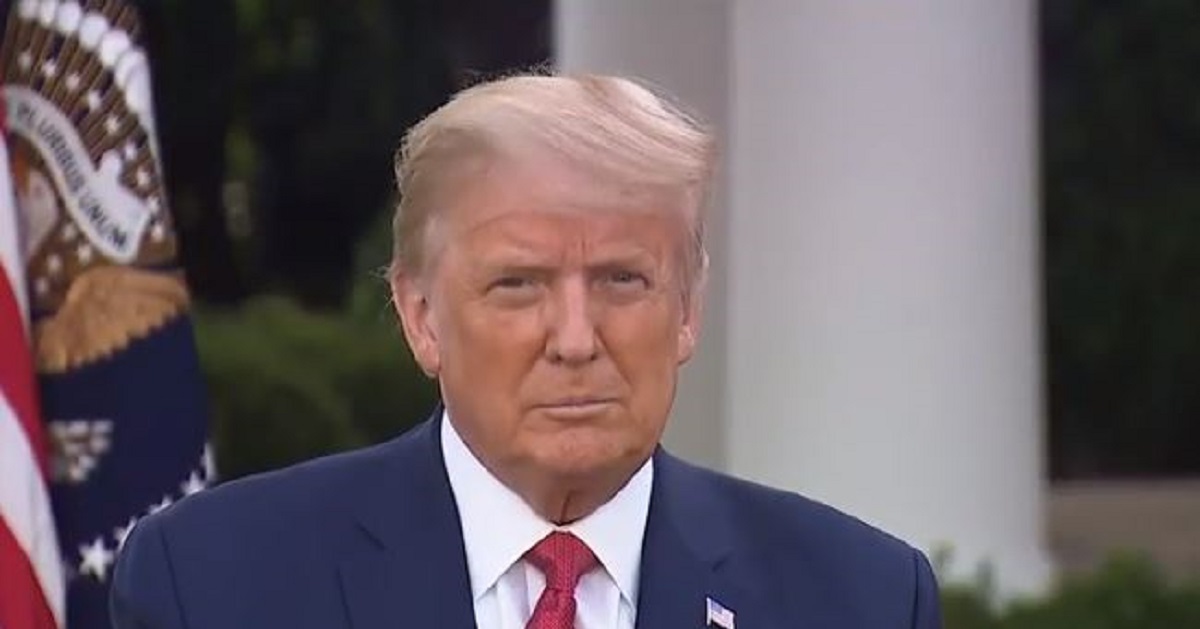
President Trump warned of possible casualties from Iranian attacks but reassured that proper protocols were in place to minimize American deaths. His statement framed the broader mission in terms that the American public deserves to hear from a commander in chief:
"My administration has taken every possible step to minimize the risk to US personnel in the region."
"But we're doing this not for now, we're doing this for the future and it is a noble mission."
That is the posture of a president who understands that the elimination of the Iranian regime's top leadership will be measured not by Saturday's retaliatory fireworks but by what the region looks like six months from now. Operation Epic Fury removed the head. The body is thrashing. That was always going to be the ugly part.
People fled to nearly a dozen countries. Kuwait, the UAE, Jordan, Syria, Iraq, and Saudi Arabia fended off Iranian strikes throughout the day. The geographic breadth of the attack is itself an indictment of the regime. Iran didn't hit military targets with precision. It sprayed missiles across an entire region, killing civilians in airports and apartment buildings and Syrian towns that had nothing to do with Operation Epic Fury.
For years, the foreign policy establishment warned that confronting Iran would destabilize the Middle East. What Saturday demonstrated is that Iran was always the source of that instability. A regime willing to fire on nine countries, including nations it ostensibly maintained diplomatic relations with, was never a partner for peace. It was a threat waiting for a reason.
The interceptors worked in most cases. The Gulf states' defense systems, built in large part through American partnerships, absorbed the blow. Kuwait intercepted. The UAE intercepted. Israel intercepted most of what came its way. The infrastructure America spent decades building in the region did exactly what it was designed to do.
The question now is whether what remains of Iran's command structure can sustain this level of aggression or whether Saturday was the high-water mark of a dying regime's capacity. The Gulf states are watching. Israel is watching. And every one of them is doing the math on what Iran looks like without Khamenei, without its key figures, and without the illusion of untouchability that kept its neighbors deferential for decades.
The UAE's four-word statement said everything. Saudi Arabia hosted incoming fire at a base 40 miles from Riyadh. Kuwait took missiles at an air base housing coalition forces. These governments now have domestic justification for responses they may have previously hesitated to pursue.
Saturday was ugly. People died in airports and living rooms and ancient Syrian towns. But the regime that ordered those strikes no longer has the leadership that built it, the supreme leader who sustained it, or the aura of invincibility that protected it. Iran fired in nine directions at once. That is not a strength. That is the last act of a collapsing power trying to burn everything on its way down.