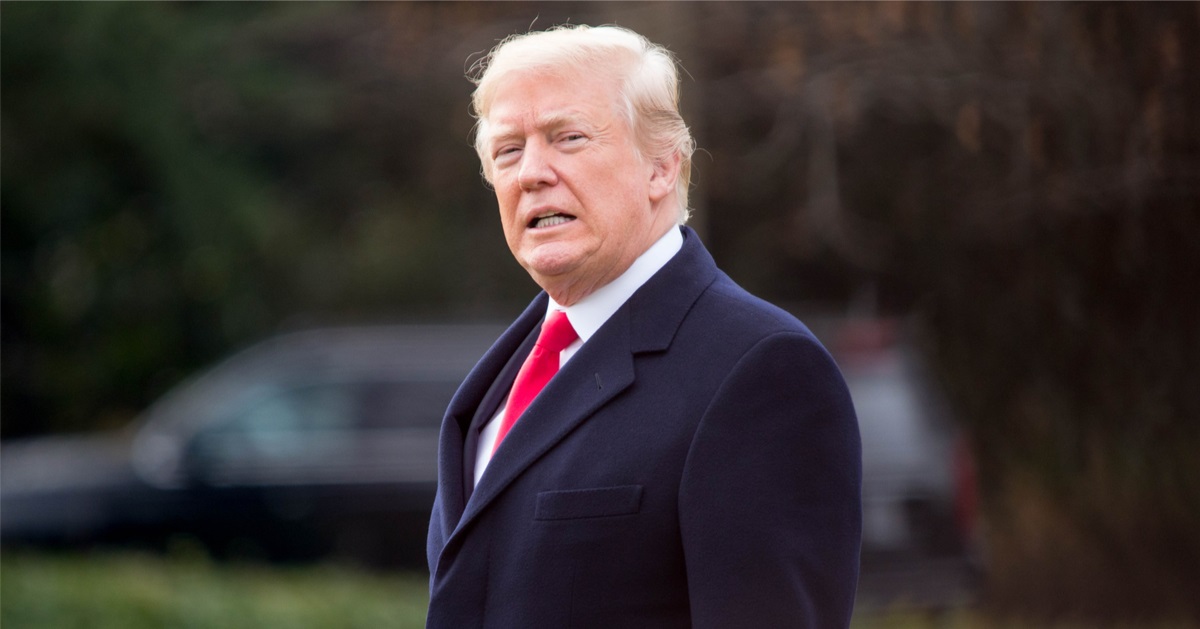
The Iranian operative who orchestrated the plot to assassinate President Donald Trump is dead. Secretary of War Pete Hegseth announced Wednesday that U.S. and Israeli forces tracked down and eliminated the man responsible for directing the Islamic Republic's most brazen act of aggression against an American leader.
Hegseth delivered the news during a morning debrief on Operation Epic Fury at the Pentagon.
"The leader of the unit who attempted to assassinate President Trump has been hunted down and killed."
Hegseth did not publicly identify the target. Israeli media named him as Rahman Mokadam, head of the Islamic Revolutionary Guard Corps' special operations division. The strike reportedly occurred during the final days of the 2024 election campaign, meaning the operation was kept quiet for months before Hegseth chose to reveal it.
Hegseth was careful not to declare victory prematurely, calling it "not a mission accomplished moment." But he made the larger point unmistakable.
"Iran tried to kill President Trump, and President Trump got the last laugh."
The scope of Iran's assassination conspiracy remains staggering even in summary. The New York Post reported that according to federal prosecutors, the IRGC tasked Afghan national Farhad Shakeri in September 2024 to "focus on surveilling, and, ultimately, assassinating" Trump. Shakeri, who emigrated to the U.S. as a child and was deported in 2008 after serving a 14-year prison sentence for robbery, had become a willing asset of the Iranian regime.
The timeline was urgent. On October 7, 2024, an Iranian official told Shakeri to have a plan in place to kill Trump within seven days. When Shakeri indicated the operation would cost a "huge" amount of money, his IRGC handler was unmoved. The response, according to court documents: "We already spent a lot of money … so the money's not an issue."
Tehran officials reportedly calculated that if Trump lost the election, it would then be easier to assassinate him. Either way, they wanted him dead. This was not a contingency plan. It was a standing order.
Shakeri didn't build his network through intelligence tradecraft. He built it in a U.S. prison cell. He recruited Brooklyn native Carlisle Rivera and Staten Islander Jonathan Loadholt, men he met while incarcerated, to serve as hitmen on American soil.
Before the Trump plot accelerated, Shakeri initially directed Rivera and Loadholt toward another target: Masih Alinejad, an Iranian American activist and journalist who had been an outspoken critic of the Tehran regime and had been targeted for assassination in the past. Iran offered Shakeri $1.5 million to kill Alinejad. Shakeri promised Rivera and Loadholt $100,000.
The two men surveilled Alinejad's Brooklyn home and planned to watch her speak at Fairfield University in Connecticut. They pursued her for nine months. Rivera, in a phone conversation captured by investigators, offered this assessment of his target: "This b—h is hard to catch, bro."
The charges eventually caught up with them:
Beyond the reach of American courts, but apparently not beyond the reach of American and Israeli forces.
Iran's obsession with killing Trump did not begin with the 2024 campaign. It stretches back to 2020, when President Trump ordered the drone strike that killed Qasem Soleimani, head of the IRGC's elite Quds Force. Tehran never forgave and never moved on. In 2022, a video animation posted on then-Ayatollah Ali Khamenei's website carried the message "Revenge is Definite."
That revenge campaign spanned assassination plots on American soil, the recruitment of convicted felons as contract killers, and the mobilization of IRGC special operations resources against a sitting and former president. The regime wagered it could strike at the heart of American politics without consequence.
Khamenei himself was killed in strikes on February 28, alongside dozens of other top Iranian officials. The IRGC operative who ran the Trump assassination unit is now dead. The foot soldiers who stalked an Iranian American journalist in Brooklyn are headed to federal prison for years.
Trump, in characteristic fashion, did not mince words about the outcome. He told ABC News' Jonathan Karl simply: "They tried twice. Well, I got him first." In a separate interview with NewsNation this past January, he said he had left instructions about what would happen if Iran's plot succeeded.
"We're going to blow the — the whole country is going to get blown up."
For years, the foreign policy establishment treated Iran as a rational actor that could be managed through negotiation, incentive structures, and strategic patience. The assassination plots against Trump and Alinejad tell a different story. This is a regime that recruited ex-convicts from American prisons to carry out contract killings on U.S. soil. A regime whose supreme leader posted animated fantasies about revenge on his personal website. A regime that told its operatives money was no object when the target was an American president.
Rational actors don't behave this way. Regimes that believe they can act without consequence do.
The elimination of Mokadam, the death of Khamenei, and the ongoing prosecution of Iran's recruited assets on American soil represent a comprehensive answer to that belief. Every layer of the conspiracy, from the IRGC handler in Tehran to the hitmen in Brooklyn, has now faced consequences.
Iran wanted to prove that no one was beyond its reach. It proved the opposite.