A federal judge ordered construction of President Trump's White House ballroom project halted on Tuesday, granting a preliminary injunction sought by the National Trust for Historic Preservation. The Department of Justice filed a notice of appeal later that afternoon to the U.S. Court of Appeals for the District of Columbia Circuit.
U.S. District Judge Richard Leon sided with the preservation group, which argued the project required congressional authorization before moving forward. Leon wrote that the group is likely to succeed on the merits of its case, stating:
"No statute comes close to giving the President the authority he claims to have."
The judge delayed enforcement for fourteen days, leaving a narrow window for the appeals process to begin. He also noted that construction could resume if Congress explicitly approves the project or authorizes funding.
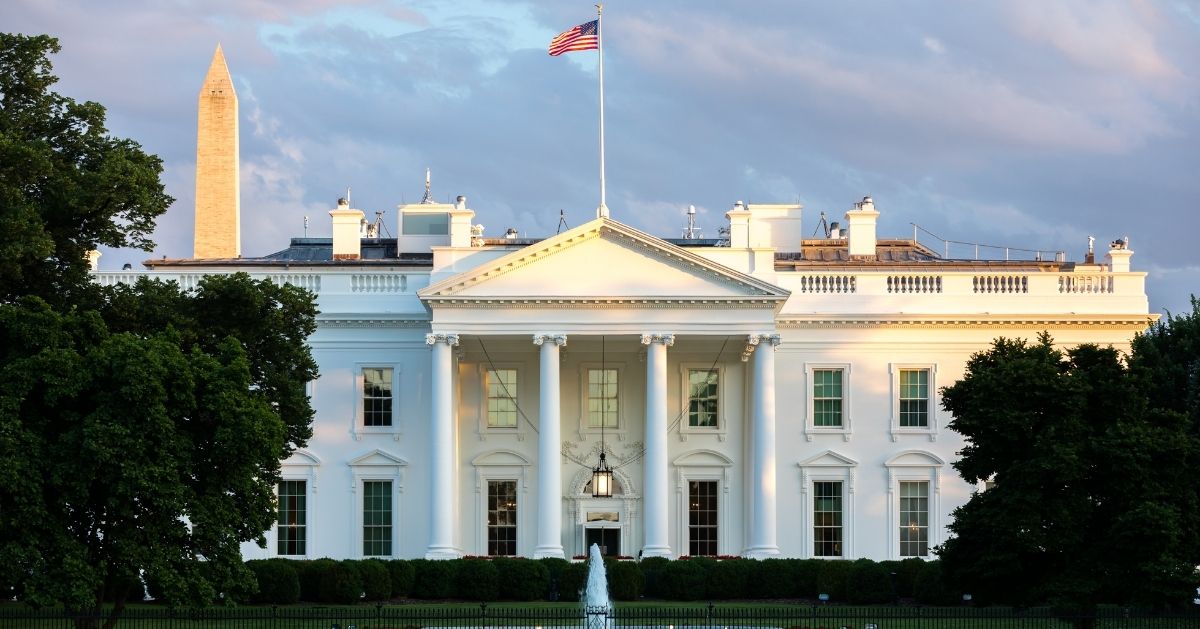
The proposed ballroom, slated for the site of the former East Wing of the White House, will span 90,000 square feet. It is being funded through private donations, not taxpayer money. According to Fox News, President Trump blasted the lawsuit on Truth Social, calling the National Trust for Historic Preservation a "Radical Left Group of Lunatics."
"The National Trust for Historic Preservation sues me for a Ballroom that is under budget, ahead of schedule, being built at no cost to the Taxpayer, and will be the finest Building of its kind anywhere in the World."
Trump also argued that the ruling requiring congressional approval "has never been given" for projects like this, pushing back on the premise that the executive branch lacks the authority to move forward.
The president shared visual renderings of the proposed ballroom early last month on Truth Social. The project is one of several Washington, D.C. renovation and beautification efforts Trump has spearheaded since re-entering office, including upcoming construction slated for July on the "Trump-Kennedy Center."
There's something worth noting about the preservation group's legal theory. The ballroom costs taxpayers nothing. It is privately funded. It is, by the president's account, ahead of schedule and under budget. The National Trust for Historic Preservation is not arguing that the building is ugly, structurally unsound, or harmful to the surrounding grounds. They are arguing that the president of the United States cannot improve the White House without asking Congress for permission first.
That's a sweeping claim about executive authority over the president's own residence and workplace. And Judge Leon appears to have embraced it without identifying a specific federal statute that the project allegedly violates. His ruling rests on the assertion that no statute authorizes the construction, effectively flipping the burden: instead of the government needing to prove the project breaks the law, the president must prove he has explicit permission to build on White House grounds with private money.
This framework, if sustained on appeal, would set a remarkable precedent. Every future renovation, addition, or improvement to the White House complex could become a litigation target for any advocacy group with standing and an agenda.
The National Trust for Historic Preservation brands itself as a nonpartisan organization dedicated to protecting America's historic places. But filing suit to block a privately funded improvement to the most famous house in the country raises obvious questions about selective enforcement of that mission.
Where was the Trust when previous administrations altered the White House grounds? When were the lawsuits demanding congressional authorization for past renovations? The organization's sudden interest in executive overreach coincides neatly with the identity of the current occupant.
Trump's characterization of the group as politically motivated may lack diplomatic nuance. It does not lack a factual basis.
The DOJ's appeal moves the fight to the D.C. Circuit, where the fourteen-day enforcement delay gives the administration room to seek a stay. The core legal question, whether a president can build on White House grounds with private funds absent explicit congressional approval, will likely receive more rigorous treatment at the appellate level.
Meanwhile, the ballroom sits unfinished. A project that costs the public nothing, funded entirely by private donors, designed to enhance one of America's most iconic buildings, is frozen because a preservation group convinced one judge that improving the White House is something a president needs permission to do.
Congress hasn't objected. Taxpayers aren't paying. The only people trying to stop it are the ones who claim to love historic buildings.