Eric Swalwell — congressman, former Intelligence Committee member, and now California gubernatorial hopeful — once fancied himself a poet. The results are about what you'd expect.
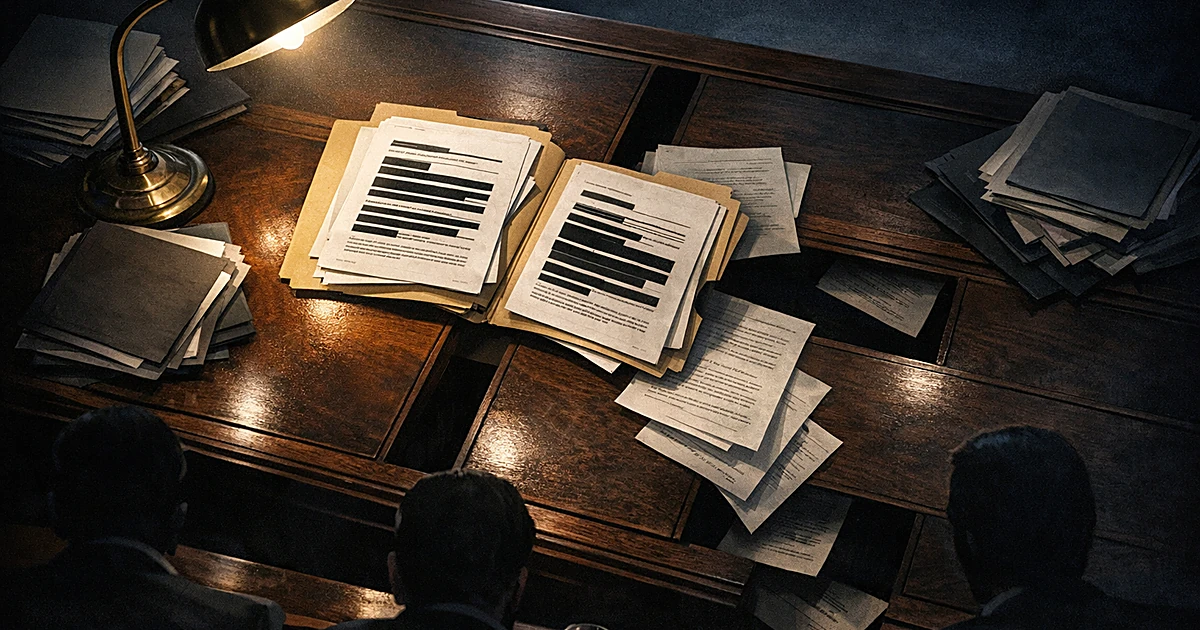
A sexually graphic poem penned by Swalwell during his sophomore year at Campbell University has surfaced, courtesy of a Daily Mail report. Titled "Hungover From Burgundy," the piece appeared in the university's literary magazine, The Lyricist, and reads like a fever dream scrawled on a dorm room napkin at 2 a.m.
The highlights — if you can call them that:
"And there beauty was, formless and magnificent — a flurry of limbs and nails. She chased and I ran, I chased and she ran."
"While I screamed, she bent her lips to mine. Kissing till veins imploded and exploded, till blood rolled down our chins, for bounded mouths cannot speak of parting."
"In the morning, I awoke beside beauty's shadow — her form sloppy and her legs pale. My scar lost, my lips cracked and dry. And we groaned simultaneously."
A Swalwell spokesman offered the campaign's only response to the Daily Mail:
"If you think Eric's poetry at 18 was bad, you should see his diary entries from when he was 12."
Points for self-awareness, at least.
The poem itself is embarrassing but ultimately harmless, the New York Post noted — most people's college creative writing deserves to stay buried. What makes this worth more than a laugh is context. Swalwell isn't some anonymous state legislator. He's a man who sat on the House Intelligence Committee, who lectures his colleagues on national security with the cadence of a man who believes he's the only adult in the room. And the trail of baggage he's hauling into this governor's race extends well beyond purple prose.
Start with the college writings that aren't erotic. The Daily Mail report also unearthed commentary Swalwell penned for his student newspaper that critics say expressed sympathy for Mumia Abu-Jamal, convicted in the 1981 killing of a Philadelphia police officer, and Leonard Peltier, found guilty in the 1975 killing of two FBI agents. Activists have long argued that both were politically persecuted. Swalwell, at the time, was apparently sympathetic to that framing.
That might be a forgivable youthful indulgence — college kids flirt with bad ideas the way Swalwell's poetry flirts with coherence — except for one detail. Swalwell went on to become a prosecutor who led a hate crimes unit. Opponents have raised the obvious question: how does a man who expressed sympathy for convicted cop killers pivot to that role without anyone asking him to reconcile the two?
Nobody has provided a satisfying answer. Swalwell himself hasn't addressed it — he hasn't responded to requests for comment on any of this.
Then there's Christine Fang. Between 2011 and 2015, Swalwell had contact with a woman later identified by U.S. intelligence officials as a suspected Chinese operative tied to China's Ministry of State Security. Fang cultivated relationships with local and national politicians, helped raise funds for Swalwell's 2014 re-election campaign, and even assisted in placing an intern in his congressional office.
Federal investigators eventually gave Swalwell a defensive briefing in 2015. He cut off contact. The House Ethics Committee investigated and concluded in 2023 without taking action. Swalwell was not accused of wrongdoing.
Those are the facts — and they're the facts Swalwell's defenders always recite, as though a clean ethics report erases the underlying reality. A suspected foreign intelligence asset embedded herself in a congressman's orbit closely enough to fundraise for him and place staff in his office. Then-Speaker Kevin McCarthy removed Swalwell from the House Intelligence Committee over national security concerns. That decision wasn't made lightly, and no ethics committee finding changes the substance of why it was made.
Swalwell's gubernatorial bid arrives at a moment when California is drowning in real problems — housing costs that punish working families, an energy grid held together by optimism, and cities that have spent a decade treating law enforcement as the enemy. The state needs a governor who commands seriousness.
What it's getting instead is a candidate whose public record includes sophomoric erotic poetry, college sympathy for cop killers, a suspected Chinese spy in his fundraising apparatus, and removal from one of the most sensitive committees in Congress. His campaign's instinct when confronted with any of it is to crack jokes about diary entries.
California voters will decide whether that's the résumé of a governor — or of a man who peaked as a mediocre campus poet and never quite figured out the difference between ambition and qualification.