Investigators in Humboldt County, California, have unearthed the remains of at least 117 dogs from burial pits on the grounds of a self-described "no-kill" animal rescue, many of them killed by gunfire, according to the sheriff's office. The discovery at Miranda's Rescue Animal Sanctuary in Fortuna has triggered a multi-agency criminal investigation into alleged animal abuse, cruelty, fraud, and conspiracy.
The numbers alone tell a damning story. Since January, the rescue took in more than 900 dogs from shelters. Only about 116 adoptions were confirmed. Seventy-one dogs were found alive on site. That leaves more than 700 animals unaccounted for.
And beneath the property, authorities found the first answers about where many of those dogs ended up.
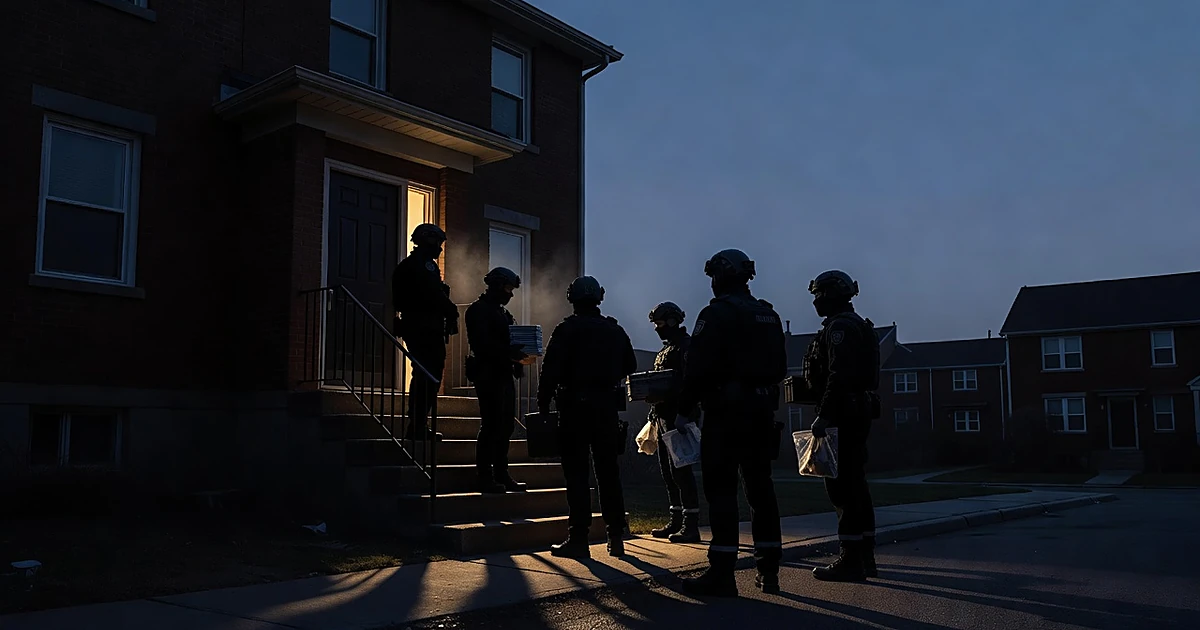
The Humboldt County Sheriff's Office launched its investigation after receiving a tip in April about conditions at the sanctuary. Working alongside local, state, and federal partners, including, as the New York Post reported, the FBI and the U.S. Department of Agriculture, investigators moved onto the 50-acre property and began excavating.
What they uncovered was grim. From two dig sites, crews recovered 117 intact canine remains. At a third location nearby, they found 21 additional canine skulls, hundreds of loose bones, and six microchips separated from any remains. More than 600 dog collars were recovered inside a barn on the property, an area authorities believe was the likely kill site.
Forensic veterinarians X-rayed 70 of the recovered dogs on site. Many showed bullet fragments. The preliminary determination: gunshot wounds killed a significant number of the animals. The Associated Press reported that investigators used ground-penetrating radar to locate the remains in an open field, where the bodies were found in various stages of decomposition.
The sheriff's office stated that most of the recovered dogs were microchipped:
"Most of the dogs recovered were microchipped. Analysts are currently reviewing the data obtained from the microchips and are working to identify the dogs associated with those chips. All items were collected as evidence and will undergo further examination as part of the ongoing investigation."
Those microchips may ultimately connect specific animals to the shelters that transferred them, and to the people who believed they were sending dogs to safety.
The math is the most unsettling part. Miranda's Rescue received at least 918 dogs since January 2025. Subtract the 116 confirmed adoptions and the 71 dogs found alive on site, and the gap is enormous. Sheriff William Honsal put the figure plainly, as the New York Post reported: "We have 730 animals that are unaccounted for."
The 117 intact remains and additional skulls recovered so far represent only a fraction of that total. Where the rest of those animals went, whether more burial sites exist, whether dogs were disposed of by other means, or whether record-keeping was simply nonexistent, remains an open question that investigators are working to resolve.
Honsal described the scene as "horrific" and made clear the probe is far from over. As Fox News Digital reported, the sheriff said:
"This investigation is just getting started. There is a tremendous amount of data to process, witnesses to interview, and evidence to examine. The Major Crimes Division is laser focused on this case and will continue working with our state and federal partners to examine every lead."
No arrests or charges have been filed as of publication. The sheriff's office said the evidence review will require significant time given the complexity and scale of the case.
Shannon Miranda, the owner and founder of Miranda's Rescue Animal Sanctuary, posted a statement on the rescue's website dated June 18 pushing back against the allegations. She claimed more than 30 years of work rescuing and caring for animals and accused media coverage of presenting "an incomplete and, in some cases, inaccurate picture" of her operation.
Miranda described specific incidents she said justified euthanizing individual dogs. In one case, she said a dog named Zora arrived heavily sedated, later killed a feral cat during a walk with a prospective adopter, then broke free and attacked another dog. In another, she said a transferred dog "became fixated on a stroller carrying a baby, lunged at it, and attacked it before staff intervened."
"In both situations, given the observed behavior and the risks to staff, volunteers, visitors, and other animals, I made the difficult decision to euthanize the dogs."
Miranda also insisted, as Newsmax reported, that "Miranda's Rescue is a no-kill rescue. We do not euthanize animals simply to make space."
That claim sits uneasily next to the physical evidence. Individual euthanasia decisions for dangerous animals are one thing. More than 600 collars piled in a barn, 117 bodies in the ground, bullet fragments in X-ray after X-ray, and 730 dogs simply gone, that is something else entirely.
The case exposes a structural weakness in the animal rescue pipeline that has grown across the country. Shelters transfer dogs to rescue organizations, often across state lines, to keep their own euthanasia numbers low and preserve "no-kill" status. Once an animal leaves a shelter's books, tracking what happens next depends almost entirely on the receiving organization's honesty.
Miranda's Rescue accepted dogs from shelters and, based on the transfer records authorities cited, took in more than 900 animals in roughly five months. The volume alone should have raised questions. An operation receiving that many animals while confirming only 116 adoptions was either warehousing dogs at an unsustainable rate or disposing of them by other means.
The investigation alleges fraud alongside cruelty. That combination suggests authorities are examining whether Miranda's Rescue collected fees, donations, or transfer payments under false pretenses, accepting animals it had no capacity or intention to place in homes. Fox News Digital reached out to Miranda's Rescue for comment. Whether any response was received beyond the June 18 website statement is unclear.
The participation of the FBI and the U.S. Department of Agriculture alongside the Humboldt County Sheriff's Office suggests investigators see potential federal violations, whether related to wire fraud, mail fraud tied to donations, or federal animal welfare statutes. The Major Crimes Division is leading the local effort, which is not the unit assigned to routine animal control complaints.
Authorities have not disclosed which specific charges they may pursue or whether a grand jury is involved. But the scope of the investigation, forensic veterinarians, microchip data analysts, multi-agency coordination, and ground-penetrating radar, reflects a case being built with prosecution in mind, not simply a welfare check that got out of hand.
The microchip data may prove to be the most consequential evidence. If analysts can match chips to specific dogs transferred from specific shelters on specific dates, investigators can build a timeline showing how quickly animals disappeared after arriving at the sanctuary. That timeline, cross-referenced with adoption records and financial transactions, could establish whether the operation was systematically killing animals it was paid to save.
The 600-plus collars found in the barn raise their own questions. Collars are typically removed before burial or disposal. A collection that large, stored in the same structure investigators believe was used as a kill site, suggests a routine, not a series of isolated, agonizing decisions about dangerous dogs.
Miranda's account of individual euthanasia cases may be truthful in those specific instances. But two anecdotes do not explain 700 missing animals and a field full of bullet-riddled remains. The gap between her narrative and the physical evidence is vast, and it will be up to investigators and, potentially, a jury to close it.
People who donate to animal rescues and shelters that transfer dogs to organizations like Miranda's deserve to know whether their trust and their money were used to save animals or to dispose of them. Right now, the evidence coming out of Fortuna suggests the answer is buried in the ground.