The Trump administration has asked the Supreme Court to lift a lower-court block on border wall work in West Texas’s Big Bend region, a move environmental groups are fighting hard to stop.
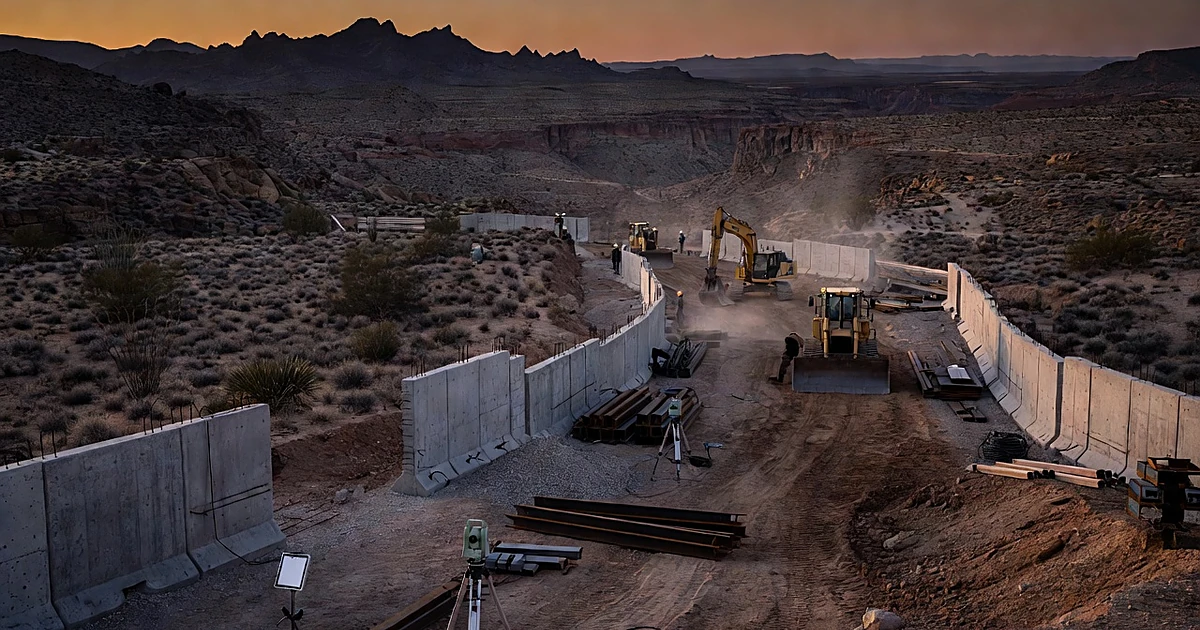
The Justice Department on Wednesday filed an emergency request seeking to resume construction of a border wall and related infrastructure across a remote stretch of the U.S.-Mexico line that includes Big Bend National Park. Officials want the high court to lift a preliminary injunction that currently bars the Department of Homeland Security from building barriers or doing any ground-disturbing work in the Big Bend Sector.
CBS News reported that Solicitor General D. John Sauer told the justices the district court’s order is blocking the government’s ability to secure a long, lightly policed section of the southern border. The administration frames the project as a direct response to illegal crossings and drug smuggling in the region.
Big Bend is not a minor pocket of desert. The sector covers more than 500 miles of the border and 77 Texas counties. The government says barriers and roads in the broader effort would ultimately span more than 300 miles.
President Trump has treated a physical barrier as a core piece of border enforcement for the last decade. The latest filing puts that priority back before a conservative Supreme Court majority that has already shaped major national fights.
U.S. District Judge Kathleen Cardone granted the challengers a preliminary injunction earlier this month. She barred DHS from building border barriers or related infrastructure in the Big Bend Sector and from any construction or ground-disturbing activities there.
Cardone also found that then-Homeland Security Secretary Kristi Noem and her successor, Secretary Markwayne Mullin, exceeded their authorities when they issued waivers between February and July. Those waivers rested on a 1996 federal immigration law that lets the secretary set aside legal requirements needed for quick construction of physical barriers and roads near the southern border in areas of high illegal entry.
Just before the Justice Department went to the Supreme Court, Cardone rejected the administration’s request to pause her own order. Breitbart reported that her halt order landed on October 2 and covered a project area of roughly 500 miles.
Customs and Border Protection Commissioner Rodney Scott had already paused construction inside the national park until the end of September after earlier pushback. Photos and videos of bulldozers at the park drew criticism from lawmakers in both parties, cattle ranchers, and local Texas law enforcement.
CBP has said the proposed border wall itself will not cut through Big Bend National Park. Other infrastructure would, including patrol roads, detection technology, and roughly 17 miles of vehicle barriers. Construction of a 47-mile stretch of wall in the Big Bend region began last month, according to the agency, and the Justice Department said the government has awarded contracts for five border-barrier projects in the area. Plans have described 30-foot bollard walls running from Fort Quitman, Texas, to Closed Canyon in Big Bend Ranch State Park.
In the emergency filing, Sauer did not say much about what the lower-court order does to operational control.
He wrote that the injunction “significantly frustrates the government’s ability to stop the flow of illegal aliens and drugs across the southern border.”
"The district court's injunction significantly frustrates the government's ability to stop the flow of illegal aliens and drugs across the southern border"
Sauer also tied the project map to enforcement data the secretary used when choosing the sites.
"The Secretary identified the Big Bend project areas at issue because of the high rates of illegal-alien crossings and drug smuggling in the region over the past several years."
The government told the court that more than 89,000 people were apprehended trying to cross illegally in the Big Bend Sector between 2021 and 2025. The Washington Examiner reported that Sauer called the injunction “baseless” and said it “halts a major portion of the construction of the border wall.”
That is the same high court now weighing other charged matters, from December arguments on AR-15 ownership to repeated fights over state election maps.
The Center for Biological Diversity and other challengers see a different case. Plaintiffs include an environmental nonprofit, a professional riverboat guide, and a religious organization focused on preserving a church site along the Rio Grande. They sued in April to stop the project.
Senior attorney Zeynep Graves said the center will keep fighting to keep the park protected.
"We're deeply disappointed that the Trump administration is asking the Supreme Court for a green light to bulldoze one of America's wildest, most extraordinary landscapes"
Graves went further on the legal claim at the heart of the suit.
"Once Big Bend's canyons, cultural treasures and wild ecosystems are destroyed, they'll be lost forever. We're confident the law is on our side and that only Congress can authorize something as consequential as walling off the entire U.S.-Mexico border."
Plaintiffs also argue the sector is not the crisis zone the government describes. They say Big Bend ranks last among the seven southern border sectors for apprehensions. Court filings note that while the area covers more than 25% of the U.S.-Mexico border, its annual share of border-wide apprehensions ranged only between 0.3% and 2.2%.
That statistical fight is why the administration’s emergency pitch matters. Low density does not mean no traffic, and a long open stretch can still become a route when other corridors tighten. The Supreme Court’s recent map rulings show how quickly one district order can stall a statewide or national priority until the justices step in.
Just the News reported additional language from Sauer’s filing that puts the balance of harms in plain terms. He said the judge “illogically concluded that respondents’ aesthetic and recreational harms ‘outweigh’ the government’s extraordinarily strong border-security and operational interests.”
Sauer argued the federal government’s “paramount interest in preventing a quarter of the border from becoming a magnet for cartel exploitation” outweighs local opposition to the wall. DHS had sought to waive dozens of federal and state laws for the work. Plaintiffs called that step unlawful without a true emergency.
February’s announcement that DHS would build barriers and roads in the sector was always going to draw a lawsuit. The waivers followed. Construction started on the 47-mile segment. Then Cardone’s injunction froze the ground game across the sector, including work tied to the park’s edges.
Emergency Supreme Court practice is built for exactly this kind of clash: a nationwide enforcement tool stopped by one district judge while the government still bears the duty to control the line. Similar high-court petitions have become a regular feature of the Trump years, including cases such as the one in which Mahmoud Khalil asked the justices to greenlight a free-speech suit against the administration.
Congress wrote the 1996 waiver authority so barrier projects would not die in process. Cardone held that Noem and Mullin still went too far. The administration says the opposite: the statute exists so DHS can move in sectors where illegal entry and smuggling persist, not so a single injunction can freeze hundreds of miles of planned wall, roads, and detection gear.
Taxpayers already funded contracts. Agents still need roads and barriers where the terrain is rough and the distances are long. Ranchers and local officers live with the crossings. Park scenery matters. So does the duty to stop illegal entry and the drug trade that uses every soft spot on the line.
If the Supreme Court leaves Cardone’s order in place, a signature stretch of wall stays dark while cartels and smugglers keep testing the open ground. If the justices lift it, construction can resume under the same security rationale the secretary used when the maps were drawn. Secure borders are not a side project. They are the job.