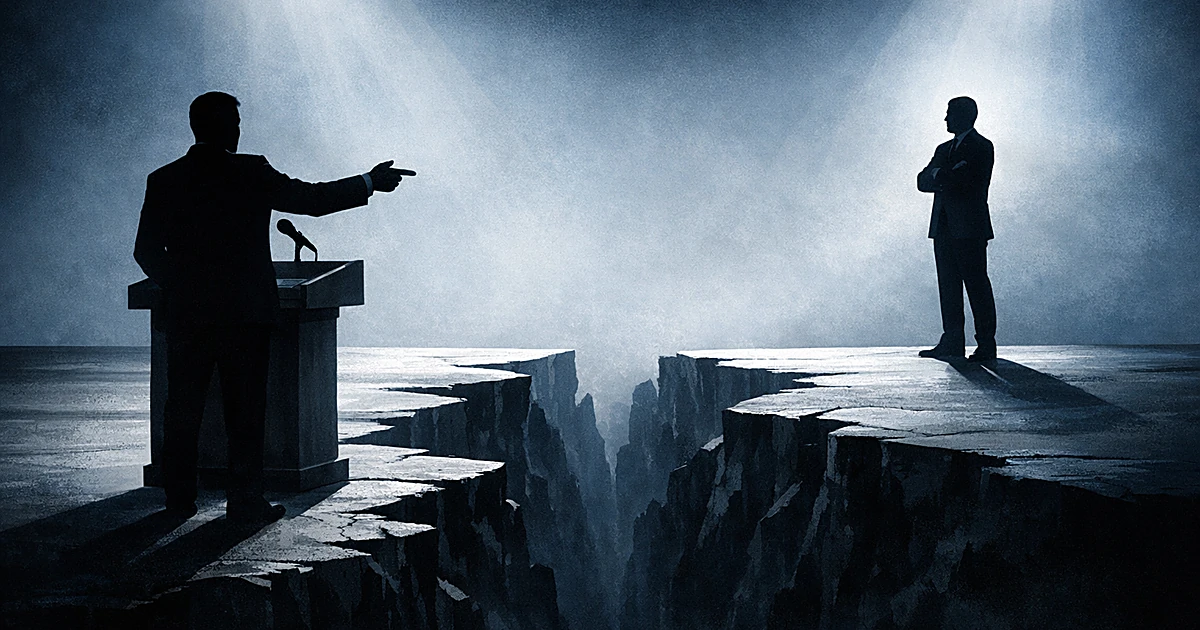
President Donald Trump publicly broke with his own handpicked federal prosecutor over her decision to drop vandalism charges tied to the Lincoln Memorial Reflecting Pool, but stopped short of firing her.
In a phone interview with NBC News on Thursday, Trump called U.S. Attorney Jeanine Pirro's move to dismiss a felony case against former Olympic canoeist David Hearn a "terrible mistake," even as Pirro's own court filing blamed the damage on a contractor's botched installation rather than deliberate sabotage. The split is rare: Pirro spent years as one of Trump's most vocal defenders on Fox News before he appointed her as Washington's top federal prosecutor.
Trump left no ambiguity about his displeasure. But when NBC pressed him on whether Pirro would lose her job, he drew a line. "I think she made a terrible decision," Trump told NBC News. "That doesn't mean change." He added: "So, she made a terrible mistake. I don't understand why she did such a s***** thing."
The tension centers on what actually happened to the 2,030-foot Reflecting Pool after the administration poured money into refurbishing it. Trump had initially said the project could be done for $1.5 million in time for White House-backed Fourth of July celebrations. Federal spending records show the administration ultimately spent nearly $14.7 million, all directed to a single Virginia firm, Atlantic Industrial Coatings LLC.
The pool was repainted in a dark blue shade and outfitted with what officials described as "advanced nanobubbler technology" to fight algae blooms. But algae returned shortly after the work was finished, and the new sealant began peeling off in chunks that floated to the surface.
When Hearn, a former U.S. Olympian, was charged in connection with touching part of the liner that had already detached from the pool bottom, Pirro's office initially accused him of having "woefully destroyed property" in a "deliberate act," claiming he had "forcefully and violently" pulled the lining. He faced up to ten years in prison.
Then Pirro reversed course. In a motion filed in D.C. Superior Court, her office stated that the damage to the liner "was the result of a botched installation and not vandalism." The filing went further:
"Given all of this newly discovered information, it is difficult to attribute the widespread damage to the Reflecting Pool to vandalism, let alone to establish that fact beyond a reasonable doubt."
Pirro also accused the Department of the Interior of providing her office with "less than fulsome information" about the case, a pointed allegation that another arm of the federal government had left prosecutors working with incomplete facts. Trump has broad authority over agency leadership, which makes the Interior Department's role in withholding information from his own prosecutor all the more striking.
The scope of the information gap became clearer through additional reporting. The Department of the Interior initially told Pirro's office that "nearly all of the damage to the Reflecting Pool was due to vandalism," the New York Post reported. Only after the indictment was already filed did Interior reveal the details about the contractor's flawed work.
Atlantic Industrial Coatings received a no-bid contract worth more than $14 million to coat the pool's 68,000-square-foot bottom. Documents obtained by Pirro's office showed the lining began peeling just two days after installation on June 9, the result of overspraying and a rushed timeline to finish before Independence Day.
That timeline matters. If the liner was already failing within 48 hours of application, well before Hearn ever touched it, the prosecution's original theory that he deliberately destroyed the pool collapses on its own terms. Pirro's filing acknowledged as much.
Trump, however, has not accepted that conclusion. He posted on Truth Social that he "disagrees 100%" with Pirro's decision, Fox News reported. "I don't know what she was thinking?" he wrote. In the NBC interview, he insisted: "She said there was no vandalism. There was tremendous vandalism."
Hearn's legal team has asked the court to dismiss the charges with prejudice, a legal term meaning the government could never refile the case. Their argument rests on the president's own words. Even after Pirro's filing attributed the damage to contractor error, Trump continued to publicly call the incident vandalism and promote the pool renovation as "bigger than skyscrapers."
Hearn's attorneys, Norm Eisen, Mary Dohrmann, and Steve Levin, issued a statement calling the prosecution an abuse of government power. "The Trump administration's case against Davey Hearn should never have been brought," they said. "Its dismissal today does not erase the abuse of government power in arresting and charging a patriotic American who did nothing wrong."
A D.C. Superior Court judge, Todd Edelman, dismissed the felony charge but deferred on whether the case could be brought again with new evidence, Just the News reported. That deferral leaves Hearn in legal limbo, free for now, but without the finality his attorneys sought.
Hearn himself described the ordeal in stark terms. "This whole thing has been really surreal and absurd," he told CNN. "It's a relief, but there's a detachment to that relief of extreme concern for other people and for our country."
Rather than accepting the dismissal, Trump escalated. He called on Pirro via Truth Social to reopen the prosecutions, pointing to new photographic evidence from a freelance photographer named Andrew Leyden. Trump claimed the photos showed cuts in the pool material spanning more than 300 feet. The president's handling of federal appointments has drawn scrutiny before, from unconventional personnel picks to sharp disagreements with his own officials.
"The material was cut right where the video tape showed, for 300 feet or more. People were on their knees with their hands in the water at the exact location of the slashes."
Trump described Pirro's dismissal of charges as a "hastily made decision" and called on her to revisit the matter, the Washington Examiner reported. Pirro's office also dropped misdemeanor charges against three other individuals in the same case.
Whether Pirro will comply with the president's public demand remains unclear. The confrontation reportedly extended beyond social media: Pirro was involved in a confrontation in the Oval Office last week, though the full details and participants have not been publicly confirmed. In other instances where Trump has clashed with appointees, the results have been swift and decisive.
The broader picture is unflattering for the agencies involved. A project Trump said could be done for $1.5 million ballooned to nearly ten times that amount. The sole contractor received a no-bid deal. The new coating failed almost immediately. Algae came back. And an American Olympian faced a decade in prison over damage that the government's own prosecutor now says was caused by sloppy workmanship.
The Department of the Interior fed prosecutors information that turned out to be incomplete at best and misleading at worst. That failure put Pirro in an untenable position: she built a case on facts that weren't facts, then had to walk it back in open court. Trump's frustration with the outcome is understandable. His refusal to accept the documented explanation is harder to square with the record his own appointee put before the court.
The episode also raises questions about accountability elsewhere in the executive branch. If Interior officials gave Pirro's office bad information, who authorized that, and what consequences have followed? The administration has shown no hesitation in removing officials from other agencies. So far, the Interior Department's role in this debacle has drawn no visible consequence.
When a $14.7 million government project falls apart within days, and the only person who faced prison time was the citizen who noticed, the system has a problem that no amount of nanobubbler technology can fix.