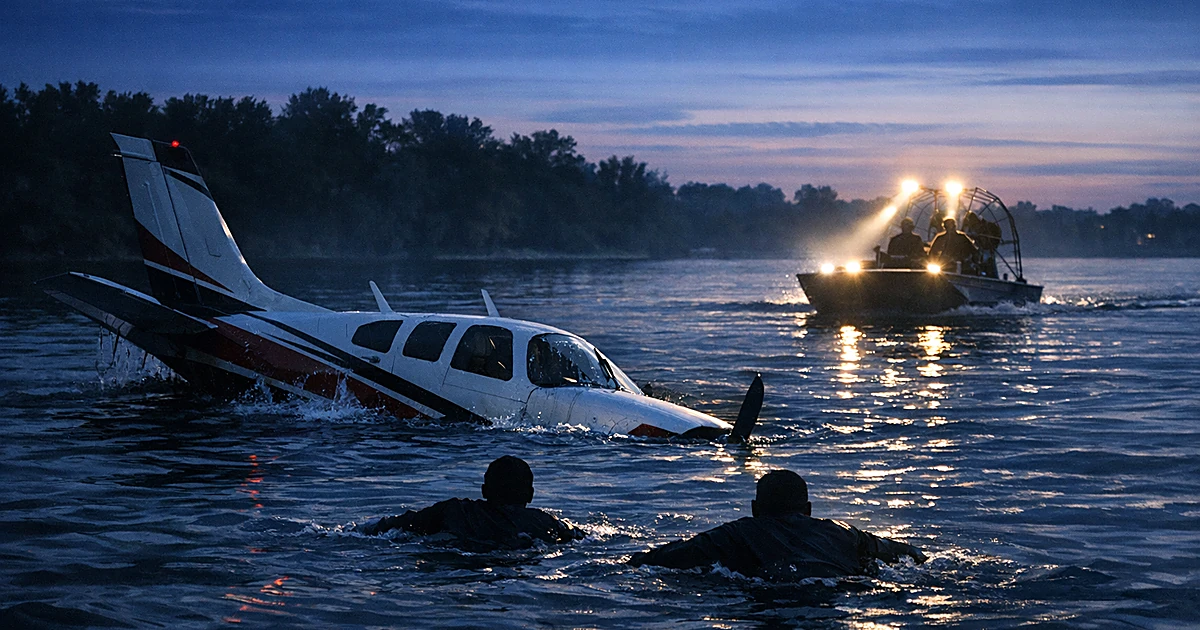
Authorities recovered an unidentified body Sunday from the waterway near Tampa's Howard Frankland Bridge, the same stretch of water where the remains of missing University of South Florida doctoral student Zamil Limon were found just days earlier, as the search for his girlfriend, Nahida Bristy, entered its second week.
The grim discovery deepens an already disturbing case. Limon's roommate, Hisham Saleh Abugharbeih, was arrested Friday and now faces two counts of first-degree premeditated murder with a weapon in the deaths of both missing students, Breitbart reported.
As of Monday, the Hillsborough County Sheriff's Office had not identified the body recovered Sunday. The agency posted a plea on X late Monday afternoon asking the public for any information or dashcam footage from the Howard Frankland Bridge between 1 a.m. and 5 a.m. on April 17, the day after both Limon and Bristy were last seen.
Limon and Bristy, both 27 years old and originally from Bangladesh, were last seen on April 16. Limon, a doctoral student studying geography, environmental science, and policy, was last spotted at 9 a.m. at his student apartment complex in Tampa. Bristy, a chemical engineering student and Limon's girlfriend, was last seen at USF's Natural and Environmental Sciences Building. Officials deemed the pair "endangered" but did not provide further details at the time.
By Friday, the worst fears had been confirmed for at least one of the two. Human remains found near the Howard Frankland Bridge were positively identified as Limon. Hillsborough County Sheriff Chad Chronister delivered the news himself.
Fox News reported that Chronister said at the time:
"I am heartbroken to announce the discovery of human remains discovered on the Howard Franklin Bridge earlier this morning. Just now, those remains were positively identified to Zamil."
The identification of Limon's body on the Tampa bridge set off a chain of events that moved fast.
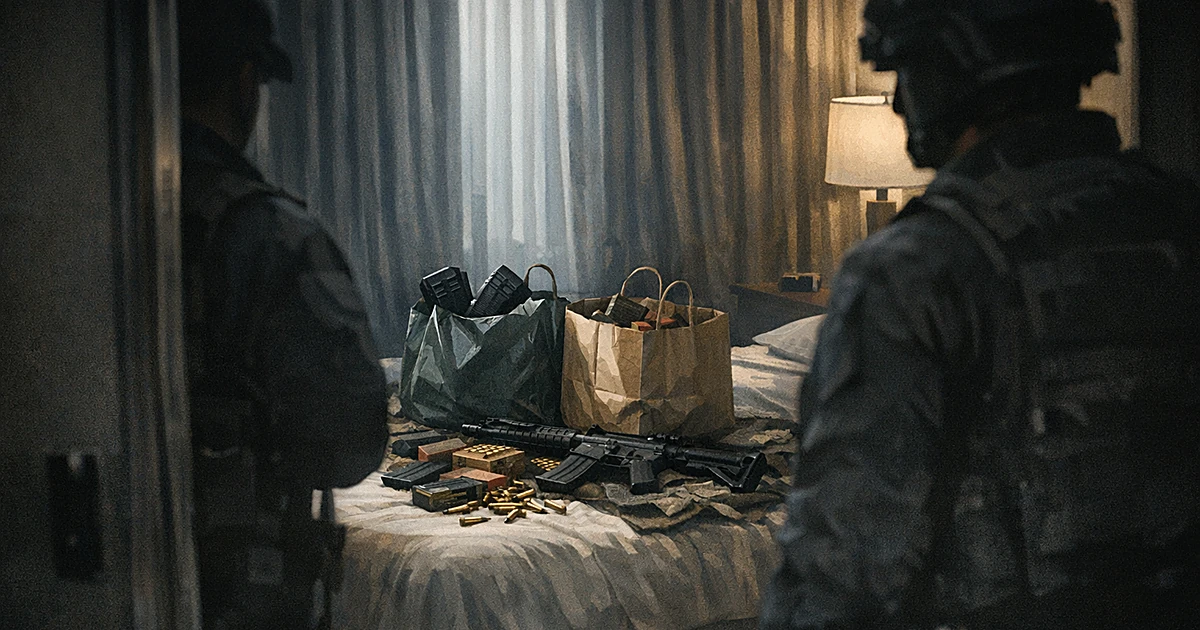
Abugharbeih, identified as Limon's roommate, did not go quietly. Before his arrest Friday, he barricaded himself inside a Tampa home while SWAT teams swarmed the surrounding neighborhood. He eventually surrendered and was taken into custody.
The charges filed against him paint a picture of alleged violence and concealment. Abugharbeih was hit with failure to report a death, unlawfully moving a body, domestic violence, battery, false imprisonment, and tampering with evidence, the New York Post reported. Those initial charges have since been upgraded: he now faces two counts of first-degree premeditated murder with a weapon in the deaths of both Limon and Bristy.
The escalation from evidence-tampering charges to double murder charges tells its own story about what investigators believe happened.
Sheriff Chronister described the toll the case has taken on the community. AP News reported his statement:
"This is a deeply disturbing case that has shaken our community and impacted many who were hoping for a safe resolution."
Even with a second body recovered Sunday, Bristy officially remained missing as of Monday. Dive teams were searching Tampa Bay near the bridge, and authorities made clear their work was far from over. A sheriff's office spokesperson identified only as Maurer stated plainly: "We are still actively searching for Nahida."
The fact that the second body was found in the same waterway, near Interstate 275 over Tampa Bay, close to where Limon's remains were recovered, raises obvious questions about whether Bristy has been found. But the sheriff's office had not confirmed any identification as of Monday night. The New York Post said it reached out to both the Hillsborough County Sheriff's Office and the Pinellas County Medical Examiner's Office on Monday night and did not immediately hear back from either.
Cases involving concealed bodies and delayed discovery are not new to the criminal justice system, but the speed and proximity of these recoveries stand out.
The sheriff's office plea for dashcam footage zeroed in on a narrow window: 1 a.m. to 5 a.m. on April 17. That is the early morning after both students were last seen on April 16. Investigators clearly believe something happened on or near the Howard Frankland Bridge during those predawn hours.
The timeline raises hard questions. Limon was last seen at 9 a.m. on April 16. Bristy was last seen at USF's Natural and Environmental Sciences Building at an unspecified time the same day. By the early hours of April 17, whatever happened had apparently already played out.
Abugharbeih's charges, particularly the allegations of unlawfully moving a body and tampering with evidence, suggest authorities believe he took active steps to dispose of remains and cover his tracks. The domestic violence and false imprisonment charges point to violence inside the home before the bodies ended up in the water.
The case echoes other investigations involving students found dead near water, though the circumstances here point to foul play rather than accident.
What remains unclear is how long it took for anyone to notice two doctoral students had vanished. Officials deemed them "endangered" but offered no public explanation of what prompted that designation or when it was made. The gap between April 16, when both were last seen, and Friday, when Limon's body was found and Abugharbeih was arrested, spans nearly a week.
University campuses are supposed to be places where missing students trigger alarm bells quickly. Whether USF or local authorities acted with appropriate urgency in the days after April 16 is a question that deserves a clear answer.
In a separate but thematically related case, an Ohio suspect was found dead before his arraignment, a reminder that criminal cases involving death and violence can take sharp turns at any stage.
The immediate questions are straightforward. Is the body recovered Sunday that of Nahida Bristy? What evidence led to the upgraded murder charges against Abugharbeih? And what, if anything, did anyone in the students' circle know or see in the days between their disappearance and the discovery of Limon's body?
Abugharbeih now faces two counts of first-degree premeditated murder with a weapon. If convicted, the consequences will be severe. But for the families of two young Bangladeshi students who came to America to pursue doctoral degrees, no courtroom outcome will undo what happened near the Howard Frankland Bridge.
Two people came here to study. One is confirmed dead. Another body lies unidentified. And the man charged with killing them was living under the same roof. The system owes these families, and the public, a full accounting of how this happened and why no one caught it sooner.