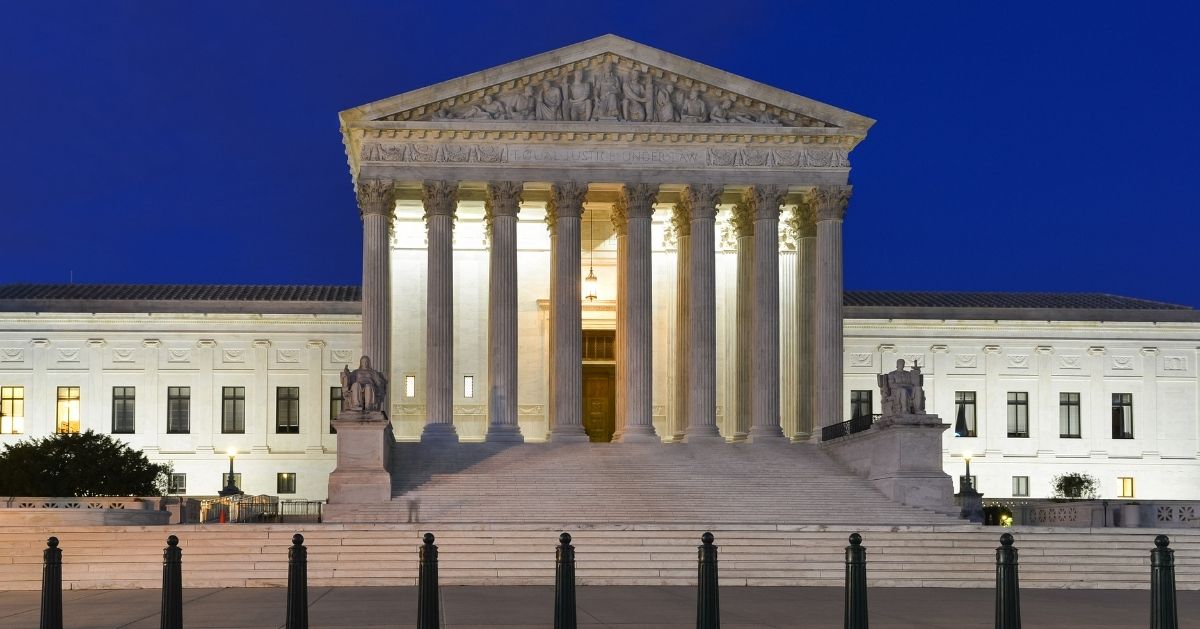
The Supreme Court on Monday wiped away the D.C. Circuit's ruling upholding Steve Bannon's contempt of Congress conviction, sending the case back for reconsideration after the Justice Department moved to dismiss it two months ago. The order was brief, unsigned, and decisive.
Bannon, the influential right-wing podcaster and former chief strategist to President Donald Trump, spent four months in federal prison in 2024 after a jury convicted him on two misdemeanor counts. His crime: refusing to comply with demands for testimony and documents from the House select committee investigating January 6th. He argued he was following his attorney's advice and that the records sought were protected by executive privilege.
Now the prosecution itself wants out.
Solicitor General D. John Sauer urged the justices in a February filing to reverse the appeals court ruling and return the case to the trial court for dismissal. According to the Washington Post, Sauer wrote that such an outcome:
"is in the interests of justice."
Four words that carry the weight of a full reversal. The DOJ, under new leadership, has concluded that this prosecution should not stand. The Supreme Court obliged, vacating the D.C. Circuit's judgment and remanding for reconsideration in light of the government's motion to dismiss.
Bannon had appealed to the Supreme Court in October after the D.C. Circuit upheld his conviction in 2024. With the government now on his side, the path forward was clear.
Bannon's case is not an isolated event. Since Trump's return to the White House, the Justice Department has moved systematically to undo criminal cases brought by prosecutors in prior administrations. The tools range from sweeping orders to targeted interventions.
Consider the scope:
The common thread is straightforward: a new administration examining the legal wreckage of its predecessors and deciding which prosecutions served justice and which served politics.
Robert Weisberg, a professor of criminal law at Stanford University, offered a measured reading of the court's action:
"I very much doubt the court did it out of particular sympathy or ideological alignment with Steve Bannon."
He framed it as routine judicial housekeeping:
"It's simply saying as a kind of supervisory matter: Let's clean the court of cases the prosecution doesn't want to pursue. I think it's a judicial administration motivation rather than anything having to do with Bannon."
That reading is probably correct as far as it goes. When a prosecutor drops a case, courts generally don't force the government to keep prosecuting someone against its own judgment. Prosecutorial discretion runs in both directions.
The contempt charges against Bannon were a product of a specific political moment. A House select committee, composed entirely of members chosen by the Democratic leadership, demanded compliance under threat of criminal referral. Bannon raised a legal defense rooted in executive privilege. The committee wasn't interested. The prior DOJ wasn't interested. A jury convicted him, and he went to prison.
Now, the same government that put him there has concluded the case should be dismissed. A man served four months behind bars on two misdemeanor counts that the Justice Department itself no longer wishes to defend.
The legal machinery moved in one direction when it was politically convenient. It is now moving in the other direction because the facts and the administration's priorities have changed. Critics will frame this as interference. But a government declining to prosecute is not obstruction. It is discretion. The same discretion that every prior DOJ has exercised, usually with far less scrutiny.
Steve Bannon went to prison. He served his time. And now the case that sent him there is on its way to being erased from the books, not by presidential pardon, but by the justice system acknowledging it had run its course.