An NYPD narcotics sergeant has been convicted of second-degree manslaughter after he hurled a cooler filled with drinks at a fleeing drug suspect, killing the man when he crashed his motorized scooter and slammed into a tree. Sgt. Erik Duran, 38, now faces up to 15 years in prison.
Judge Guy Mitchell delivered the verdict on Friday in Bronx criminal court following a bench trial — no jury, just a judge weighing the facts alone. The conviction makes Duran the first NYPD officer in years to be tried for killing someone while on duty. He has already been dismissed from the department.
Sentencing is scheduled for March 19.
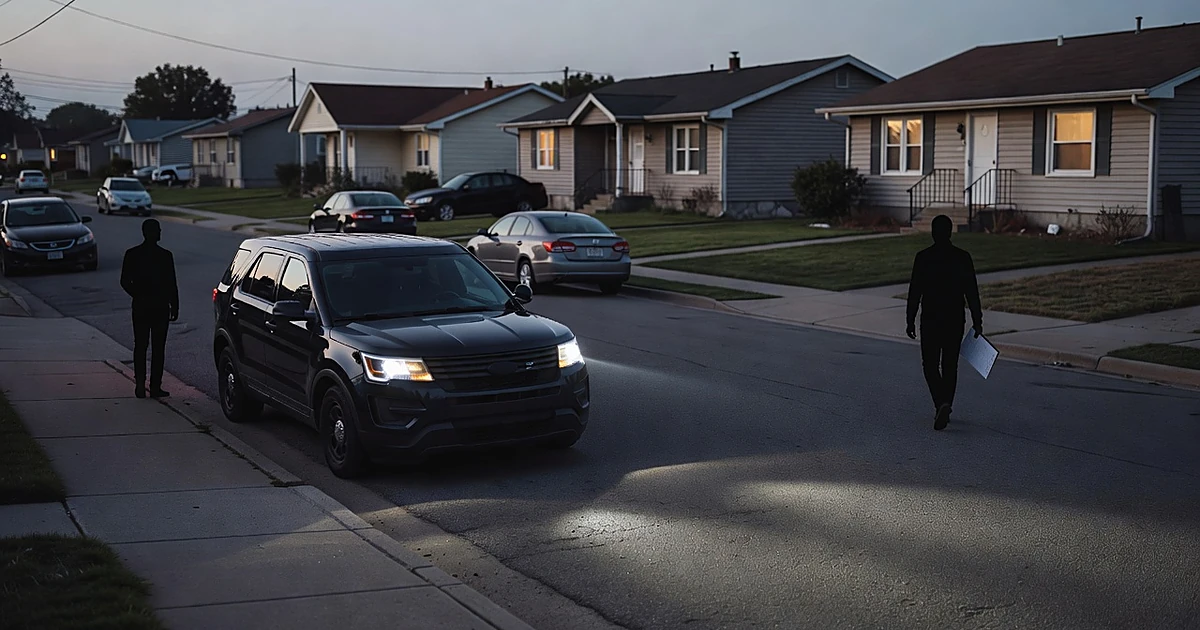
On August 23, 2023, authorities say 30-year-old Eric Duprey sold drugs to an undercover officer in the Bronx and then fled the scene on a motorized scooter. Duran, part of the narcotics unit conducting the operation, grabbed a nearby red cooler packed with ice, water, and sodas, and threw it at Duprey as he rode away.
Duprey — who was not wearing a helmet — lost control of the scooter, crashed into a tree, landed on the pavement, and slid beneath a parked car. Prosecutors said he sustained fatal head injuries and died almost instantaneously.
Security footage captured Duran grabbing and hurling the cooler.
Duran testified in his own defense this week, telling the court he acted in a split-second to protect himself and fellow officers from the oncoming scooter:
"He was gonna crash into us. I didn't have time. All I had time for was to try again to stop or to try to get him to change directions. That's all I had the time to think of."
He also said he immediately tried to render aid after seeing the extent of Duprey's injuries. The judge wasn't persuaded. Mitchell convicted Duran of second-degree manslaughter while dismissing the assault charge, finding that prosecutors had failed to show Duran intended to hurt Duprey. He did not deliver a verdict on the lesser criminally negligent homicide charge, having already found Duran guilty on the more serious count, as NY 1 reports.
Mitchell's statement from the bench was pointed:
"The fact that the defendant is a police officer has no bearing. He's a person and will be treated as any other defendant."
On its face, this sounds like equal justice. In practice, it strips away the entire context of why Duran was on that street in the first place — executing a narcotics operation against a man who had just sold drugs to an undercover officer and was actively fleeing. Duran didn't wander into a confrontation. He was doing the job the city asked him to do.
That doesn't automatically excuse the cooler throw. But to say the badge "has no bearing" is to pretend that policing doesn't involve split-second decisions in chaotic, dangerous environments that civilians never face. A construction worker who throws a cooler in a parking lot dispute and a narcotics officer trying to stop a fleeing suspect are not in the same situation, no matter how badly the court wants to flatten the distinction.
The Sergeants Benevolent Association called the conviction a "miscarriage of justice" and said it still believes Duran was innocent. In a statement, the union laid out what many officers across the city are likely thinking:
"The verdict rendered by Judge Mitchell is clearly against the weight of the credible evidence. Verdicts such as this send a terrible message to hard-working cops: should you use force to defend yourself, your fellow police officers or the citizens of the City, no matter how justified your actions, you risk criminal charges and conviction."
That message will land whether city leaders want it to or not. Officers already working in a department demoralized by years of anti-police rhetoric, progressive prosecution, and revolving-door criminal justice now watch a colleague face 15 years for a decision made in seconds during an active narcotics bust. The calculus for every cop in New York just shifted — not toward better policing, but toward less policing. Toward hesitation. Toward doing nothing and letting the suspect ride away.
That's the incentive structure this conviction creates, regardless of whether it was legally sound.
The case was prosecuted by the office of State Attorney General Letitia James, who stated after the verdict:
"Though it cannot return Eric to his loved ones, today's decision gives justice to his memory."
James has built her career on high-profile prosecutions with political resonance. Her office taking the lead here — rather than the local district attorney — is itself a statement about the kind of cases Albany wants to pursue. Prosecuting an NYPD officer for a death that occurred during a drug bust against a suspect who was actively fleeing fits neatly into a progressive framework where police force is treated as inherently suspect and criminal suspects are treated as inherently sympathetic.
Eric Duprey's death is a tragedy. A 30-year-old man is dead. His wife, Orlyanis Velez, spoke outside the courthouse:
"I was waiting for justice just like everybody, but when the moment happens, you can't believe it's happening. It's been a lot of time. These people been killing citizens, been killing everybody. They don't give no reason."
Her grief is real. But the broader narrative her words were woven into — that police officers are systematically "killing citizens" without reason — is the same narrative that has driven anti-police policy in New York for years. Duprey was not stopped at random. He was not an innocent bystander. He had, according to authorities, just completed a drug sale to an undercover officer and was fleeing a narcotics operation.
None of that means he deserved to die. But the refusal to acknowledge even the basic circumstances of the encounter — a drug deal, a flight from law enforcement, a split-second response — tells you everything about how this case will be used politically.
The NYPD confirmed Duran's dismissal in a statement citing New York State Public Officers Law:
"Pursuant to New York State Public Officers Law, a public officer who is convicted of a felony automatically ceases to hold that position."
Automatic. No review, no appeal within the department. A felony conviction and the career is over by operation of law. Duran's attorney and police union representatives had not responded to requests for comment on potential appeals at the time of reporting.
Duran faces sentencing on March 19, where a judge will decide how many of those 15 possible years he'll serve. The decision will be watched closely — not just by Duran's family, but by every officer in the NYPD, weighing whether the risks of proactive policing are still worth taking.
New York asked its officers to get drugs off the street. One of them did, and now he's a felon. The next officer won't throw a cooler. He also won't chase the suspect. He'll stand there, watch the scooter disappear, and file a report that nobody reads.
That's the city Letitia James is building.