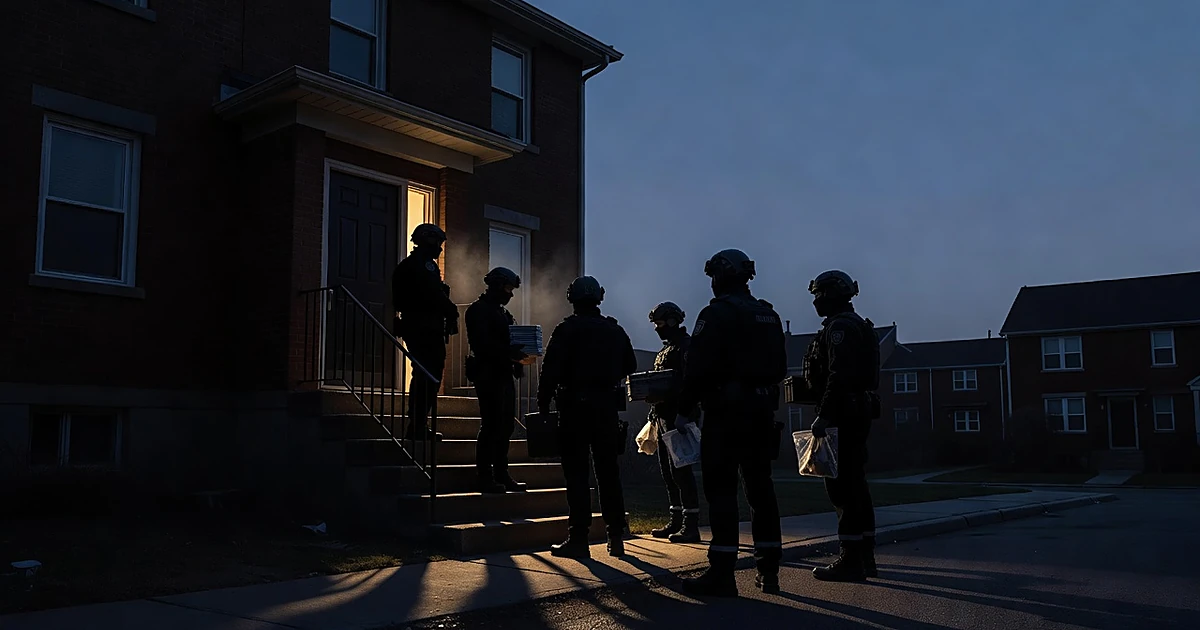
In recent days, confrontations between anti-ICE demonstrators and federal agents have intensified in and around the Twin Cities. These incidents, marked by blocked federal vehicles, personal threats against agents, and doxxing of ICE personnel and their families, have been tied to ongoing enforcement operations.
Adam Swart, CEO of Crowds on Demand, has publicly warned that many of these aggressive actions are not grassroots efforts but are driven by outside actors with undisclosed agendas, while the White House has deployed border czar Tom Homan to oversee the situation.
The unrest has sparked significant concern among law enforcement, with Swart affirming that fears of further escalation are justified. He has called on President Donald Trump to adopt a temporary de-escalation strategy in Minnesota to prevent harm to agents, protesters, and civilians. This plea comes as the Trump administration adjusts its approach to the mounting tensions.
Swart’s revelations about the nature of these protests raise serious questions about who stands to gain from sustained disorder on Minnesota’s streets. His assertion that “many of the most aggressive and unlawful actors targeting ICE are not organic protesters, but are being financed by shadowy interests” points to a troubling undercurrent of manipulation, Fox News reported.
If true, this suggests a deliberate effort to exploit public frustration for private gain.
Let’s be clear: genuine dissent over immigration policy deserves a hearing, but turning streets into battlegrounds through funded agitation is a betrayal of democratic principles. Swart’s refusal to involve his company, Crowds on Demand, in what he calls “illegal chaos” underscores the line between protest and provocation. His firm’s stance—“would not touch the Minneapolis protests with a 10-foot pole”—mirrors the unease many feel about tactics that endanger public safety.
The cycle of escalation Swart describes, where activist aggression prompts harsher responses from ICE, only to fuel more hostility, is a recipe for disaster. It’s a vicious loop that serves no one, least of all the communities caught in the crossfire. If Minnesota becomes a sustained flashpoint, as Swart warns, the fallout could ripple far beyond state lines.
Swart’s critique isn’t one-sided; he acknowledges instances where ICE’s use of force has seemed excessive, contributing to the spiraling tensions. Yet, his primary condemnation falls on demonstrators who obstruct federal duties through unlawful means. Blocking roads and threatening agents aren’t solutions—they’re accelerants.
Amid the unrest, Swart offers pragmatic ideas to cool the temperature, such as prioritizing deportation of those with criminal records and ensuring non-criminal undocumented individuals can report crimes without fear. Other suggestions include clearer sanctuary city guidelines and mandating identifiable ICE uniforms and vehicles. These aren’t capitulations but attempts to rebuild trust while maintaining enforcement.
Still, the idea of a “cease-fire posture,” as Swart terms it, might strike some as a step back from necessary border security. It’s worth debating whether tactical resets risk emboldening those who flout federal authority. The balance between de-escalation and resolve remains a tightrope.
With border czar Tom Homan now on the ground in Minnesota, the administration’s next moves will be closely watched. His deployment signals a commitment to restoring order, but it also raises questions about whether federal presence will calm or inflame the situation. Swart’s warning of a self-perpetuating conflict looms large.
The protests’ uglier tactics—doxxing families, impeding federal vehicles—cross a line that no policy disagreement can justify. They erode the moral high ground of any cause, turning public sympathy into frustration. If outside money is indeed orchestrating this, as Swart claims, it’s a cynical hijacking of real concerns.
Swart’s broader point about escalation backfiring is worth heeding: chaos could lead to stricter enforcement, not the reforms some activists seek. Pushing too far, too fast, often hardens the very systems under critique. It’s a lesson history teaches time and again.
Minnesota’s unrest is a microcosm of a national struggle over immigration enforcement, where passion and policy collide with real human stakes. Finding a way out demands clarity on who’s driving the discord and why. Swart’s insights peel back a layer of complexity that can’t be ignored.
The administration faces a tough call: stand firm on enforcement while avoiding a heavy-handed response that alienates communities further. Swart’s policy ideas, though imperfect, offer a starting point to reduce friction without abandoning principle. Dialogue, not disruption, should guide the next steps.
Ultimately, if shadowy interests are indeed bankrolling street chaos, exposing and dismantling their influence is critical to restoring order. Minnesota doesn’t need imported agitation—it needs solutions that respect both law and humanity. Let’s hope federal and local leaders can cut through the noise and deliver them.