Denmark has just dropped a significant military reinforcement in Greenland, escalating tensions with President Donald Trump over the Arctic territory's future.
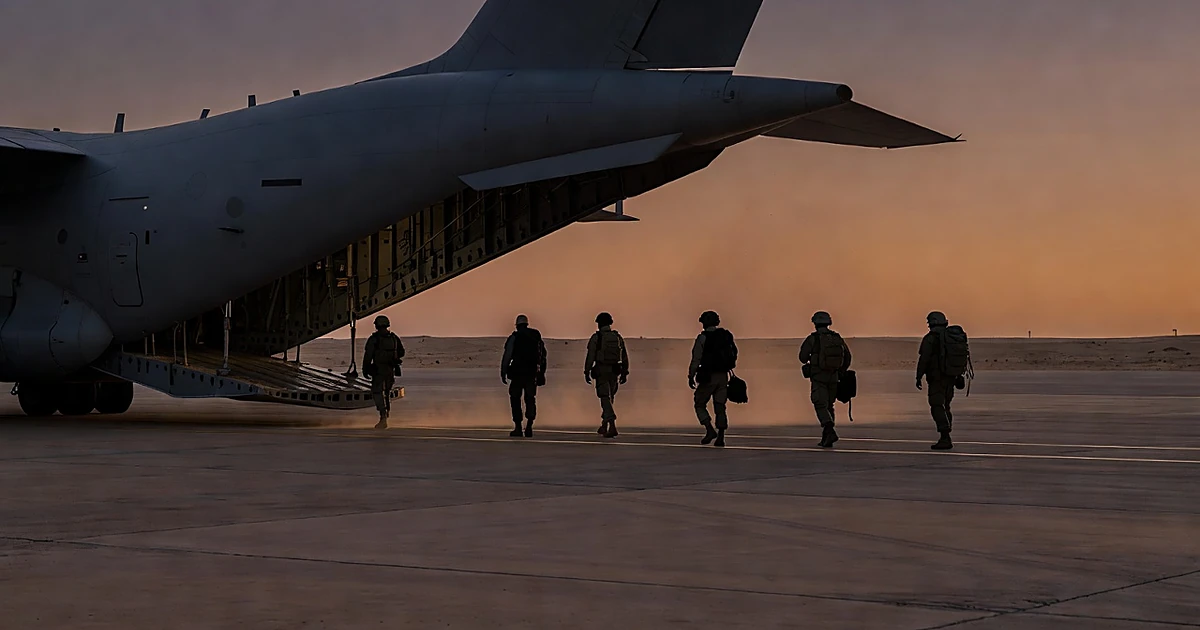
On Monday, Denmark deployed additional troops to Greenland, citing heightened security needs in the Arctic region. The Danish Armed Forces confirmed a substantial contingent arrived at Greenland’s main international airport, with Maj. Gen. Søren Andersen noting that around 100 soldiers landed in Nuuk, the capital.
Further deployments are planned for Kangerlussuaq in western Greenland, while existing forces may stay for a year or more with rotations scheduled in coming years.
This move follows recent statements from Trump asserting that Denmark cannot adequately protect Greenland from foreign threats. In posts and messages, Trump has argued for U.S. dominance over the territory, while a White House spokesperson on Jan. 15 clarified that European troop presence wouldn’t sway his acquisition goals. Reuters reported Danish Defense Minister Troels Lund Poulsen stating the buildup is part of a broader NATO-aligned effort to fortify Arctic defenses.
Trump didn’t mince words in a Truth Social post on Jan. 18, declaring, "NATO has been telling Denmark, for 20 years, that ‘you have to get the Russian threat away from Greenland.’"
He followed up with a jab at Denmark’s capabilities, suggesting they’ve failed to act. It’s a classic Trump move—call out weakness, then position America as the only solution, Fox News reported.
But let’s unpack this. If Denmark has indeed lagged on Arctic security, as Trump claims, shouldn’t NATO allies be asking tougher questions? The region’s strategic value isn’t just academic; it’s a frontline against potential Russian or Chinese influence.
Danish officials, per Reuters, insist this troop surge isn’t solely about Trump’s rhetoric but part of wider security concerns. Maj. Gen. Andersen had previously downplayed the connection to U.S. statements, yet the timing raises eyebrows. With 100 soldiers already in Nuuk, this feels like a statement as much as a strategy.
TV 2 called the new contingent “a substantial contribution,” and it’s hard to argue otherwise. Yet, beefing up forces in Greenland won’t magically settle the deeper question of who should steward such a critical territory. Denmark’s cooperation with NATO allies is commendable, but it doesn’t address Trump’s core critique.
Speaking of Trump, a released text exchange on Monday with Norway’s Prime Minister showed him questioning Denmark’s claim, asking, "Denmark cannot protect that land from Russia or China, and why do they have a ‘right of ownership’ anyway?" It’s a blunt challenge to historical precedent. And frankly, it’s a question worth wrestling with—ownership rooted in centuries-old landings feels flimsy in today’s geopolitical chess game.
Adding fuel to the fire, Trump announced a 10% import tax starting in February on goods from nations backing Denmark and Greenland, including Norway. This economic jab signals he’s not just talking—he’s willing to twist arms. It’s a reminder that diplomacy under Trump often comes with a financial sting.
White House press secretary Karoline Leavitt doubled down on Jan. 15, noting European troops won’t deter Trump’s ambitions for Greenland. Her confidence suggests the U.S. isn’t backing off, no matter how many Danish boots hit the ice. That’s either bold leadership or reckless overreach, depending on where you stand.
Denmark’s military rotations planned for years ahead show they’re digging in for a long haul. Yet, if Trump’s right that they’ve underperformed on security, more troops might just be a Band-Aid on a bigger problem. The Arctic isn’t a sandbox—it’s a pressure cooker.
What’s at stake here isn’t just Greenland’s icy terrain but the principle of national control versus collective defense. Trump’s push for “complete and total control” might sound overbearing, but it reflects a real concern about global threats exploiting weak links. The question is whether his solution is the only viable one.
Denmark deserves credit for stepping up with NATO’s support, yet they must prove they can safeguard Greenland without ceding ground to U.S. demands. Meanwhile, Trump’s tariff threats and sharp rhetoric keep the pressure on allies to rethink their stance. This standoff is far from over, and the Arctic’s future hangs in the balance.